The standard wedding photo list looks the same at every wedding.
Couple at the altar. Couple cutting the cake. Couple at the arch. First dance. These photographs matter — they document the structure of the day — but they are not the images that make people stop scrolling. They are not the ones couples frame, send to family and still look at twenty years later with genuine emotion.
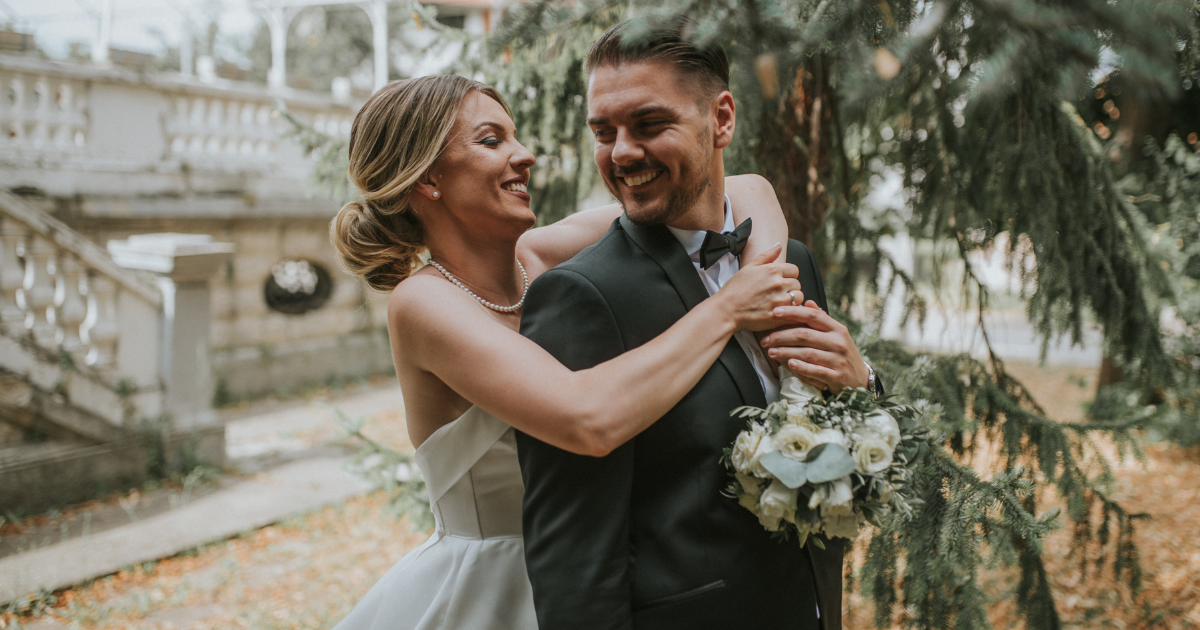
The photographs that do that are almost never staged. They happen in the fifteen minutes between the ceremony and the cocktail hour when the couple finally has a moment alone. They happen in the getting-ready room when someone says something that makes the bride laugh before she realizes a camera is there. They happen at golden hour when a photographer who knows what they are doing walks the couple fifty meters away from the reception and asks them to do nothing but stand together and look at each other.
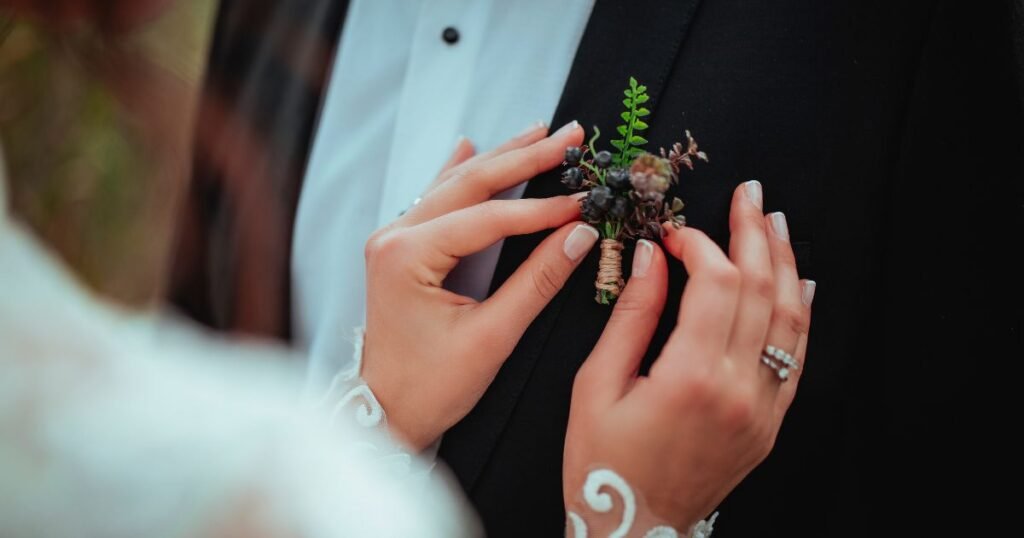
These 5 creative wedding photo ideas for bride and groom give you the context, the timing and the briefing to make those photographs happen at your wedding — not by luck, but by preparation.
1. The Private First Look
The first look — the arranged, private moment where the bride and groom see each other for the first time before the ceremony — is not just a sentimental choice. It is a photographic decision that produces some of the most emotionally powerful images of any wedding day.
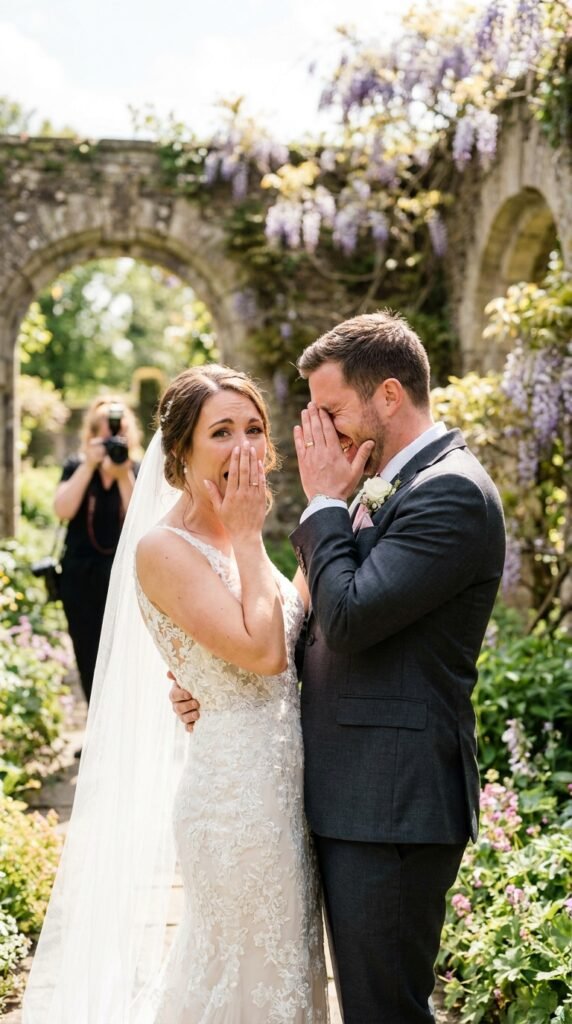
The reason is simple. A first look happens in relative quiet, without 150 guests watching, without an officiant and a microphone, without the formal choreography of the processional. It is just two people seeing each other. The reactions — the sharp inhale, the hands covering the mouth, the involuntary laugh, the tears that arrive before the person can think to stop them — are completely unguarded because there is nobody to perform for. A skilled photographer positioned correctly captures facial expressions and body language in this moment that simply cannot be reproduced during the ceremony.
How to make the most of a first look photograph: choose a location with natural light — a window, a garden, an open courtyard — and genuine background rather than a blank wall. Ask your photographer to position themselves before you arrive so neither person knows exactly where the camera is. Do not plan what you will say. Whatever comes out when you see each other is what belongs in the photograph.
The first look also solves a practical problem. With most couple portraits and family formals completed before the ceremony, you can go directly to your cocktail hour afterward and spend it with your guests rather than disappearing for an hour of photographs while 100 people wait for you.
2. The Golden Hour Portrait
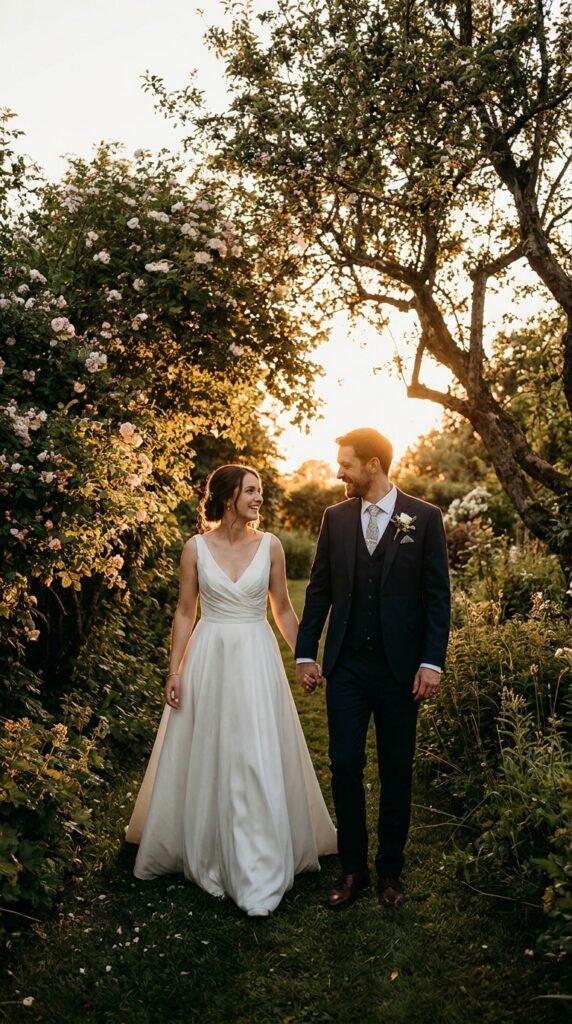
Golden hour — the 20 to 40 minutes of warm, directional sunlight that occurs in the hour before sunset — produces the most beautiful natural light available to a wedding photographer on any day. It is not an opinion. It is physics. The sun at a low angle on the horizon creates soft, warm, side-directional light that eliminates harsh shadows, flatters skin tones and wraps around subjects in a way that makes any photograph look like it was taken by someone who knows what they are doing.
Most couples get their golden hour portraits because their photographer planned for them. The ones who do not get them are the ones whose timeline did not protect the window, whose reception dinner began exactly at sunset or whose wedding ran forty minutes late through the afternoon and lost the light without anyone noticing until it was gone.
To guarantee golden hour portraits: look up the sunset time for your wedding date and location on timeanddate.com. Build twenty to thirty minutes into your wedding day timeline starting fifteen minutes before sunset. Brief your photographer at your planning meeting that golden hour portraits are a priority. Assign your day-of coordinator the specific task of extracting you from the reception at the right moment — and tell your guests you are disappearing briefly for photographs.
The posing for golden hour portraits that produces the strongest results is almost no posing at all. Walk together slowly. Stop and look at each other. The photographer captures what happens between the directions. The light does the rest.
3. The Quiet Moment Alone
Schedule ten minutes immediately after the ceremony — before photographs, before the cocktail hour, before any guest reaches you — that belong only to the two of you.
Not for photographs. For yourselves. Then tell your photographer where you will be.
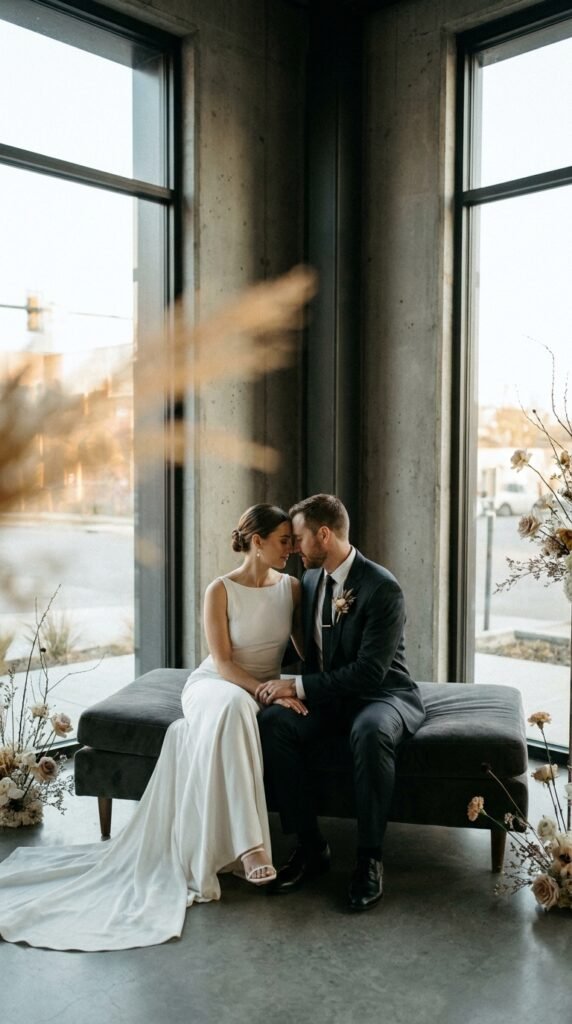
What happens in those ten minutes — the first moment the couple is alone as a married pair, the things they say to each other when no one is listening — is consistently where the most emotionally resonant photographs of the entire day are taken. Not because anything dramatic happens. Because nothing dramatic happens. Someone leans their forehead against the other’s. Someone says something quiet. Someone laughs at something only the two of them understand. A hand reaches for another hand.
A photographer who understands this moment does not direct it. They document it from a respectful distance with a long lens. The resulting photographs look nothing like any other wedding portrait because they are not portraits at all — they are records of a private moment that the couple forgot was being photographed.
Brief your photographer before the wedding: “We are going to have ten minutes alone immediately after the ceremony. We want you to photograph us from a distance without directing us. Don’t announce yourself. Just be there.” A good photographer will understand immediately what you are asking for and why.
4. The Detail Story Flat Lay
Your photographer spends most of the day photographing people. The detail photographs — the objects that tell the story of who you are and what this day meant — are equally important and consistently under-photographed at weddings where nobody has briefed the photographer on what matters.
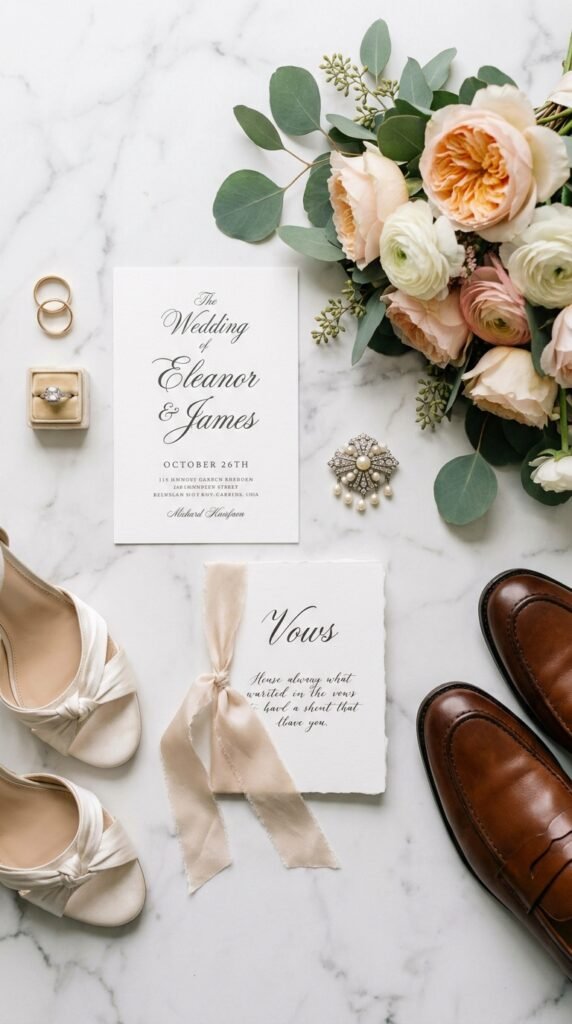
A well-composed detail flat lay is not a photograph of the rings on a surface. It is a composition — arranged with intention — that tells a visual story about the couple and the wedding in a single image. The invitation suite next to a dried flower from the bouquet next to the grandmother’s brooch next to the vow booklet next to the wedding band. These objects together create a narrative that no portrait can replicate.
To make this happen at your wedding: collect all meaningful detail objects the morning of the wedding and place them in a single location where your photographer can find them. Brief your photographer specifically — “these are the details we want photographed and this brooch was my grandmother’s, so please make sure it is in the flat lay.” Give them a surface with good natural light — a windowsill, a marble bathroom countertop, a linen tablecloth — to work with. Leave the composition to them.
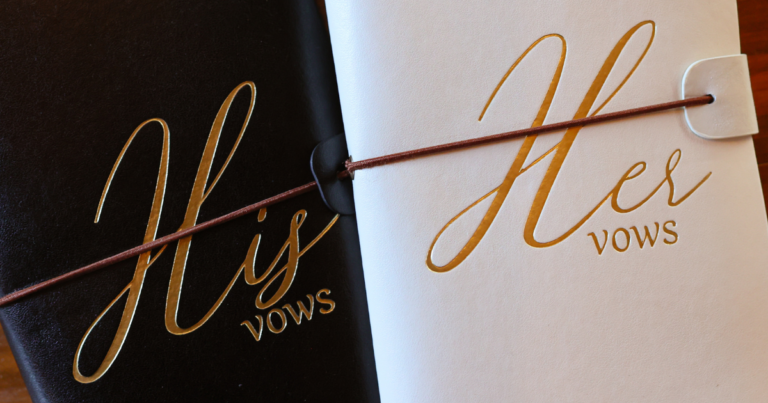
The details to consider: rings on the original ring box or on a ring dish, the invitation suite, dried or pressed flowers, any heirloom jewelry or objects, the vow booklets, perfume or cologne, wedding shoes, cufflinks, the garter, a handwritten note from one partner to the other. Any object with a story.
5. The Reception Candid Series
The most memorable photographs from any wedding are almost never the posed ones.
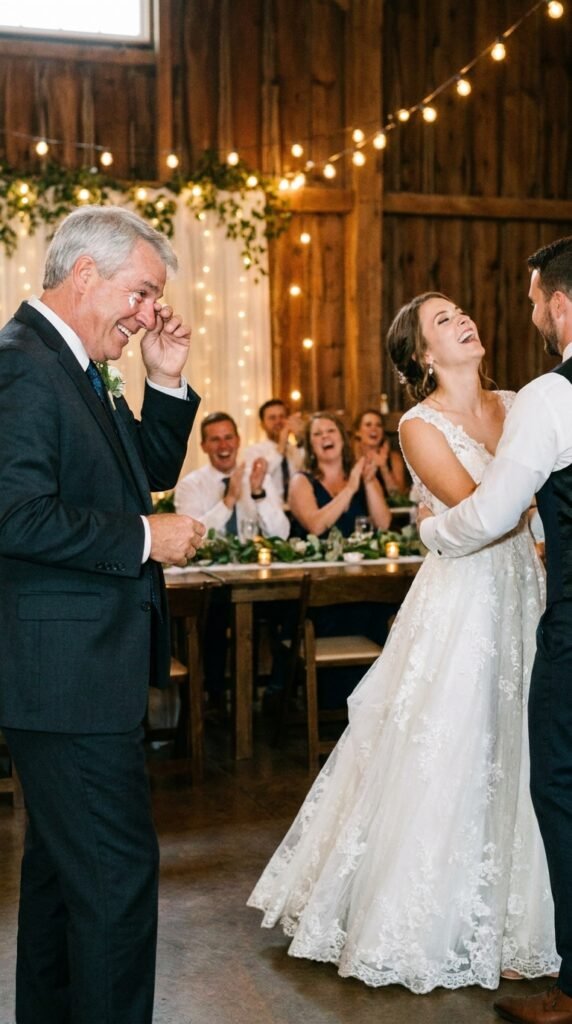
They are the father of the bride watching his daughter dance from across the room when he thinks nobody is looking. The flower girl falling asleep under a table at 9pm. Two old friends who have not seen each other in ten years finding each other during cocktail hour. The groom’s best man laughing so hard at his own speech that he cannot finish the sentence. The bride and her mother in a quiet doorway moment that nobody else sees.
These photographs do not happen because a photographer asked for them. They happen because a photographer is moving through the reception space actively and invisibly — looking for genuine human moments rather than waiting for staged ones — and because the couple briefed them beforehand on the specific people and relationships that matter most.
Brief your photographer with a short list of the people whose candid moments you most want captured: aging grandparents who may not be at another family event like this, siblings who rarely see each other, a best friend flying in from abroad, the parent whose reaction to the vows you most want documented. This list takes five minutes to write and transforms the candid coverage of your day from random to intentional.
Ask your photographer specifically to photograph your guests during the speeches — not just the speaker. The faces of people listening to a speech about someone they love produce some of the most emotionally genuine photographs of the entire day.
How to Brief Your Photographer
The quality of your wedding photographs is determined by two things: the skill of your photographer and the quality of the brief they receive before your wedding day.
Share these five photo ideas with your photographer at your planning meeting — not as a prescriptive shot list, but as a conversation about what matters to you and what kind of images you want to take home from your day. A good photographer will take these ideas and find the version that fits your specific venue, your specific relationship and the specific light on your specific day.
Give your photographer a printed copy of your wedding day timeline at least two weeks before the wedding. Confirm the sunset time together and protect the golden hour window explicitly. Share the list of people and relationships you most want captured in candid moments. And tell them about any object, heirloom or detail that has a story — because the story is what makes the photograph.
The Weddzie Wedding Planner Bundle includes a complete wedding day timeline template and a shot list planning guide — so your photographer has everything they need to capture the day the way you want it remembered.
[→ Get the Weddzie Wedding Planner Bundle for $17 — Instant Download]
Frequently Asked Questions
When is the best time to take wedding photos? Golden hour — the 20 to 40 minutes before sunset — produces the most beautiful natural light of any point in the day. Look up the sunset time for your wedding date and location and build a 20 to 30 minute window into your reception timeline specifically for couple portraits. If your ceremony is in the afternoon, the window between the ceremony end and the cocktail hour is also excellent for portraits — the light is good and the couple’s makeup and attire are at their freshest.
Should you do a first look before the ceremony? Most wedding photographers recommend it — and for good reason. A first look produces the most emotionally genuine photographs of the day because the reaction is completely unguarded. It also allows the couple to complete the majority of their portrait session before the ceremony, meaning they can attend their cocktail hour with their guests rather than disappearing for an hour afterward. The only argument against a first look is tradition — some couples prefer to see each other for the first time at the altar. Both choices are completely valid.
How do you look natural in wedding photos? The couples who look most natural in their wedding photographs are almost always the ones who were not thinking about the camera. The best practical advice: do something rather than pose for something. Walk together. Have a conversation. Look at each other rather than at the lens. Move. A photographer who gives direction through activity — “walk toward me slowly,” “whisper something in her ear” — produces more natural results than one who asks for a specific pose and then waits for it to be held.
What details should be photographed at a wedding? The most important detail photographs are the rings, the invitation suite, any heirloom jewelry or objects with personal significance, the bridal bouquet, the wedding shoes, the vow booklets and any handwritten notes between the couple. Collect all of these in a single location on the morning of the wedding and brief your photographer on which objects have a story — the story context helps the photographer compose each detail image with more intention.
How do you get candid wedding photos? Candid photographs happen when the photographer is actively moving through the event looking for genuine human moments rather than waiting for staged ones. Brief your photographer with a short list of the specific people whose candid moments matter most to you. Ask them to photograph guests’ faces during speeches rather than only the speaker. And give them enough time during the reception to move freely — a photographer who is managing the couple’s portrait session cannot simultaneously capture candid guest moments.
How many photos should a wedding photographer deliver? Most wedding photographers deliver between 400 and 800 edited photographs from a full-day wedding. This range accounts for variation in wedding size, duration and the number of formal portrait groupings. A smaller, more intimate wedding with fewer family formals typically yields 400 to 500 images. A larger wedding with extensive family portraits and multiple reception moments typically yields 600 to 800. Ask your photographer specifically what their average delivery count is before booking to ensure expectations are aligned.