Most couples leave the vows until the last two weeks before the wedding.
They have spent twelve months choosing a venue, tasting cakes, arranging flowers and building a seating chart. Then with fourteen days to go they sit down with a blank page and realize they have no idea how to say — in front of everyone they love — what the person across from them actually means to them.
The vows are the ceremony. Not the flowers, not the music, not the dress. The vows are the only part of the day that cannot be redone, cannot be delegated and cannot be bought. They are completely, irreducibly yours.
This guide gives you a step-by-step framework for writing wedding vows that are personal, emotionally honest and genuinely memorable — for your guests, for your partner and for yourself when you read them again ten years from now.
Start Earlier Than You Think
The single most common vow-writing mistake is starting too late.
Not because vows take a long time to write. They do not. Two hundred to three hundred words is the ideal length — about two to three minutes when spoken aloud — and most people can write that in an afternoon once they know what they want to say.
The problem with starting late is that the best vows are not written in a single sitting. They are written, set aside, returned to, revised, set aside again and then read aloud until they feel genuinely yours. That process takes two to three weeks when done without pressure. It takes four days of panic when done at the last minute. The output is different.
Start writing your vows six to eight weeks before the wedding. Give yourself the time to get it right.
Decide on the Format Together — But Write Separately
Before either of you writes a single word, have one conversation with your partner about format. Not content — you should not share what you are going to say. But format.
Agree on approximate length. Two to three minutes each is the standard and the most comfortable length for both partners and guests. One person delivering five minutes of vows while the other delivers ninety seconds creates an unintentional imbalance that the entire room notices.
Agree on tone. Funny, heartfelt, formal, conversational — or a mix. Wildly mismatched tones feel jarring during the ceremony. If one partner is planning to open with a joke and the other is planning a formal recitation of lifetime promises, have that conversation before you write.
Agree on whether to include specific promises or keep things more general. Some couples prefer concrete commitments — I will always make you coffee before I make my own. Others prefer broader declarations. Neither is wrong. But both doing the same thing creates harmony.
After that single conversation, write separately and do not share until the ceremony.
The Formula That Works
Personal wedding vows that genuinely move people follow a recognizable emotional structure. It is not a rigid template. It is a sequence of emotional beats that mirrors how love actually feels.
Part 1 — The acknowledgement Open by saying who this person is to you. Not what they look like. Not how long you have been together. Who they are. The quality in them that you recognized and knew was irreplaceable.
This is the section that tells your guests something true about your partner that only you could know. It is the section your partner will remember most clearly.
Part 2 — The specific memory Include one real, specific story or moment. Not a general statement about how happy they make you. A real moment — the specific Tuesday, the exact thing they said, the precise way they looked at you — that shows your guests rather than tells them.
Specificity is what separates vows that make people cry from vows that make people nod politely. Anyone can say “you make me a better person.” Only you can say “the morning you drove forty minutes to bring me soup when I had the flu and then left without waking me up because you knew I needed sleep — that was the morning I knew I wanted to spend my life with you.”
One specific moment is worth more than ten general declarations.
Part 3 — The promises Three promises. Not one, not ten. Three.
One promise about who you will be as a partner in the ordinary days. One promise about who you will be when things are hard. One promise that is unique to your relationship — the thing only the two of you would understand.
Promises work when they are concrete. “I promise to love you” is not a promise — it is a statement. “I promise to choose you every morning, even on the mornings when choosing each other is the harder option” is a promise.
Part 4 — The declaration Close with a single clear declaration of what this commitment means. Not a summary of everything you have said. A landing. Something that gives your guests a moment to exhale.
This closing line is what people quote back to you at the reception. Keep it short. Keep it true.
Write the First Draft Without Editing
Open a document. Set a timer for twenty minutes. Write without stopping and without editing.
Answer these questions in whatever order feels natural:
What was the first thing you noticed about them that you could not explain? What is the smallest thing they do that you would miss most? What does ordinary life look like with them — the version nobody else sees? What did they teach you about yourself that you did not know before? When were you most certain you were going to marry them? What are you most afraid of and how does being with them change that? What do you want your life to look like in thirty years and how do they fit into that picture?
Do not answer all of these. Write until something true comes out and then follow that thread. The goal of the first draft is not a finished product. It is raw material to work from.
Edit Ruthlessly
Read your first draft back and ask one question about every sentence: is this true or is this what I think I am supposed to say?
Generic statements — “you are my best friend,” “you complete me,” “I cannot imagine my life without you” — are not false, but they are not specific to your relationship. Replace each one with the specific version that is only true of you two.
Cut anything that sounds like something you have heard at someone else’s wedding. If it sounds familiar, it is not doing the work you need it to do.
Read aloud. Your vows will be spoken, not read silently. A sentence that looks fine on the page can be a tongue-twister when spoken or can run so long that you run out of breath mid-thought. Time yourself. Two to three minutes is the target. Anything over four minutes will lose the room.
Practice Until the Words Are Yours
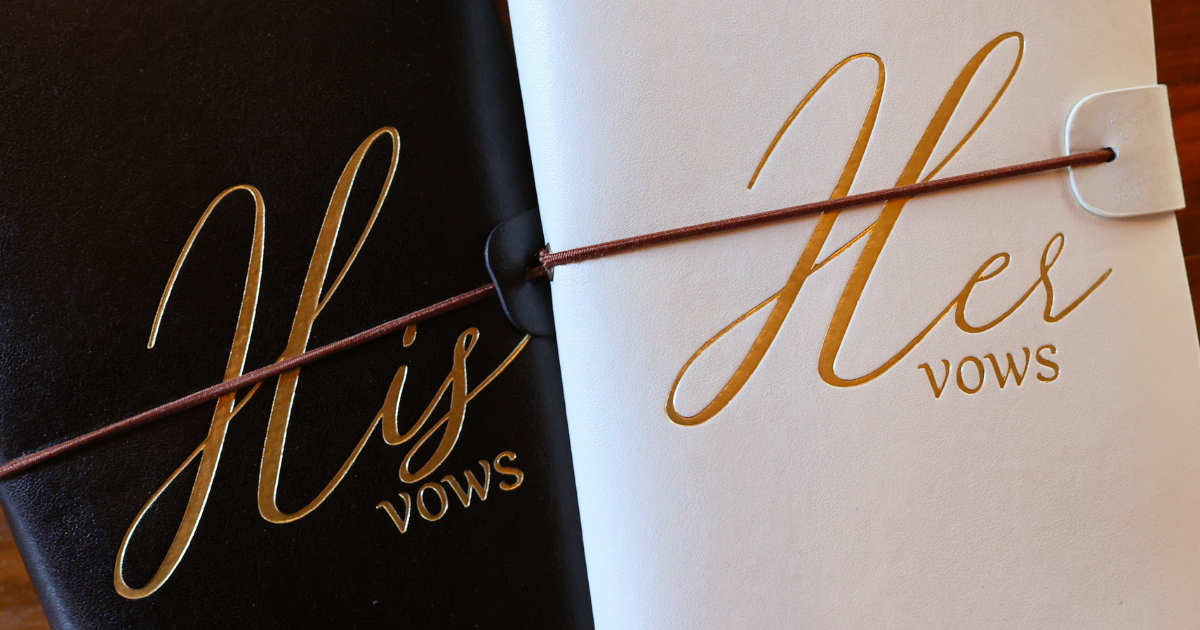
Write your final vows on the medium you will hold during the ceremony — a card, a small notebook, a printed sheet — in a font and size you can read clearly when your hands are shaking and your eyes are blurring.
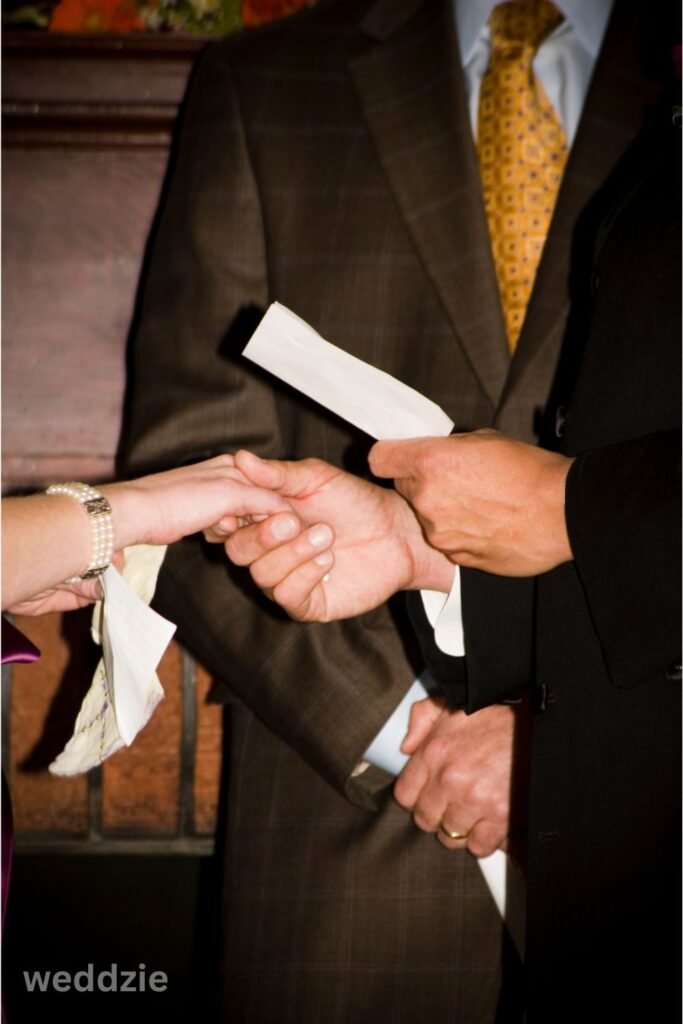
Practice reading them aloud every day for the last two weeks before the wedding. Not memorizing — reading. You are not performing. You are sharing. Having the words in front of you is not a weakness. Looking down at a card and then up at your partner as you speak is one of the most intimate visual moments of any ceremony.
Practice until you can get through them without crying.
Then cry anyway on the day. That is what the tissues are for.
The Things That Make Vows Genuinely Memorable
The best wedding vows share qualities that have nothing to do with writing skill or vocabulary. They are honest. They are specific. They are spoken to one person rather than performed to a room.
Your guests are not the audience for your vows. Your partner is. Speak to them, not to the crowd. Make eye contact. Slow down when something important is being said. Let the silence after a true statement sit for a moment before moving on.
Humor works when it is genuine and when it serves the emotional arc rather than deflecting from it. A moment of laughter that releases some of the emotional tension in the room and then allows the vows to return to sincerity is one of the most effective structures available. Humor that avoids the emotional content entirely produces vows that people describe as “fun” — which is not the same as memorable.
The moment that makes everyone cry is almost never the grandest declaration. It is the specific, quiet, true thing — the detail that only makes sense to the two people standing there — that catches the room off guard.
If You Are Completely Stuck
Some people sit down to write their vows and genuinely cannot find the words. Not because they do not have things to say but because the weight of saying them correctly is paralyzing the process.
If this is you, try writing a letter instead of vows. Write a letter to your partner — informal, unedited, as if nobody will ever read it — about why you are marrying them. Then go back and underline the three or four sentences that are truest. Those sentences are the foundation of your vows.
Alternatively, talk through your answers to the questions above with a trusted friend while they take notes. Hearing your own words reflected back by someone else often produces the breakthrough that sitting alone with a blank page cannot.
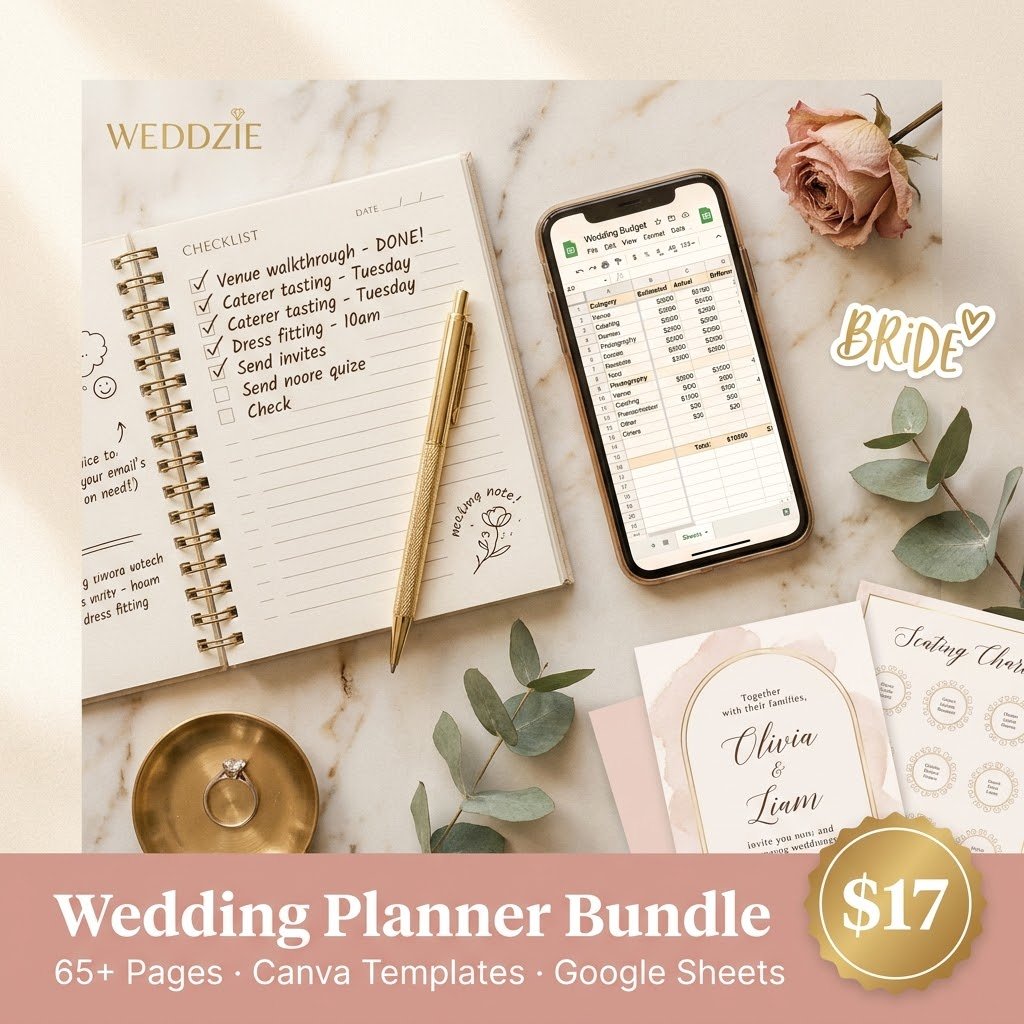
The Weddzie Wedding Planner Bundle includes a complete vow writing guide with a fill-in-the-blank template for both partners, a timing guide and a final draft lined page — so the structure is already built and all you need to bring is what is true.
[→ Get the Weddzie Wedding Planner Bundle for $17 — Instant Download]
Vow Writing Don’ts
Do not use song lyrics or poem excerpts as your vows. Not because they are wrong but because they are not yours — and the entire point of personal vows is that they are yours alone.
Do not write vows that require your partner to perform. Vows that set up a call-and-response or that reference a private joke only the two of you understand while the rest of the room is excluded feel alienating to the guests whose presence you invited.
Do not write vows in the third person or that address the guests rather than your partner. Your vows are a conversation between two people. The guests are witnesses, not participants.
Do not rehearse so much that the vows sound like a performance on the day. The slight nervousness, the real emotion, the moment where you have to stop and breathe — these are not flaws in your delivery. They are the evidence that you mean it.
A Note on Keeping Them Secret Until the Day
Most couples choose not to share their vows with each other before the ceremony — and this is the right decision for most. The first time your partner hears your vows, in front of everyone you love, with the full weight of the moment behind them, is an experience that cannot be replicated by reading them in advance.
The risk is mismatched length or tone — which is why the format conversation before you begin writing matters so much. Address the format together. Write the content separately. The surprise of hearing what your partner chose to say — and having your guests witness that surprise — is one of the most genuinely moving moments any ceremony can produce.
Your vows are the only part of the wedding that is completely free, completely irreplaceable and completely yours. Give them the time, the honesty and the care they deserve.
[→ Get the Weddzie Wedding Planner Bundle for $17]
The bundle includes the complete vow writing guide with templates for both partners — so you have the structure in place before you write a single word.
Frequently Asked Questions
How long should wedding vows be? Two to three minutes when spoken aloud is the ideal length for personal wedding vows. This translates to approximately 200–300 words. Vows shorter than 90 seconds can feel incomplete. Vows longer than four minutes lose the room and exhaust the emotional impact before the ceremony ends. Time yourself reading aloud — not silently — to get an accurate sense of length.
Should wedding vows be memorized or read from a card? Read from a card. Memorizing vows introduces the risk of blanking under the emotional pressure of the moment — and a blank during your vows is a genuine ceremony disruption. Reading from a card while maintaining eye contact with your partner is not a sign of unpreparedness. It is good ceremony management. Write your vows in a font and size you can read clearly when your hands are shaking.
When should I start writing my wedding vows? Start six to eight weeks before the wedding. Write a first draft, set it aside for a few days, revise, read aloud and revise again. The vows that genuinely move people are almost never written in one sitting. They are the result of returning to the material multiple times until every word is true and every sentence sounds like you.
Can I use quotes or song lyrics in my wedding vows? Use them as inspiration but not as the vows themselves. A quote or lyric that is meaningful to your relationship can be referenced or acknowledged — but the core of your vows should be in your own words, about your specific relationship. The moment that moves people is always the thing only you could say about this specific person. No quote can replicate that.
What should wedding vows include? The most effective personal wedding vows include four elements: an acknowledgement of who your partner is to you specifically, one real and specific memory or moment from your relationship, three concrete promises about who you will be as a partner, and a closing declaration. This structure provides emotional arc — it opens with presence, deepens through memory, commits through promises and lands with intention.
What if I cry while reading my vows? You probably will. Most people do. Practice reading your vows aloud regularly in the weeks before the wedding until you can get through them — and then expect to cry anyway on the day. The technique that helps most is pausing and taking a breath when you feel the emotion rising rather than trying to push through quickly. Slowing down — not speeding up — is what gets you through a difficult moment during the ceremony.