A beach wedding is one of the most beautiful and one of the most technically demanding settings for bridal hair.
The wind does not care about your blowout. The humidity does not respect your velvet scrunchie. The salt air has its own ideas about the carefully placed tendrils your stylist spent forty minutes perfecting. And the golden hour light — extraordinary as it is — shows every flyaway in high definition.
The brides who leave a beach wedding with their hair looking exactly as intentional at the last dance as it did at the ceremony share one thing: they chose a hairstyle designed for the conditions rather than despite them. Not a style that fights the wind. One that works with it. Not a style that requires three cans of spray to survive the humidity. One that is structured enough to hold without it.
These 10 beach wedding hairstyles are organized from the most relaxed and natural to the most structured and formal — all of them genuinely suited to outdoor coastal conditions, all achievable by a skilled hairstylist and all beautiful in the specific quality of light that makes a beach wedding look like nothing else.
1. The Effortless Loose Wave
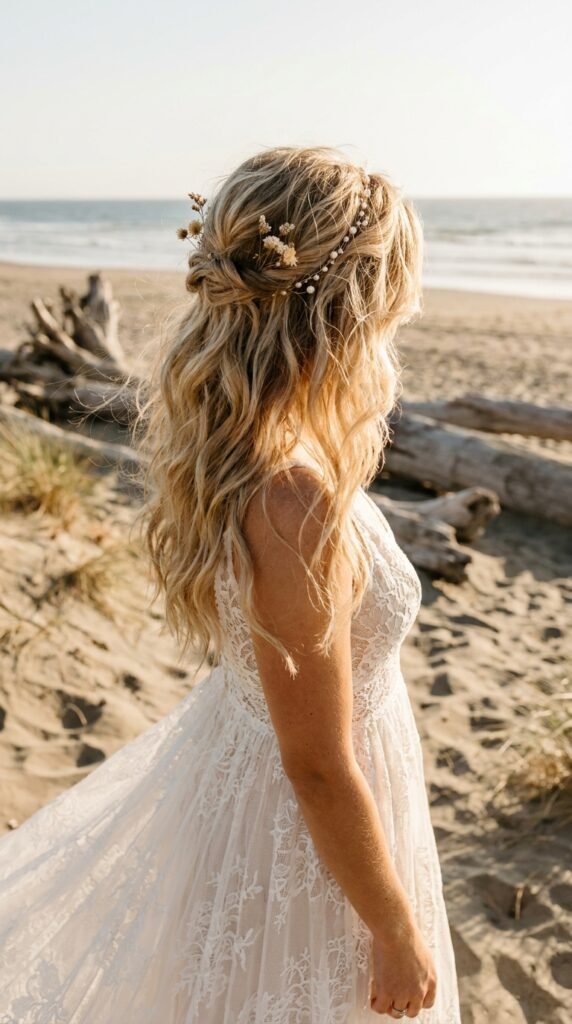
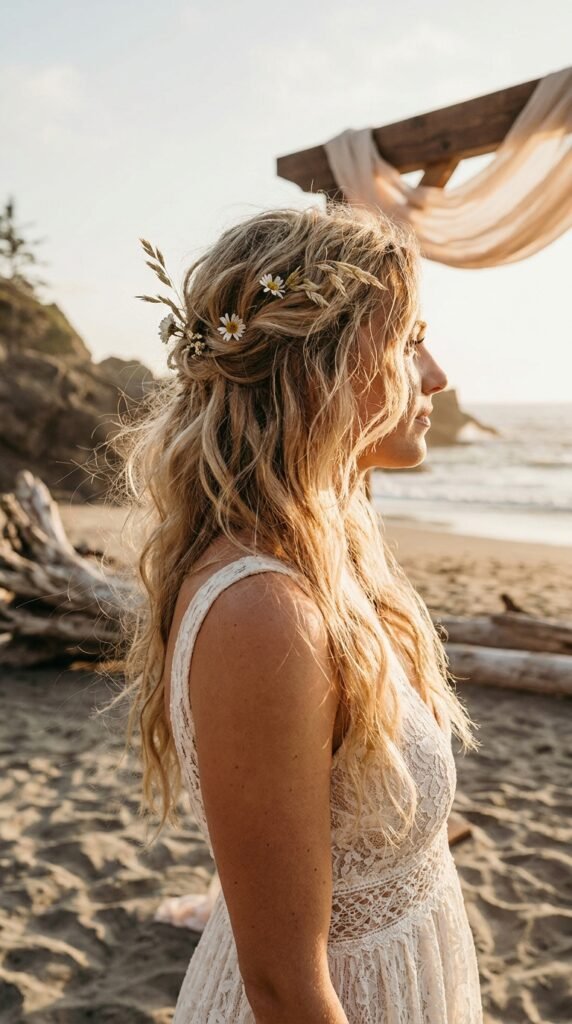
The loose wave is the most naturally suited beach wedding hairstyle available — because the beach environment actively contributes to it rather than working against it. Salt air adds texture. Sea breeze creates movement. Humidity softens the edges of any wave that might otherwise look rigid. The style that looks most deliberately effortless in beach wedding photographs is often the one that received the least intervention.
The technique that produces the best loose wave for a beach ceremony: start with clean, dried hair and apply a salt spray or texturizing spray — Not Your Mother’s Curl Talk or Ouai Wave Spray are both excellent — before using a large-barrel curling iron (1.5 to 2 inch) to create loose, irregular waves. The key word is irregular. Waves that are all the same size and direction look salon-manufactured on camera. Vary the direction, leave some sections less curled than others and then shake the entire result loose with your fingers rather than a brush. Finish with a light-hold flexible spray — not a firm-hold lacquer — so the hair continues to move in the wind rather than snapping against it. Set it with Kenra Platinum Silkening Mist or Oribe Superfine Hair Spray for longevity without stiffness. Cost at a salon: $120–$200 for bridal hair styling.
2. The Boho Side Braid
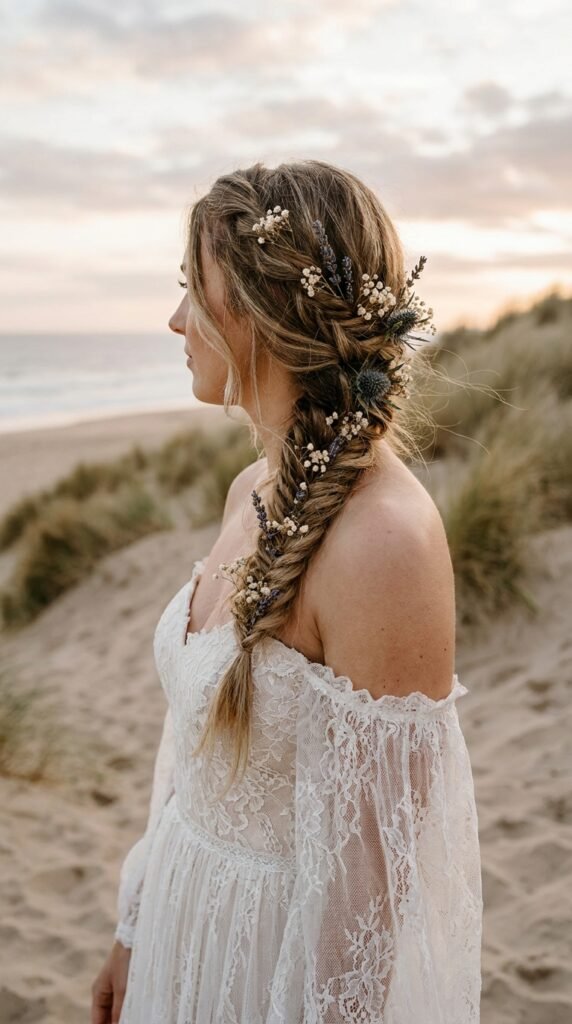
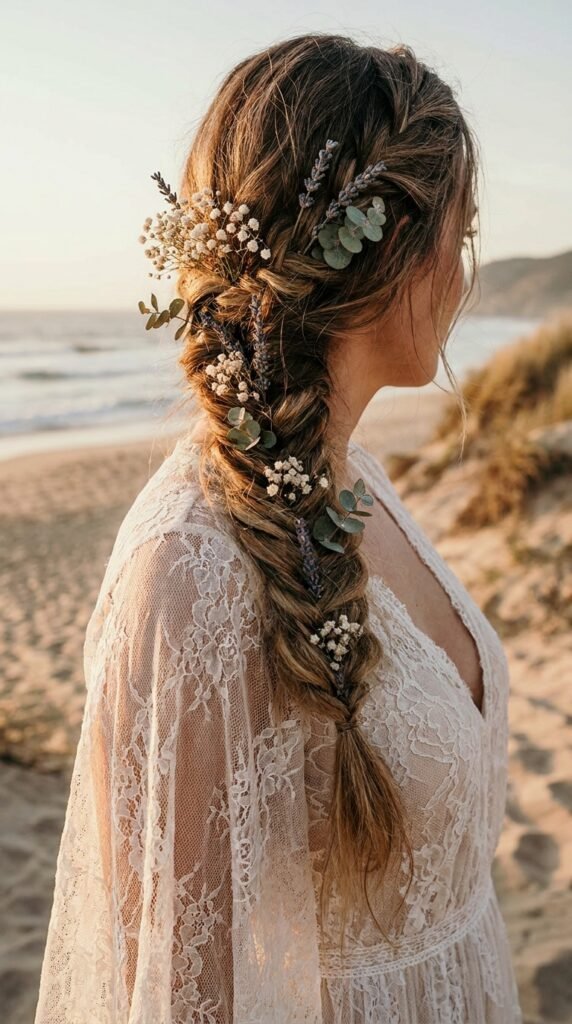
A loose, textured side braid — a three-strand or fishtail braid pulled over one shoulder and deliberately loosened so individual sections puff slightly and small face-framing pieces fall free — is one of the most photographically beautiful beach wedding hairstyles for brides with medium to long hair. It is also one of the most wind-resistant. A braid does not fight the wind because there is nothing loose to blow across the face. It sits over one shoulder, stays where it is placed and looks intentional from every angle a photographer might use.
The finishing details that make a side braid distinctly bridal rather than casual: small dried flowers or fresh blooms tucked into the braid at intervals — white jasmine, dried lunaria, small eucalyptus sprigs — in colors that match the wedding palette. A single bloom tucked just above the ear on the side the braid pulls from frames the face without competing with it. Rough up the braid after plaiting by gently pulling individual sections — the Dutch pancake technique — to add volume and softness that makes it read as relaxed rather than precise. Moroccanoil Texture Clay or Living Proof Texture Mist gives the braid the grip it needs to hold the loosened sections in coastal humidity. Cost at a salon: $130–$220.
3. The Low Twisted Chignon
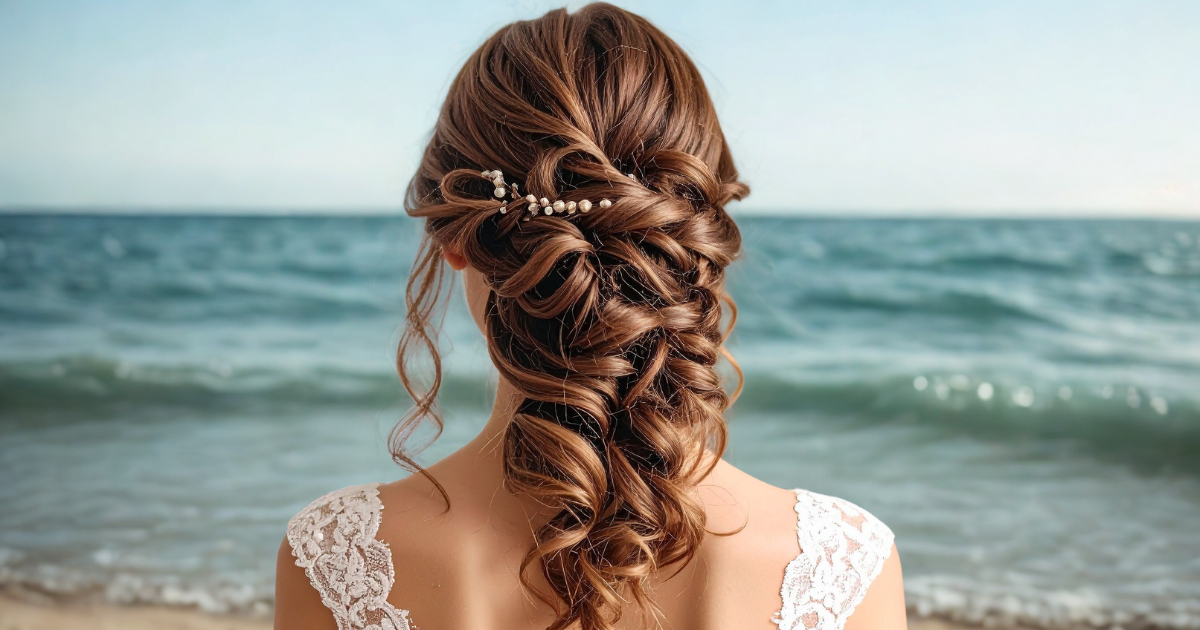
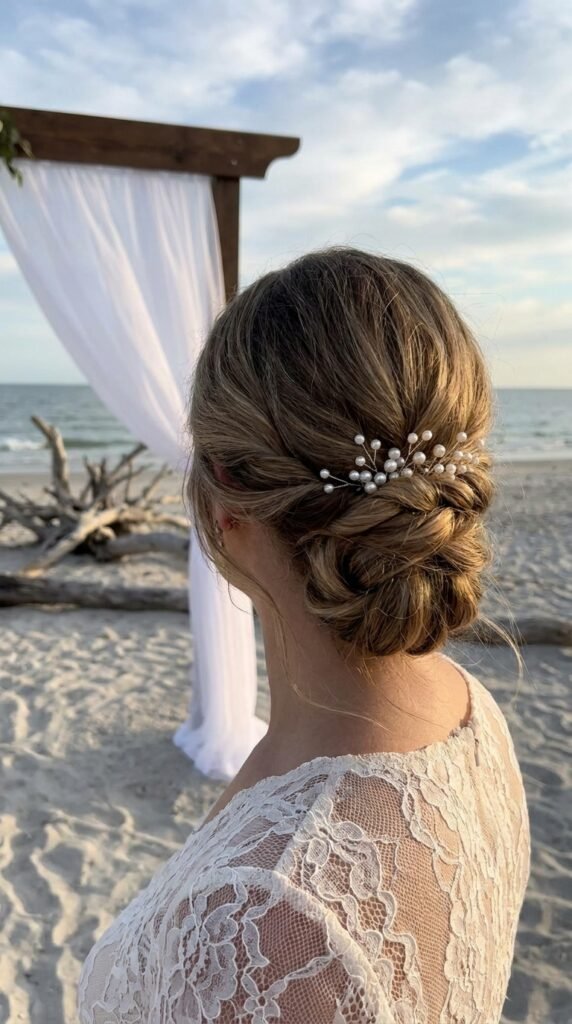
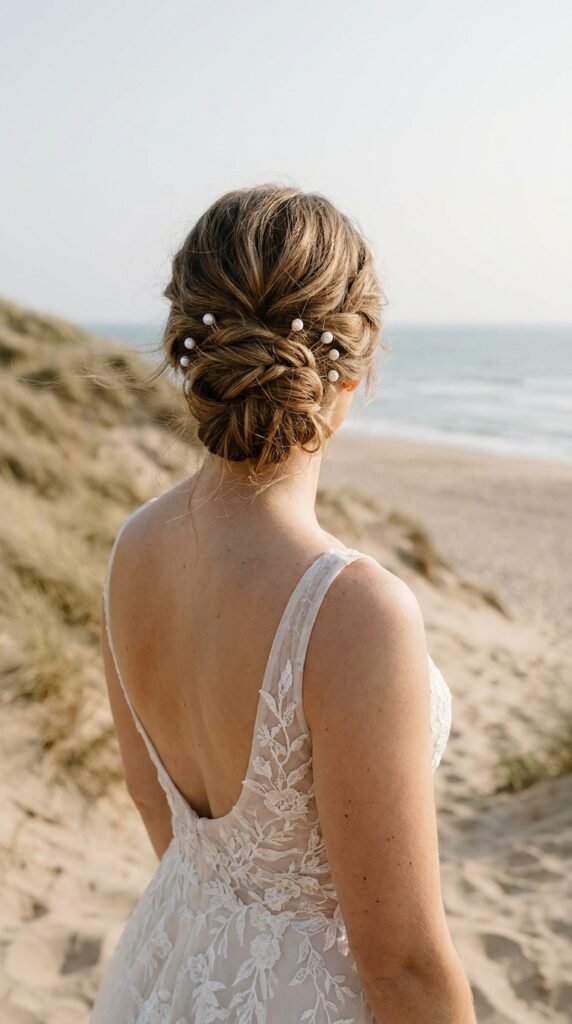
A low chignon — a gathered, twisted knot sitting at the nape of the neck — is the most structurally sound of all beach wedding hairstyles for brides who want a formal, polished look in an outdoor coastal setting. The low position means the wind passes over rather than through it. The twisted rather than pinned construction means it holds without requiring the quantity of pins that can work loose in humidity. The nape placement keeps the style clean and elegant in side and back photographs — the angles most commonly captured during a beach ceremony.
The version that works best for a beach wedding is deliberately imperfect — not the sleek, lacquered chignon of a black tie ballroom but a softly textured, slightly undone version with a few face-framing pieces left loose or pulled gently free at the temples. This deliberate imperfection is what makes the style work outdoors — it reads as windswept and romantic rather than disheveled. Joico Power Spray or Kenra Platinum Silkening Mist through the finished chignon seals the surface without the stiffness that coastal air can turn waxy. Pearl or gold pins tucked into the chignon add a bridal quality without competing with the simplicity of the style. Cost at a salon: $120–$180.
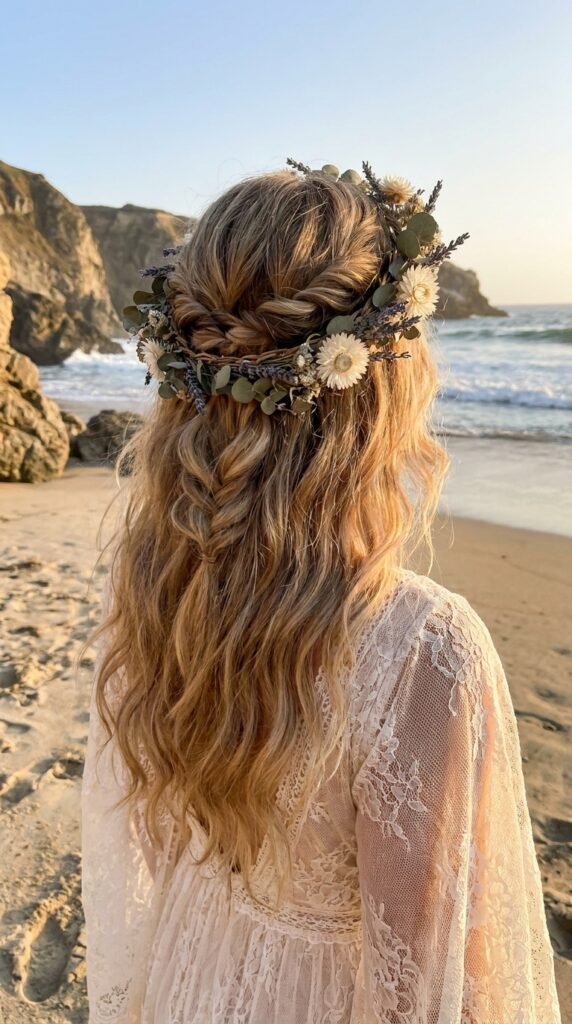
4. The Half-Up Floral Crown
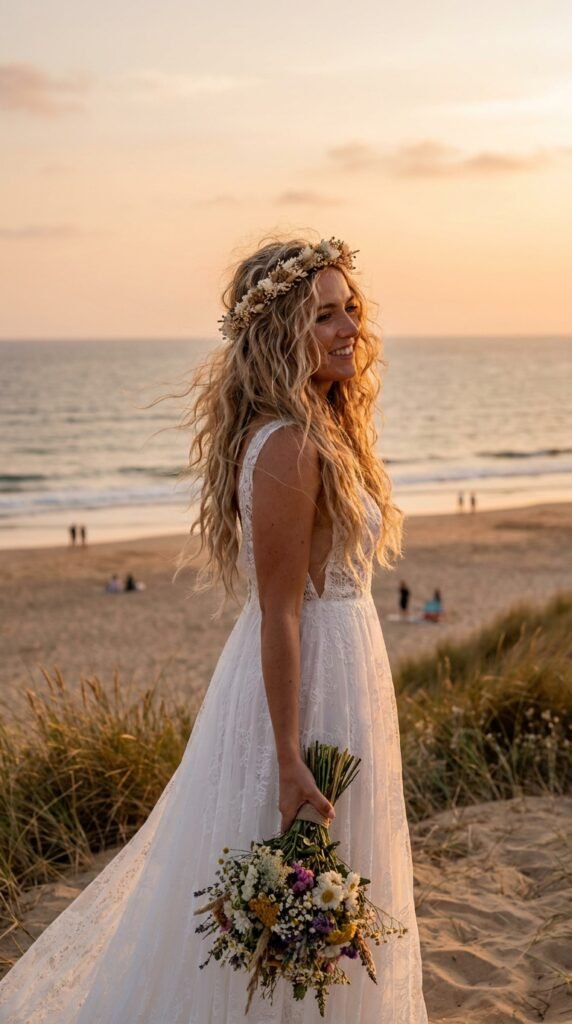
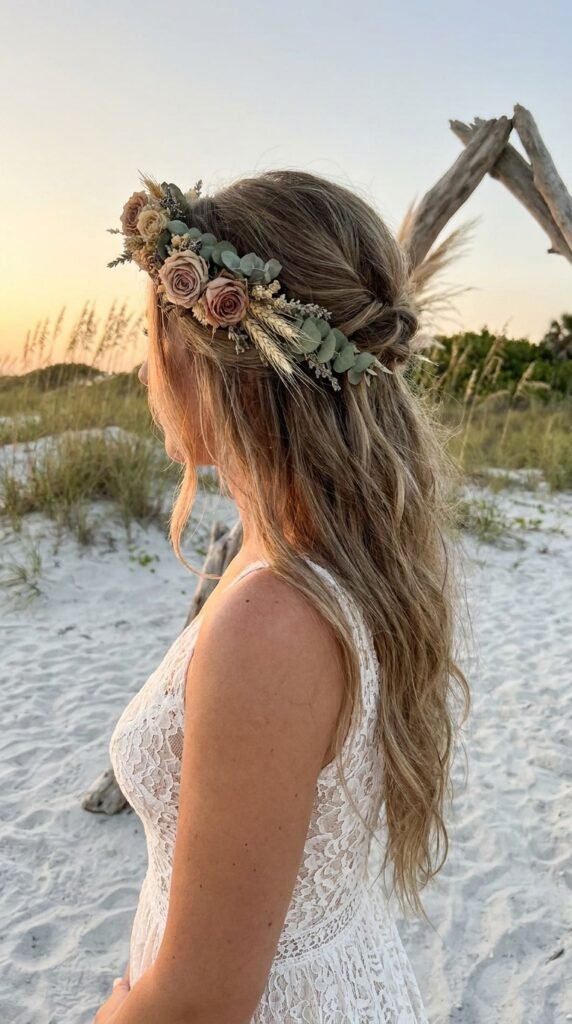
A half-up style — the top and side sections gathered and secured at the crown of the head while the lower half falls loose — with a floral crown or a small wreath of fresh or dried blooms placed across the gathered section creates one of the most distinctly romantic and photographically striking beach wedding hairstyles available. The half-up construction manages the wind problem practically: the sections most likely to blow across the face are secured, while the lower half is free to move naturally and look intentional rather than accidental.
The floral crown style works in two formats for a beach wedding: fresh flowers for a morning or early afternoon ceremony in mild temperatures, and dried or artificial botanicals — dried lunaria, preserved eucalyptus, dried rosebuds, pampas grass sprigs — for a longer day or a warmer location where fresh flowers would wilt before the reception. Anthropologie and BHLDN both carry beautiful pre-made dried floral crowns at $30 to $80. Etsy sellers including The Floral Crown Studio and Wild Blossom Designs offer custom fresh or dried floral crowns made to order. A skilled hairstylist can also build a crown from loose floral picks wired directly into the hair for the most secure and naturalistic result. Cost at a salon including crown integration: $150–$250.
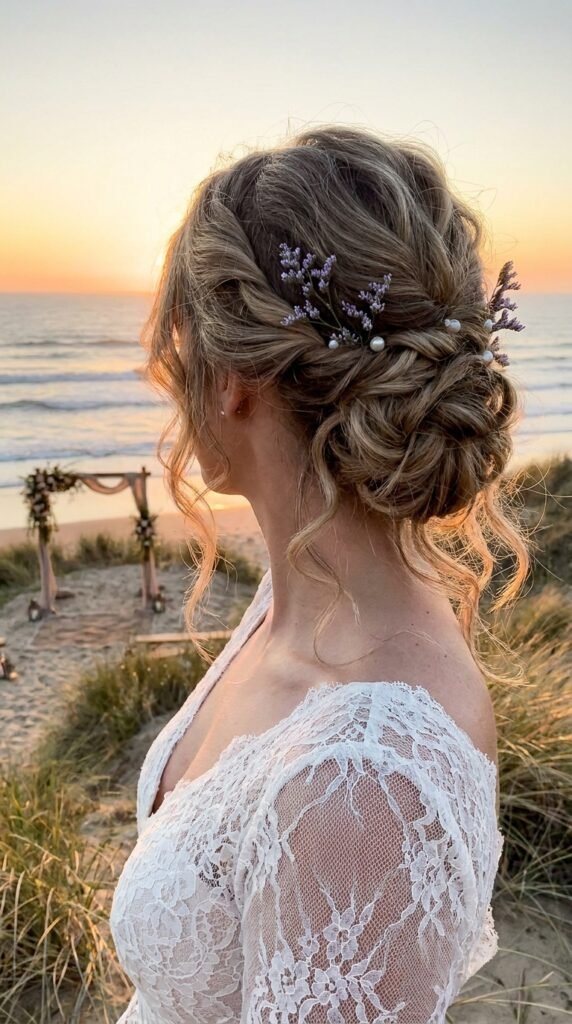
5. The Textured Updo With Tendrils
A gathered textured updo — all hair collected into a loosely structured arrangement at the mid or upper back — with deliberately placed tendrils left free at the temples, the nape and behind the ears creates one of the most versatile and reliably beautiful beach wedding hairstyles across all hair types and wedding aesthetics. The tendrils are not an accident. They are the most important element of the style — they soften the structured updo in a way that reads as romantic and wind-appropriate simultaneously, and they give the hairstyle movement even when the rest of the arrangement is secured.
For a beach wedding specifically, the tendrils should be set with a small curling iron before the updo is constructed and then touched with a very small amount of Oribe Curl Gloss or Briogeo Curl Charisma to define them without stiffness. A tendril that is stiff and separate looks mannered. One that is softly defined looks natural. The updo itself benefits from a light-hold texture product worked through the hair before construction — this gives the stylist something to grip and prevents the coastal air from smoothing away the texture that makes the style look intentionally lived-in rather than freshly finished. Cost at a salon: $140–$220.
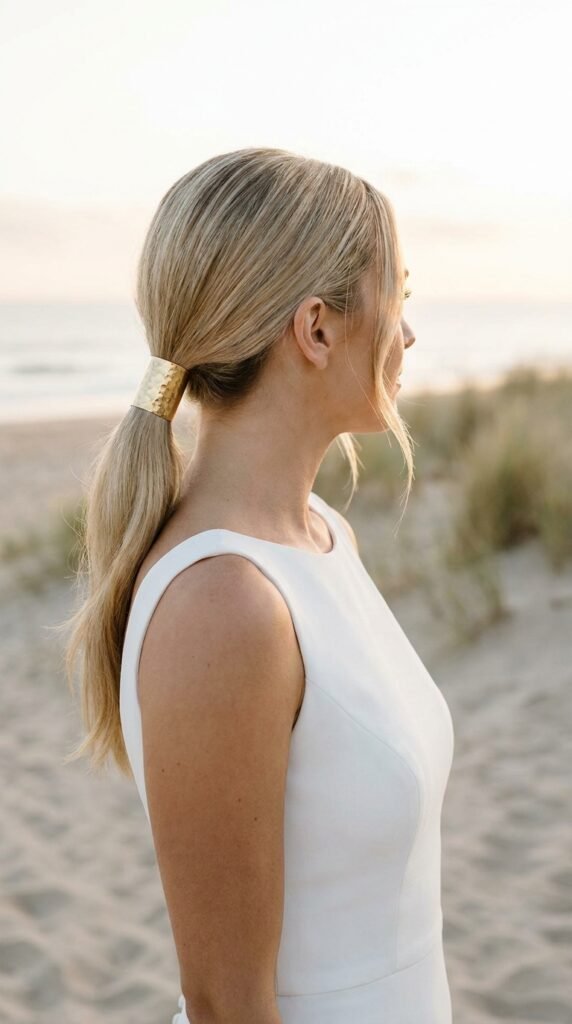
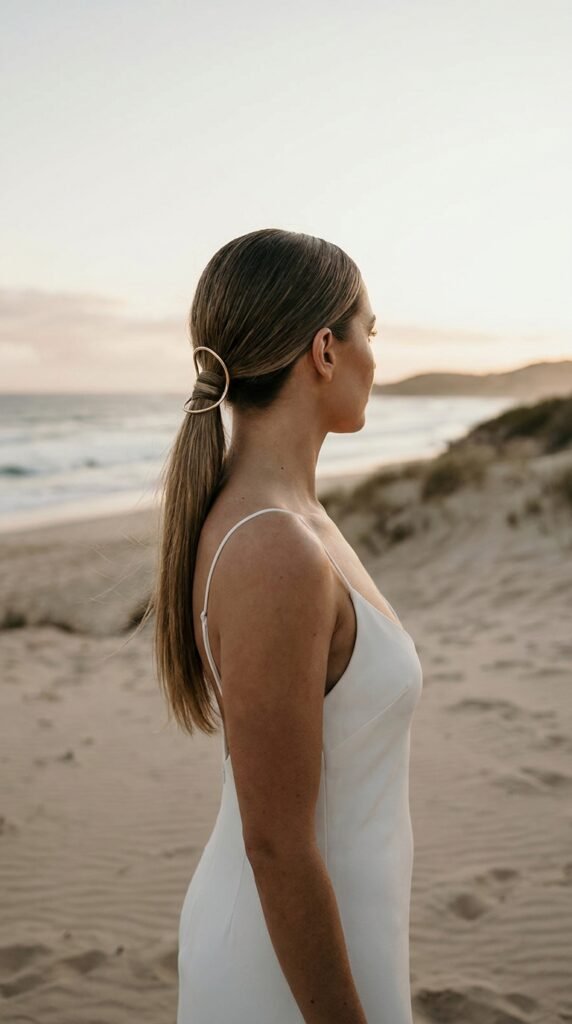
6. The Sleek Low Ponytail
The sleek low ponytail is the most graphic and the most contemporary of all beach wedding hairstyles — and the one most associated with a fashion-forward, editorial bridal aesthetic rather than a traditionally romantic one. All hair is gathered at the nape of the neck and secured with a covered elastic, then a small section wrapped around the elastic to conceal it. The result is clean, deliberate and unmistakably intentional. It photographs with an architectural simplicity that is especially effective against the natural, organic backdrop of a coastal ceremony.
The sleek ponytail at a beach wedding requires the most product commitment of any style on this list to maintain its surface smoothness in coastal humidity. Moroccanoil Smoothing Lotion applied to damp hair before blow-drying, followed by a small amount of Oribe Gold Lace Silkening Crème smoothed through the dry hair before pulling it back, seals the surface against humidity for four to six hours. A pearl or gold cuff placed over the elastic transforms a simple ponytail into a deliberately bridal accessory. Pair with minimal jewelry — the simplicity of the style makes any accessory more visible. Cost at a salon: $90–$150.
7. The Romantic Top Knot
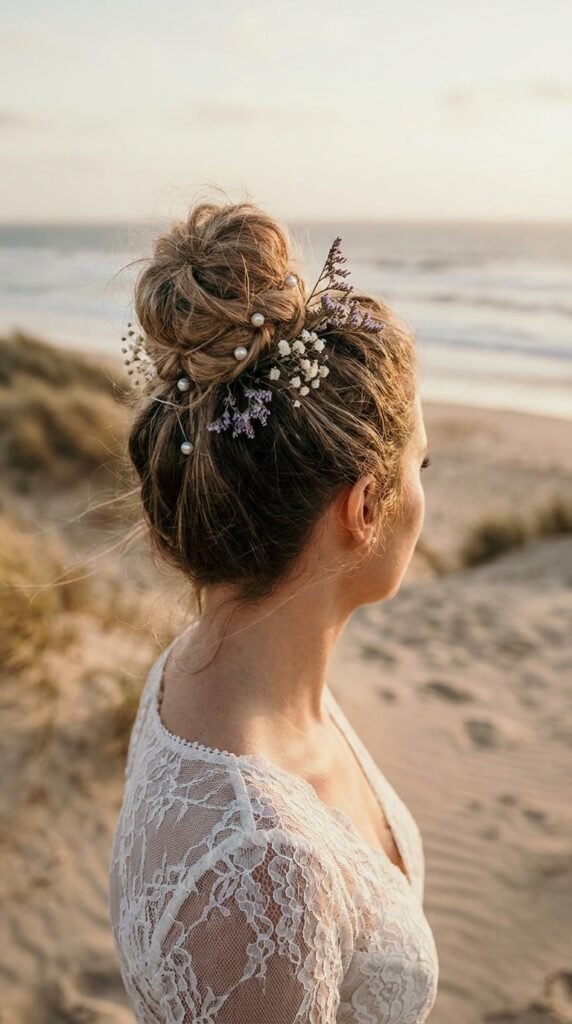
A soft, slightly undone top knot — gathered high on the head, loosely twisted and pinned with the ends left subtly loose rather than fully tucked — exposes the neck and shoulders completely and creates an elegant, uncluttered frame for the face in beach wedding photographs. The high position also keeps hair entirely clear of the face regardless of wind direction — a genuine practical advantage in a coastal setting. The romantic version of the top knot is distinguished from the casual everyday version by texture, finishing and the addition of floral or pearl accessories. A few loose strands framing the face and a small cluster of dried or fresh flowers at the base of the knot complete the bridal quality.
For maximum hold in coastal humidity, build the top knot on hair that has been rough-dried with a salt spray rather than freshly washed. Clean, freshly washed hair is often too smooth and slippery to grip well, causing pins to slide and the knot to loosen faster. Day-old or dry-shampooed hair gives the pins something to catch and the construction more natural texture and hold. Dry shampoo — Batiste Original or Klorane Oat Milk — at the roots before styling creates the grip that keeps a top knot in place through a full beach ceremony and reception. Cost at a salon: $100–$160.
8. The Braided Crown
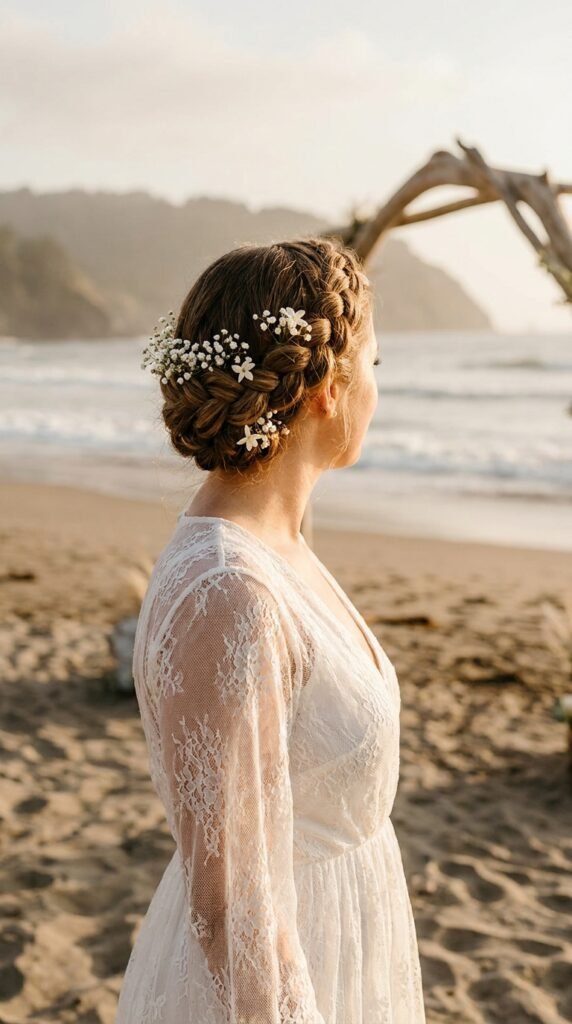
A braided crown — two braids beginning at the temples, sweeping over the top of the head and pinned to form a continuous wreath-like crown across the hairline — is the most formal and the most structurally robust of all the beach wedding hairstyles in this guide. It will not move in the wind because there is nothing loose to catch. It requires no touch-ups during the reception because the braid construction is self-reinforcing. And it produces a distinctly romantic, almost pre-Raphaelite bridal quality that suits outdoor, garden and coastal ceremonies equally.
The braided crown works on most hair types with at least shoulder-length hair. For finer hair, extensions added by your stylist at the braid points create the volume needed for the crown to look abundant rather than thin. Fresh flowers woven into the braid at intervals — small white blooms, tiny seasonal wildflowers or micro-roses — add color and a botanical quality that reads beautifully in coastal outdoor photography. Ask your stylist to use clear elastic bands at the braid joins rather than pins wherever possible — elastics hold more securely in outdoor conditions than pins. Cost at a salon: $150–$230.
9. The Undone Low Bun With Accessories
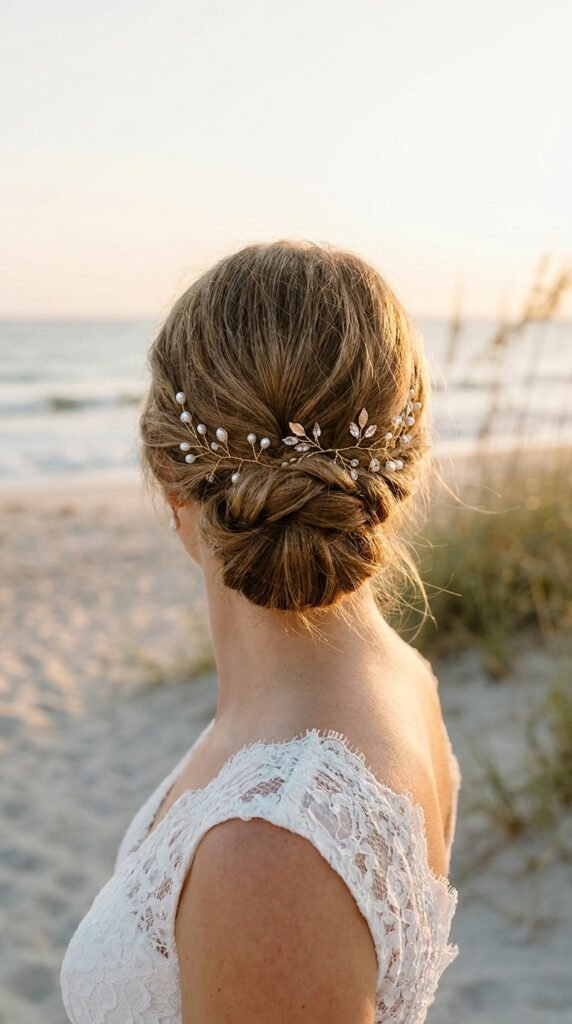
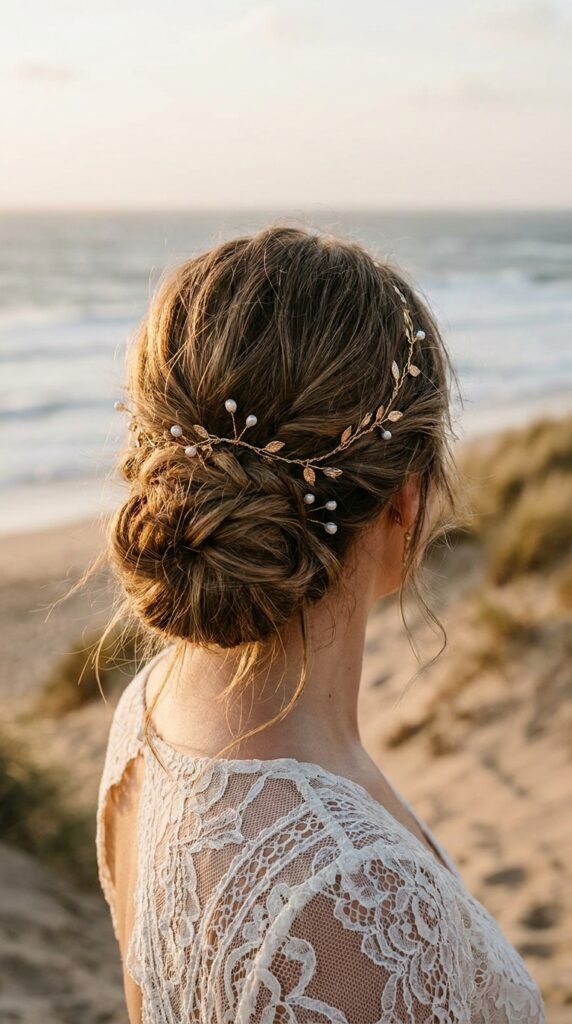
An undone low bun — all hair gathered at the nape or just above and twisted loosely into a bun that is intentionally imprecise, with sections of varying tension and a few escaping pieces at the edges — decorated with pearl pins, gold hair combs or a simple hair vine, is the most versatile of all beach wedding hairstyles. It suits every hair texture, every wedding aesthetic from relaxed to formal and every face shape. It is also the most forgiving style in outdoor conditions — its deliberately undone quality means the wind contributes to rather than contradicts the intended aesthetic.
The accessories are where this style becomes distinctly bridal. A single gold leaf hair vine woven through the bun, three to five pearl pins placed asymmetrically rather than in a pattern, or a small vintage-style hair comb placed at the left side of the bun all create a bridal quality without competing with the relaxed structure of the style. Jennifer Behr and Lelet NY both produce beautiful bridal hair accessories at the high end. For more accessible options, ASOS Bridal and Amazon carry pearl pins and gold hair vines at $8 to $25 that photograph as well as pieces costing five times as much. Cost at a salon: $110–$180.
10. The Long Veil With Minimal Hair
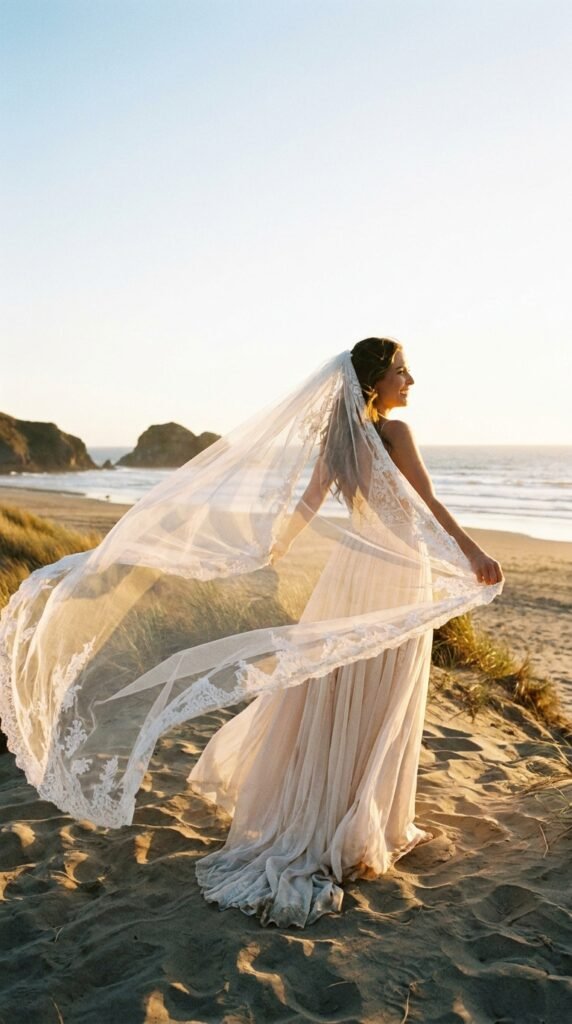
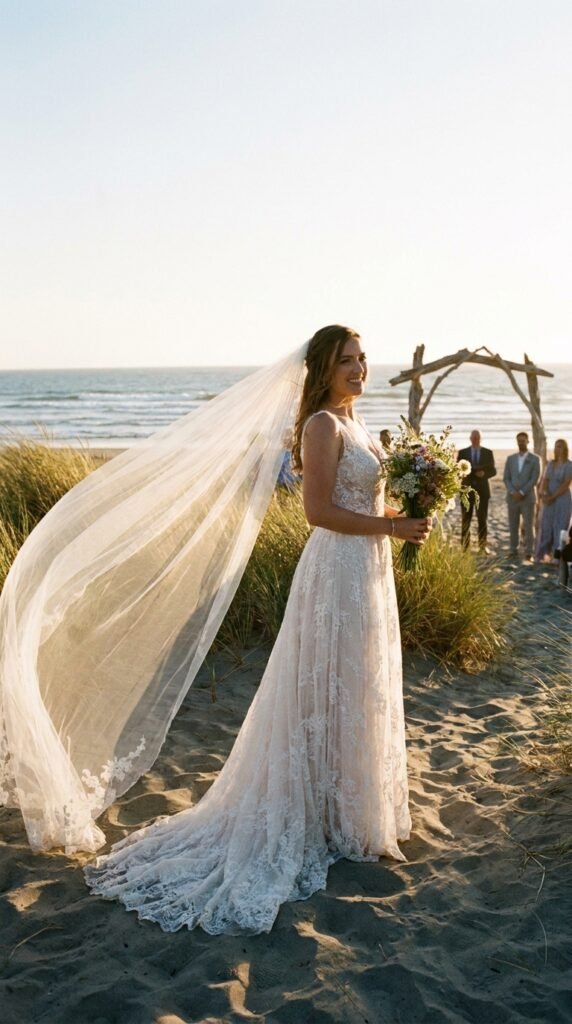
Not a hairstyle in the conventional sense — but one of the most powerful hair decisions available to a beach bride. A long cathedral or chapel-length veil over hair that is simply down, gently waved or gathered loosely at the back does more visual work in a beach ceremony photograph than any hairstyle could do alone. The veil catches the coastal wind and produces movement, volume and a visual drama that is genuinely impossible to replicate through hair styling. In a beach ceremony photograph at golden hour, a veil caught in a sea breeze behind a bride is one of the most iconic images in all of wedding photography.
The practical consideration: secure the veil to the hair with at least four strong grip combs rather than the two that most standard veils include. A beach wind is significantly stronger than a studio fan. The veil should be attached low enough to sit stably but high enough to catch the breeze freely. Cathedral veils — ten feet or more — catch more wind and produce more movement than shorter lengths. Bring a backup set of combs in your wedding day emergency kit. Remove the veil after the ceremony if conditions are particularly windy — it is a single-use statement piece for the ceremony and portraits, not a full-day accessory. Cost: $50–$500 for the veil, minimal additional styling cost.
How to Choose the Right Beach Wedding Hairstyle
Two questions determine the right hairstyle for a beach wedding more than any other. How long is the ceremony and reception — and how hot, humid and windy is the location likely to be?
A morning beach ceremony in a mild coastal climate with a reception moving indoors is a very different context from a four-hour outdoor reception in a tropical destination in August. The styles at the more structured end of this guide — the braided crown, the low chignon, the sleek ponytail — hold better across long, warm, windy events. The styles at the more relaxed end — the loose wave, the undone bun — are better suited to mild conditions where the wind is a style asset rather than a challenge.
Book a hair trial at least six weeks before the wedding and ask your stylist specifically to test hold and humidity resistance. Bring the accessories you plan to wear and assess how they interact with the style in real conditions. If possible, trial the style on a warm or humid day rather than in an air-conditioned salon.
The Weddzie Wedding Planner Bundle includes a complete bridal appointment tracker, a getting-ready timeline and every planning tool you need to manage your hair and makeup schedule as part of your full wedding day plan.
[→ Get the Weddzie Wedding Planner Bundle for $17 — Instant Download]
Frequently Asked Questions
What is the best hairstyle for a beach wedding? The most universally successful beach wedding hairstyles are those that work with outdoor coastal conditions rather than against them. Braided styles — side braids, braided crowns, loose plaits — are the most wind-resistant. Low buns and chignons at the nape of the neck are the most structurally stable. Loose waves and half-up styles are the most relaxed and naturally suited to salt air and sea breeze. The worst choice for a beach wedding is a precisely styled blowout with volume at the crown — this requires the most product to maintain and is the most affected by humidity and wind.
How do you keep hair in place at a beach wedding? Use a humidity-resistant primer or serum on damp hair before blow-drying — Moroccanoil Smoothing Lotion and Chi Silk Infusion are both highly effective. Avoid heavy-hold lacquers in favor of flexible-hold products that allow movement without becoming stiff or waxy in salt air. Carry a small touch-up kit — bobby pins, a travel-size flexible spray, a small comb — in your wedding day emergency kit. Choose a hairstyle with structural integrity — braids, low buns and twisted styles hold their form better than loose styles in wind.
Can you wear a veil at a beach wedding? Yes — and a long veil caught in a coastal breeze produces some of the most spectacular wedding photographs possible. The practical requirements: secure the veil with at least four strong grip combs, choose a length that catches the breeze freely (cathedral or chapel length work best outdoors), and plan to remove the veil after the ceremony and portraits if conditions are particularly windy. Bring a backup set of combs in your emergency kit.
How early should you book a hair stylist for a beach wedding? Book your bridal hair stylist at the same time you book your photographer — eight to twelve months before the wedding for peak season dates. The best bridal hair stylists in most areas fill their wedding season calendars quickly. If your wedding is at a destination location, ask your venue for recommendations and book well in advance as destination wedding stylists often have limited availability during peak travel seasons.
Should you get a hair trial before a beach wedding? Absolutely — and specifically request that the trial includes a humidity and hold test. Try the style on a warm or humid day if possible rather than in an air-conditioned salon. Wear the style for several hours after the trial to assess how it holds. Test all accessories — the veil, pins, flowers — in the trial and photograph the result from multiple angles including the back, which appears most frequently in beach ceremony photographs.
What hair accessories work best for a beach wedding? Pearl pins, gold leaf hair vines, small dried or fresh floral clips, thin ribbon or silk ties and simple decorative combs all work beautifully for beach wedding hairstyles. Avoid large decorative pieces with many moving components — shells, heavy crystal pieces, elaborate headbands — that can become unstable in wind. Simple, small, well-secured accessories are always more effective in outdoor coastal conditions than elaborate statement pieces.