There is a reason satin and silk have been the dominant bridal fabric choice for over a century.
They move beautifully. They photograph in a way no synthetic fabric replicates. They drape with a weight and fluidity that makes every silhouette look more considered. Under natural light, they catch the warmth of a golden hour sunset in a way that makes a photograph feel like a painting. Under candlelight at a reception, they glow rather than reflect.
Satin and silk wedding dresses are not a trend. They are a standard — the one bridal fabric choice that has never gone out of fashion, never needed a revival and will never look dated in thirty years of anniversary photographs.
The question is not whether to choose satin or silk. It is which silhouette, which cut and which designer or price point is right for your body, your venue and your vision. These five classy satin and silk wedding dress ideas answer that question across a range of styles, from minimal column gowns to dramatic ball gowns, and across a genuine range of prices from $500 to $5,000.
What Is the Difference Between Satin and Silk?
Before the styles, one distinction worth understanding because it affects both quality and price significantly.
Silk is a natural fibre produced from silkworm cocoons. It is lighter, softer and more breathable than satin and has a subtle natural sheen that reads as luxurious without being overtly glossy. Genuine silk wedding dresses are among the most beautiful bridal garments available — and among the most expensive, typically starting at $2,000 and rising to $10,000 or more for designer pieces.
Satin is a weave structure rather than a fabric. Satin can be woven from silk — producing silk satin, which is the most expensive and most beautiful version — or from polyester, acetate or other synthetic fibres, producing a more affordable fabric with a higher gloss and less natural drape. Most wedding dresses described as “satin” at mid-range price points use polyester satin. The quality difference between a good polyester satin and a genuine silk satin is real but manageable — a skilled seamstress and a beautiful cut can make polyester satin look extraordinary.
The practical guidance: if your budget allows genuine silk or silk satin, the fabric quality is worth the investment. If it does not, a well-chosen polyester satin dress from a reputable designer will photograph beautifully and feel genuinely special.
1. The Bias-Cut Silk Column Gown
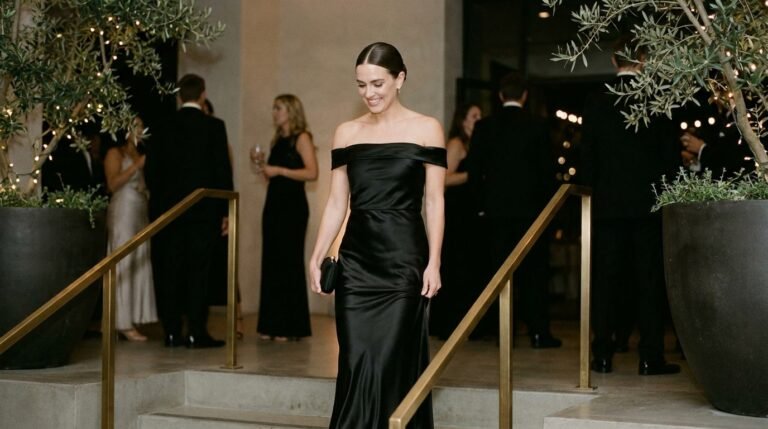
The bias-cut silk column gown — cut on the diagonal grain of the fabric so it drapes and moves with the body rather than against it — is the most sensual, most editorial and most enduringly elegant wedding dress silhouette available. It requires almost no structural engineering: no boning, no crinoline, no corset. The fabric does everything. It skims the body from shoulder or bust to floor with a fluid, living quality that no other construction method produces.
This silhouette was pioneered by Madeleine Vionnet in the 1930s and has been consistently referenced by bridal designers ever since. In 2026 it is the dominant satin and silk wedding dress choice for brides who want their dress to read as fashion rather than costume. Chloe, The Row and Galvan London all produce versions at the high end. Reformation’s Juliet or Lumiere gown achieves a comparable aesthetic from $400–$600. BHLDN’s Willowmere and Elise gowns sit at $500–$900. For a genuine silk bias cut at an accessible price point, Ghost London produces beautifully draped silk-like styles from $300–$500 that are consistently praised for their movement and photography quality.
The bias cut is unforgiving of undergarment choices — seamless nude underwear or a body-smoothing slip is essential. It rewards good posture and confident movement. It is not the right choice for a bride who wants significant structure or support. It is the perfect choice for a bride who wants to feel like she is wearing water.
Cost: $300–$5,000+ depending on designer.
2. The Structured Duchess Satin Ball Gown
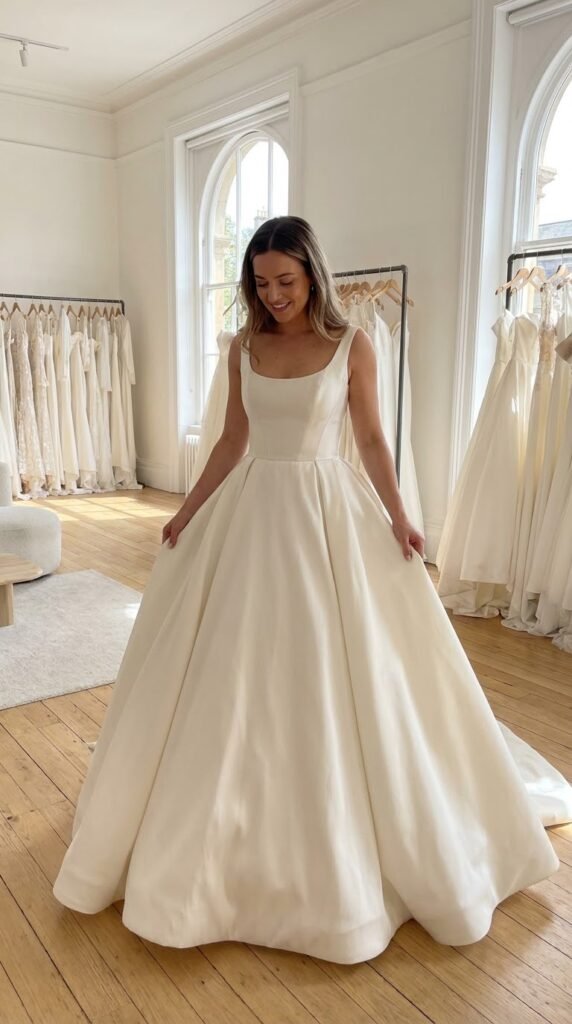
Duchess satin — a heavy, tightly woven satin with a smooth matte surface and exceptional body — is the fabric of choice for structured ball gown silhouettes. Where bias-cut silk relies on drape, duchess satin relies on architecture. It holds its shape without distortion, creates the deep crisp pleats of a gathered skirt and produces the full, dramatic silhouette that defines the classic bridal ball gown.
A duchess satin ball gown is the most formal and most traditionally bridal of all satin and silk wedding dress styles — and in 2026 it is experiencing a genuine revival among brides who want their wedding dress to be unambiguously, unapologetically bridal rather than fashion-adjacent. Vera Wang’s classic ball gown silhouettes are the most recognized reference in this category. Monique Lhuillier and Reem Acra both produce exceptional duchess satin ball gowns at $3,000–$8,000. For an accessible version, Essense of Australia and Rebecca Ingram both carry duchess satin ball gowns from $1,200–$2,500 available through authorized bridal boutiques. The dress itself is a statement. Accessories should be minimal — a simple veil, pearl or diamond stud earrings, a clean updo. Nothing competes with the volume and architectural presence of a full duchess satin skirt.
This silhouette suits grand venues — large churches, hotel ballrooms, estate venues — and looks proportionally challenging in intimate spaces. If your venue has high ceilings and a wide aisle, this dress was made for it.
Cost: $1,200–$8,000+.
3. The Satin Slip Dress With Low Back
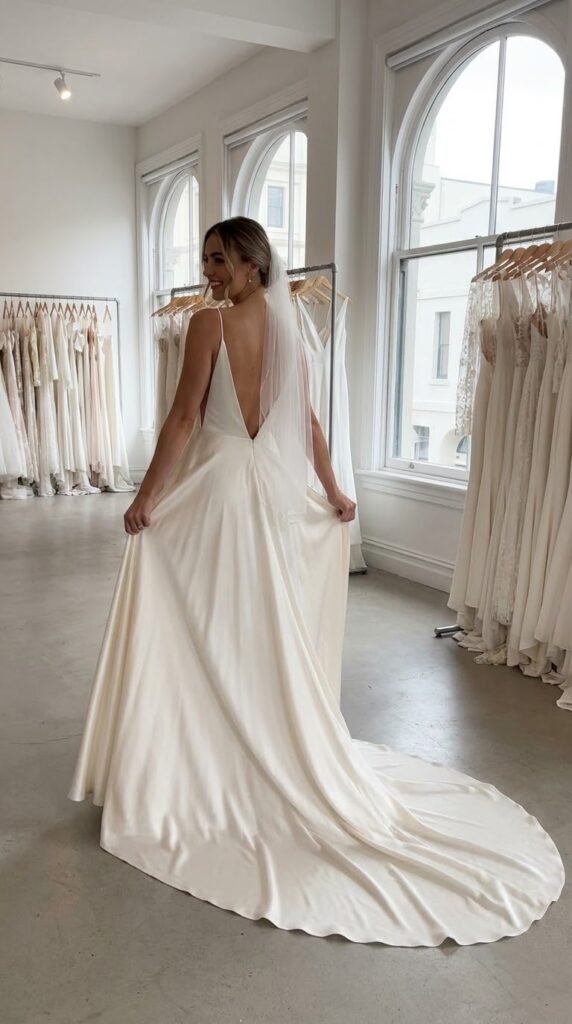
The satin slip dress with a low open back — either a deep V-back, a cowl back or a simple open rectangle revealing the spine — is the most consistently saved satin wedding dress style on Pinterest in 2026 and the one that produces the most dramatic photographic impact for the least visual complexity. The front of the dress is simple. The back is the entire design.
The low back detail works because it surprises. The ceremony photographs show the bride from the front — the neckline, the silhouette, the face. The reception photographs, the first dance, the processional from behind — all of these reveal the back, producing a reveal effect that means the dress looks different and equally beautiful from both directions.
This style is produced excellently by Lulus Formal from $150–$250 for a polyester satin version, Jenny Yoo from $1,000–$2,000 for a mid-range version and Savannah Miller (the preferred brand for brides who want British designer quality at a more accessible price than the major houses) from $2,000–$3,500. Azazie produces a made-to-measure satin slip with various back options from $200–$400. For the most beautiful version of this style at any price point, look specifically for dresses where the back opening is finished cleanly — raw edges or visible boning at the back reduces the elegant impact of the design significantly.
Cost: $150–$3,500.
4. The Satin Cape Wedding Dress
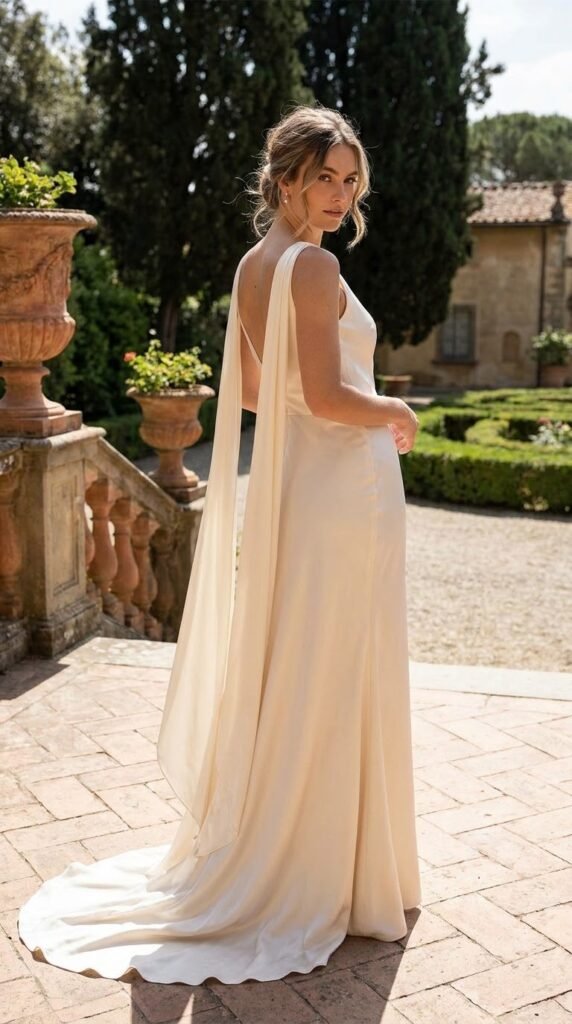
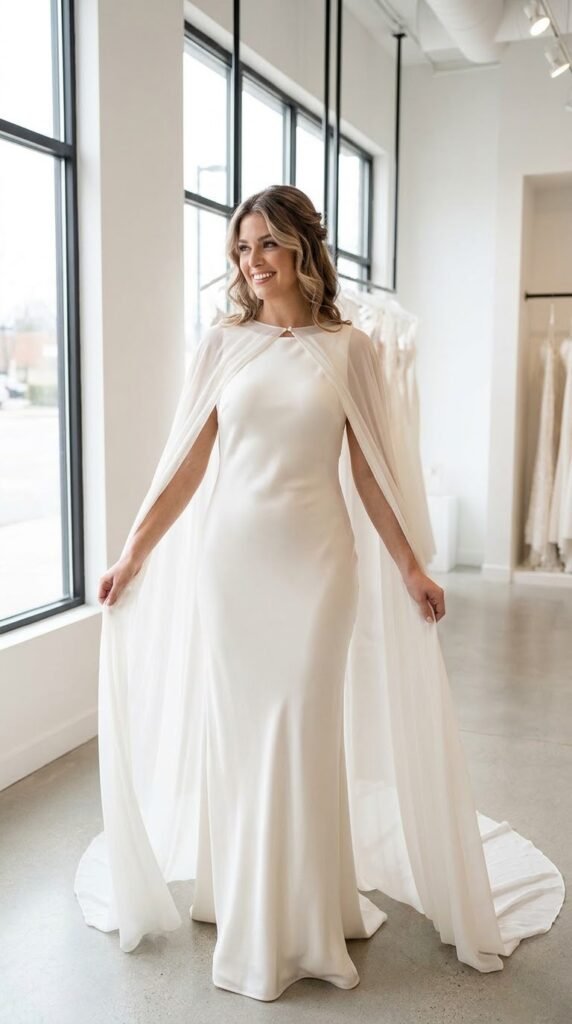
A simple fitted satin column or A-line dress paired with a detachable floor-length satin cape — attached at the shoulders and falling to the floor behind the bride — creates one of the most dramatic and contemporary satin wedding dress silhouettes of 2026. The cape replaces the traditional veil or train as the statement element of the dress and produces a completely different visual experience: dramatic from behind, clean and minimal from the front.
The cape works particularly well for brides who want maximum ceremony impact — the sweep of a floor-length cape in the processional photographs is one of the most striking images any wedding photographer can capture — and then the practicality of a simple dress for the reception once the cape is removed. Two looks from one garment. The detachable element is engineered either with press studs at the shoulder seams or with a simple ribbon tie at the front of the neckline.
Designers producing excellent versions include Halfpenny London, whose detachable cape bridal pieces have been widely featured in Vogue Brides, from $2,500–$4,000. For a more accessible version, bridal Etsy sellers including Adela Couture and Olivia Bottega produce custom satin cape bridal sets from $400–$900. ASOS Edition has carried satin cape wedding dresses at $200–$350 during various collections — check their current formal bridal range. The cape must be cut in the same fabric and color as the dress for the combination to look cohesive. A slight color or texture mismatch between cape and dress is the most common execution error.
Cost: $200–$4,000.
5. The Long-Sleeve Silk Crepe Gown
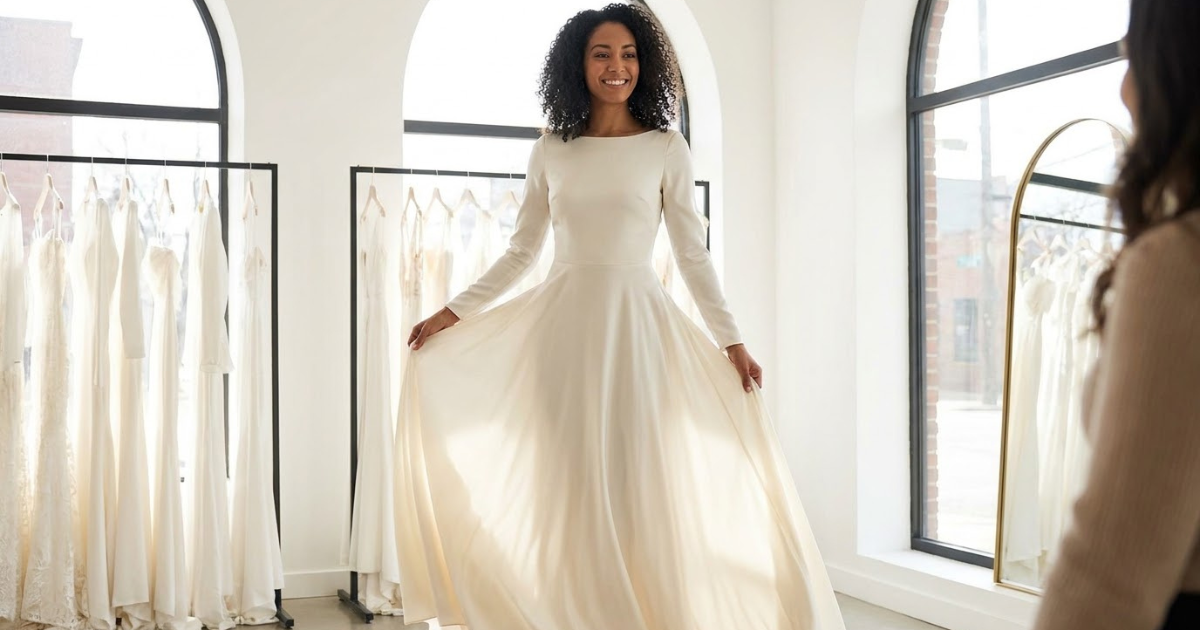
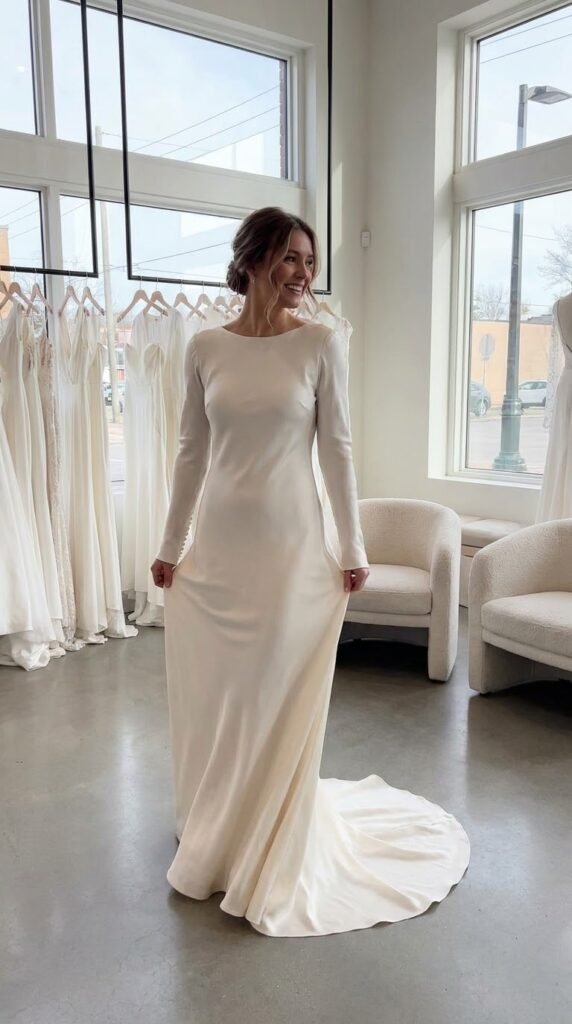
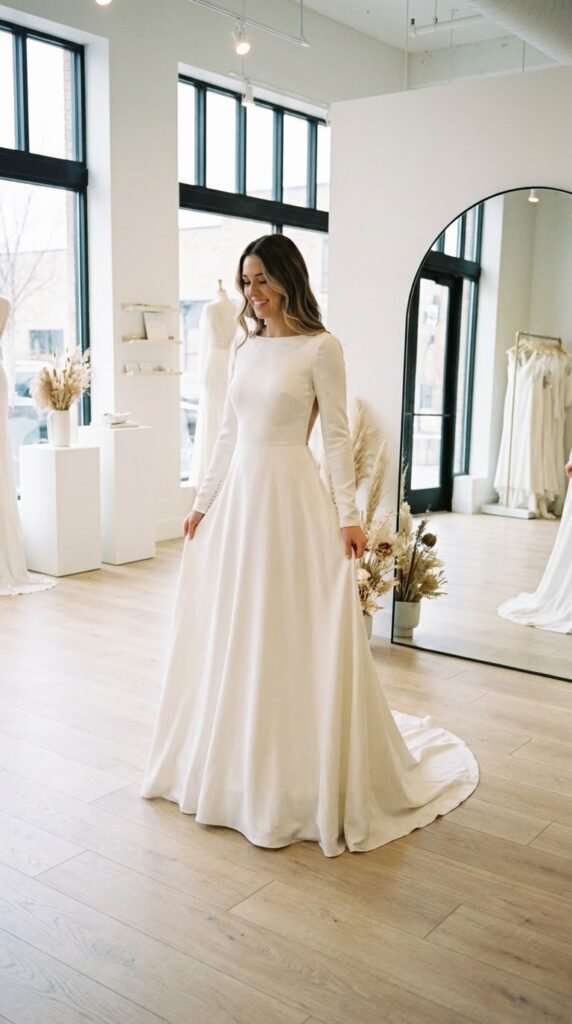
Silk crepe — a matte, subtly textured silk weave with a softly grainy surface and exceptional draping quality — is the refined alternative to silk satin for brides who want the luxury of genuine silk without the high gloss. A long-sleeve silk crepe gown — fitted through the body with simple long sleeves finishing at the wrist, floor-length, minimal embellishment — is one of the most sophisticated and quietly powerful bridal silhouettes available in 2026.
It reads as deliberately understated. As considered. As the choice of a bride who knows exactly what she wants and does not need embellishment to communicate it. It suits minimalist aesthetics, architectural venues, winter weddings and brides who want their dress to age exceptionally well in photographs taken in five, ten and twenty years.
Designers synonymous with this silhouette include Stella McCartney, whose bridal line has consistently championed minimal silk crepe from $3,500–$6,000. Rime Arodaky and Laure de Sagazan in France produce excellent versions at $2,000–$4,000. For a more accessible version, Alyssa Kristin and Lovely Bride both carry silk crepe long-sleeve options from $1,500–$2,500 in their boutiques. For a genuinely accessible entry point, Anomalie offers custom silk crepe wedding gowns from $1,200. The long sleeve in this context is not a conservative or modest choice — it is a deliberate architectural decision that extends the clean line of the dress to its logical conclusion.
Cost: $1,200–$6,000.
How to Choose Between Satin and Silk
The decision between satin and silk is ultimately a question of budget, drape preference and venue aesthetic rather than one fabric being inherently better than the other.
If your budget allows genuine silk — either silk charmeuse, silk satin or silk crepe — the investment produces a quality of movement, photograph and tactile experience that polyester cannot fully replicate. Book appointments with boutiques that carry genuine silk options and try them on to feel the difference before making a final decision.
If your budget is more constrained, a good quality polyester satin from a reputable designer cuts and photographs beautifully and the difference is imperceptible in most wedding photographs. The quality markers to look for in polyester satin: weight, the degree of gloss (less gloss reads as more expensive), the smoothness of the weave and how the fabric responds to heat — cheaper polyester satin creases easily and permanently.
Whichever fabric you choose, the cut is more important than the material. A beautifully cut polyester satin dress outperforms a poorly cut silk one in every context that matters — photography, movement, and how you feel wearing it for eight to twelve hours.
The Weddzie Wedding Planner Bundle includes a complete dress shopping appointment tracker, measurement log, alteration timeline and dress shopping checklist — everything you need to manage your bridal shopping process from first appointment to final fitting.
[→ Get the Weddzie Wedding Planner Bundle for $17 — Instant Download]
Frequently Asked Questions
What is the difference between silk and satin for a wedding dress? Silk is a natural fibre that is soft, breathable, lightweight and has a subtle natural sheen. Satin is a weave structure that can be produced from silk — creating silk satin, the most luxurious option — or from polyester, which is more affordable and has a higher gloss. Most mid-range wedding dresses described as satin use polyester satin. Both photograph beautifully when well-cut. Genuine silk provides a superior quality of drape, touch and breathability.
Are satin wedding dresses still in style in 2026? Yes — satin and silk wedding dresses are consistently among the most purchased bridal styles in 2026 and have never gone out of fashion. The specific silhouettes that lead in 2026 are the bias-cut slip dress, the low-back satin gown and the long-sleeve silk crepe — all of which have a deliberately contemporary feel while using the most classically bridal fabric choice available.
How do you clean and preserve a satin wedding dress? Satin and silk wedding dresses should always be dry cleaned by a specialist bridal cleaner rather than a standard dry cleaner. Bridal preservation services — offered by specialists including Wedding Gown Preservation Company and Memories Bridal in the US — clean the dress and box it in acid-free materials for long-term storage. Clean and preserve the dress within six months of the wedding for best results. Never store satin or silk in a plastic bag — the fabric needs to breathe.
Can you wear a satin wedding dress to an outdoor wedding? Yes — with some practical considerations. Satin and silk are more heat-sensitive than synthetic fabrics and show perspiration more visibly. For a summer outdoor wedding, a lighter satin or silk charmeuse will be more comfortable than heavy duchess satin. Avoid sitting on rough surfaces that could catch or pull the fabric. A bustle or detachable train for the reception portion reduces the risk of soiling the hem during an outdoor event.
What undergarments work best under a satin wedding dress? Seamless nude underwear is essential under any satin or silk dress — standard underwear seams and lines are visible through the fabric. A smoothing slip or bodysuit underneath eliminates any texture beneath the fabric. For bias-cut dresses specifically, a very lightweight slip layer prevents the satin from clinging. Avoid heavily structured shapewear under bias-cut or draped styles as it interrupts the natural line of the fabric.
Which satin wedding dress style is most flattering? The most universally flattering satin wedding dress silhouette is the A-line — fitted through the bodice to the hip and gently flared to the floor — because it defines the waist without the formfitting pressure of a column or mermaid cut and creates a balanced silhouette on most body shapes. The bias-cut column is most flattering on tall, lean frames. The duchess satin ball gown is most flattering on petite brides who want to create height and drama. The long-sleeve silk crepe is most flattering when the sleeve length is proportional to the height of the wearer.