Nobody tells you how it actually feels.
You get the congratulations, the ring photographs and the flood of vendor emails. You get Pinterest boards and unsolicited opinions and a mother-in-law with strong feelings about the seating chart. What you do not get is the honest briefing — the things that only make sense in retrospect, after the wedding is over and you can finally see the whole picture clearly.
This is that briefing. Ten things that experienced brides — women who have been through the planning process, made the decisions, lived the day and looked back at all of it with the clarity that only comes afterward — consistently say they wish someone had told them at the beginning.
Not the obvious advice. The real advice.
1. Your Budget Will Be Wrong on Day One — And That Is Fine
The number you write down when you first get engaged is not your actual budget. It is your best guess before you know what anything costs. Most couples discover within the first month of planning that the wedding they imagined costs approximately twice what they initially estimated.
This is not a reason to panic. It is a reason to get specific, fast.
The couples who stay on budget are not the ones who started with more money. They are the ones who got a real number locked in early — based on actual vendor quotes, not assumptions — and made deliberate decisions about where to spend and where to cut before they fell in love with anything. You can have a genuinely beautiful wedding at almost any budget. You cannot have one without knowing what your budget actually is.
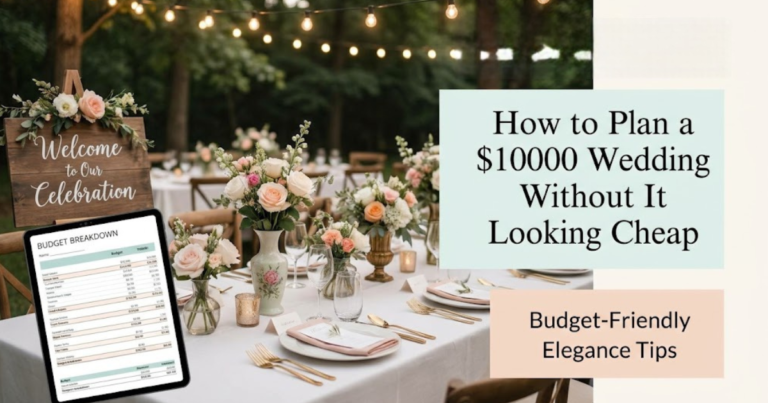
Build your budget tracker before you visit a single venue or book a single call. The Weddzie budget tracker auto-calculates across every category so you always know exactly where every dollar is going.
[→ Get the Weddzie Wedding Planner Bundle for $17 — Instant Download]
2. The Venue Locks Everything Else
Most brides start by browsing dresses, saving centrepiece ideas and dreaming about flowers. The first thing you actually need to do — before any of this — is book your venue.
The venue determines your date. Your date determines your photographer’s availability. Your photographer’s availability determines which Saturdays in your preferred season are actually possible. Your venue also determines your guest count, your catering options, your décor constraints and your entire visual aesthetic.
Every other vendor — florist, caterer, DJ, hair and makeup — is booked after the venue and around the venue date. Without a confirmed venue date you are booking hypothetically and nothing is real.
Book the venue first. Book the photographer immediately after. Everything else follows from those two decisions.
3. People Will Have Opinions. You Do Not Have to Act on All of Them
The moment you announce an engagement, everyone in your life will develop opinions about your wedding. Your mother will have feelings about the venue. Your future mother-in-law will have feelings about the guest list. Your best friend will have feelings about the bridesmaid dress color. Your father will have feelings about the budget.
Some of these opinions will be useful. Most will reflect what they want rather than what you need.
You are allowed to listen with genuine warmth and then make the decision that is right for you and your partner. You do not owe anyone a wedding that is designed around their preferences. The clearer you are about what you both actually want before the opinions start arriving, the easier it is to receive input graciously without being derailed by it.
Decide on your non-negotiables — the five or six things that genuinely matter most to you both — before anyone else gets involved in the planning. Those non-negotiables are not up for discussion. Everything else can be collaborative.
4. Book Your Vendors Earlier Than Feels Necessary
The moment in wedding planning when most brides realize they have left something too late is the moment they call a vendor they love — having assumed they would be available when the time came — and discover they booked up eight months ago.
Photographers, florists, hair and makeup artists and the best caterers in any city fill their peak season calendars far faster than any newly engaged couple expects. The Saturday in September that seemed available when you got engaged in January was gone by March.
The rule that never fails: when you find a vendor you genuinely want, book them immediately. Not after you have thought about it. Not after you have compared three more options. If they are right, they are right, and the risk of waiting is that someone else makes the decision for you.
For photographers specifically: twelve months is not too early for a peak season Saturday. In many cities it is already late.
5. The Dress Takes Longer Than You Think
There is a version of this fact that brides are told and a version they actually believe. They are told that wedding dress production takes four to six months after ordering and that alterations take another two to three months. They nod. And then they start shopping six months before their wedding.
The math does not work. Order a dress in month six before a wedding in month zero and it arrives in month one — leaving four to six weeks for alterations. That is not enough time for complex alterations and it removes all buffer for anything going wrong.
Start shopping twelve months before the wedding. Order by nine to ten months before the wedding. Have your first fitting at five to six months. Your final fitting at four to six weeks before the day. This timeline feels luxuriously early until the dress arrives and you realize how much the alterations needed.
6. Your Guests Will Remember the Food
Ask anyone who has been to a lot of weddings what they remember. They remember whether the food was good. They remember whether they waited a long time to be served. They remember whether there was enough of it. They remember whether they got a drink within the first five minutes of arrival.
They do not — or not equally — remember the centrepieces. They do not remember the exact flowers. They will not discuss the font on the menu cards.
Feed your guests well. Serve them quickly. Make sure there is enough of everything. This single decision does more for the genuine enjoyment of everyone at your wedding than almost any other.
If budget is tight, cut the flowers before you cut the food. Cut the favors before you cut the food. Cut the elaborate stationery suite before you cut the food. Your guests experience the food directly. They experience most of the other things peripherally.
7. The Day Goes Faster Than You Can Possibly Imagine
Every bride who has been through a wedding will tell you this. It goes so fast.
Not in the way that a fun afternoon goes fast. In the way that you blink and the ceremony is over. You blink again and dinner is finished. You blink a third time and someone is announcing the last dance and you have not spoken to half the people you wanted to speak to and you cannot remember eating anything.
There is nothing you can do to slow the day down. But there are things you can do to be more present within it. Schedule ten minutes alone with your partner immediately after the ceremony — before the photographs, before the cocktail hour, before the guests reach you. Eat something at the reception. Put your phone away. Look at your guests’ faces during the speeches instead of watching the room through a camera lens.
The day belongs to you. Be in it.
8. A Day-Of Coordinator Is the Best Money You Will Spend
Most brides resist hiring a day-of coordinator because they feel confident they can manage the day themselves. Every bride who managed the day herself wishes she had hired one.
On your wedding day you are getting married. You are not available to call the florist when the delivery is late. You are not available to redirect guests who cannot find the ceremony space. You are not available to troubleshoot the seating chart when two tables did not receive their cards. You are not available to brief the DJ on the timeline change or to find the best man when the speeches are about to begin.
A day-of coordinator handles all of this. Not a venue coordinator who works for the venue — your coordinator, working for you. They cost $400 to $1,000 depending on location and experience and they produce a return that is genuinely impossible to quantify in terms of the stress they remove from your wedding morning and your wedding day.
If there is one addition to a wedding budget that consistently produces the most outsized return, it is this.
9. Not Everything on Pinterest Is Achievable at Your Budget
Pinterest shows you the best version of every wedding detail — the version executed by a professional team with a generous budget, perfect light and a professional photographer to make it look even better than it actually was.
The string light canopy that looked magical on your inspiration board cost $800 to rent and required a crew of four to install over four hours. The floral arch that became your ceremony vision was a $2,200 florist commission. The calligraphy place cards were $8 each.
None of these things are wrong to want. But the gap between the Pinterest image and the actual cost of producing it is wider than most brides account for in their planning.
For every inspiration image you save, ask: what would it actually cost to produce this at my wedding? Then decide whether the cost is worth it or whether the same visual impact can be achieved more efficiently. Often it can. Occasionally it cannot. The earlier you have this conversation — with yourself, with your florist, with your planner — the fewer expensive surprises there are in the final months of planning.
10. The Marriage Is the Point — Not the Wedding
This sounds obvious. In the middle of planning it does not feel obvious at all.
There will be weeks — particularly in the final two months before the wedding — when the logistics of the event completely eclipse the meaning behind it. When you are renegotiating a vendor contract, managing a family disagreement about the seating chart and chasing an RSVP from your partner’s college roommate, the reason any of this is happening can feel very distant.
When that happens, step back. Have dinner with the person you are marrying. Talk about something that has nothing to do with the wedding. Remember that the day is a beginning, not an end. The marriage is what you are building. The wedding is the first day of it.
Every planning decision should ultimately serve the marriage — the kind of day that reflects who you both are and begins your life together in a way that feels true to that. When a decision feels weighted by obligation, external pressure or the fear of disappointing someone else, it is worth asking whether it actually serves the marriage or only the performance of it.
The wedding is one day. The marriage is the rest of your life. Plan accordingly.
The Weddzie Wedding Planner Bundle gives you every planning tool you need to manage the logistics — the budget tracker, the vendor system, the timeline, the checklists — so you can spend less time managing the wedding and more time being present for it.
[→ Get the Weddzie Wedding Planner Bundle for $17 — Instant Download]

Frequently Asked Questions
What do most brides regret about their wedding planning? The most consistent regrets among experienced brides fall into three categories: not booking key vendors early enough and losing their first choices, spending too much on elements guests do not notice and too little on food and photography, and not being present enough on the day itself. The regrets that never appear are spending time with the people they love, having good food and hiring a day-of coordinator.
What should a bride do first when planning a wedding? Set a firm total budget — not a range, a number — before doing anything else. Then build a preliminary guest list. Then begin venue research. The venue is the decision that determines everything else and nothing else is real until the venue date is confirmed and signed. Photographer search should begin simultaneously with venue search since both are high-demand and early-booking vendors.
How do you stay sane while planning a wedding? Designate one time per week for wedding planning conversations with your partner — not constantly, not reactively, not whenever a vendor emails. A scheduled hour or two per week keeps the wedding from consuming every conversation without neglecting the planning. Keep a master checklist so nothing lives in your head. And remember that most decisions are reversible until a contract is signed.
How do you deal with family opinions during wedding planning? Establish your non-negotiables — the five or six decisions that genuinely matter most to you both — before anyone else is involved. These are not discussed or negotiated. For everything else, genuinely consult the people whose input you value. The clearer you are internally about what is and is not open to input, the less conflict the planning process produces.
Is it normal to feel overwhelmed during wedding planning? Completely normal. Wedding planning involves hundreds of decisions made simultaneously over a twelve-month period while managing vendor relationships, family dynamics and the emotional weight of a major life transition. The couples who navigate it most smoothly almost always have a clear system — a budget tracker they use consistently, a vendor checklist they maintain, a timeline they built early — that keeps the logistics organized and out of their heads.
What is the most important thing to spend money on at a wedding? Photography and food. Photography produces the permanent record of the day. Food is the thing your guests experience most directly and remember most clearly. These two elements should be protected in the budget before any cuts are made elsewhere. The centrepieces, the favors, the elaborate stationery suite — all of these can be scaled back without meaningfully affecting the quality of the day as experienced by the people who were there.