Your guests will forget the exact shade of your centrepieces within a week of your wedding.
They will remember whether the food was good for years.
Wedding catering is the one line item where cutting the budget has the most direct and visible impact on guest experience — and yet it is consistently the category where the most hidden costs hide, the most assumptions go unchecked and the most money is spent on things guests do not actually want.
This guide gives you the complete picture: what wedding catering actually costs in 2026, the service styles that produce the best value at every budget level, the hidden fees that inflate every quote and the specific decisions that allow you to feed your guests generously without spending more than your budget allows.
What Wedding Catering Actually Costs
Before any other decision is made, you need to know what you are working with.
Wedding catering costs are quoted per head — per person — and the headline number is almost never the real number. The real number is the per-head cost plus service charge plus gratuity plus tax plus any equipment rental or staffing fees not included in the base quote.
The average per-head catering costs in the United States in 2026 by service style:
Buffet: $45–$85 per person Food truck: $25–$50 per person Family style: $55–$95 per person Plated dinner (two course): $75–$110 per person Plated dinner (three course): $95–$145 per person Heavy hors d’oeuvres and cocktail reception: $40–$75 per person
Add service charge (typically 18–22%) plus gratuity (typically 15–20%) plus tax to any of these figures. A quoted $85 per head plated dinner becomes $110 to $125 per person all-in at most venues and caterers. On 100 guests that is $11,000 to $12,500 for food alone — before bar, before cake, before coffee service.
Understanding this math before you fall in love with any caterer or venue is the most important financial step in your entire wedding planning process.
The Catering Minimum Trap
If your venue has an in-house caterer or a mandatory preferred caterer, they almost certainly have a food and beverage minimum — a minimum amount you must spend on catering regardless of how many guests attend or what they eat.
A catering minimum of $15,000 plus 22% service charge plus tax becomes a $19,800 invoice before you have chosen a single menu item. If your guest count does not support that spend at the per-head price, you are paying the difference regardless.
Always ask: what is the food and beverage minimum, does the venue rental fee count toward it, what is the service charge percentage, is gratuity included or additional, and what happens if we do not reach the minimum.
Get every answer in writing. What a coordinator tells you verbally in a tour is not enforceable. What is in the contract is.
The Six Wedding Catering Service Styles
Choosing the right service style for your guest count, venue and budget is the most consequential catering decision you will make. Each style produces a genuinely different atmosphere, a genuinely different cost and a genuinely different experience for your guests.
Plated dinner
The most formal service style. Each guest is served an individually plated course at their seat. Requires the most staff, the most equipment and the most kitchen capacity, making it the most expensive option. The experience is elegant and controlled — guests sit down, are served, eat and the event moves at a clear, structured pace. Best for: formal venues, black tie or semi-formal dress codes, couples who want a precise, managed reception experience. Per-head cost: $75–$145 before service charge.
Family style
Large platters of food are placed at each table for guests to serve themselves and pass between each other. Significantly less staff-intensive than plated service, producing a 20 to 35 percent cost reduction on the same menu. Creates a warm, communal atmosphere that suits relaxed, intimate and outdoor wedding aesthetics particularly well. Best for: farm tables, barn receptions, intimate guest counts, couples who want their reception to feel generous and gathered rather than formal. Per-head cost: $55–$95 before service charge.
Buffet
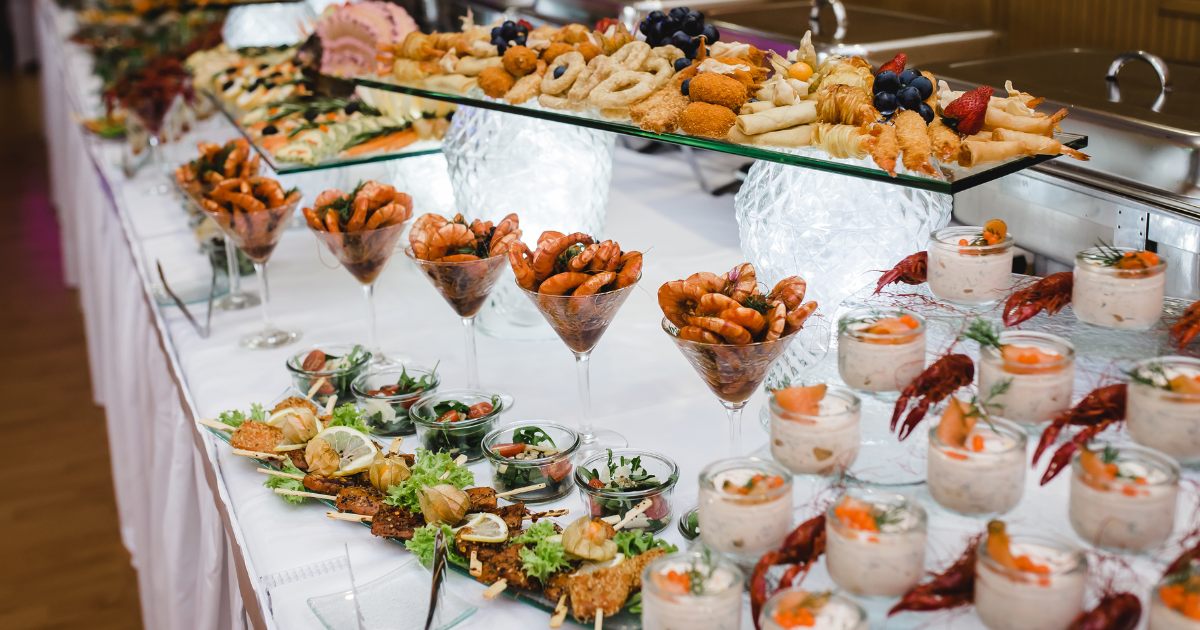
Guests serve themselves from a central buffet station. Requires the least staff of any hot food service style. Can look less formal in the wrong venue but produces excellent value and gives guests the freedom to choose portions and combinations they prefer. A well-designed buffet with attractive presentation — real serving dishes, floral garnishes, height variation in the display — looks intentional and generous rather than institutional. Best for: larger guest counts where plated service becomes cost-prohibitive, casual and outdoor weddings, venues with open floor plans. Per-head cost: $45–$85 before service charge.
Food truck
A catering truck or trailer parked adjacent to the venue serves food directly to guests through a service window or at a collection station. The most informal service style and the most distinctive. Produces a genuinely social and interactive atmosphere during the meal that traditional sit-down service does not. Significantly less expensive than any traditional catering format — most food truck bookings for weddings are priced as a flat fee per truck plus a per-head minimum rather than individual per-head pricing. Best for: outdoor receptions, casual and relaxed wedding aesthetics, couples with a tight catering budget who want generous, quality food. Flat fee: $800–$2,500 per truck for a 100-person wedding.
Grazing table
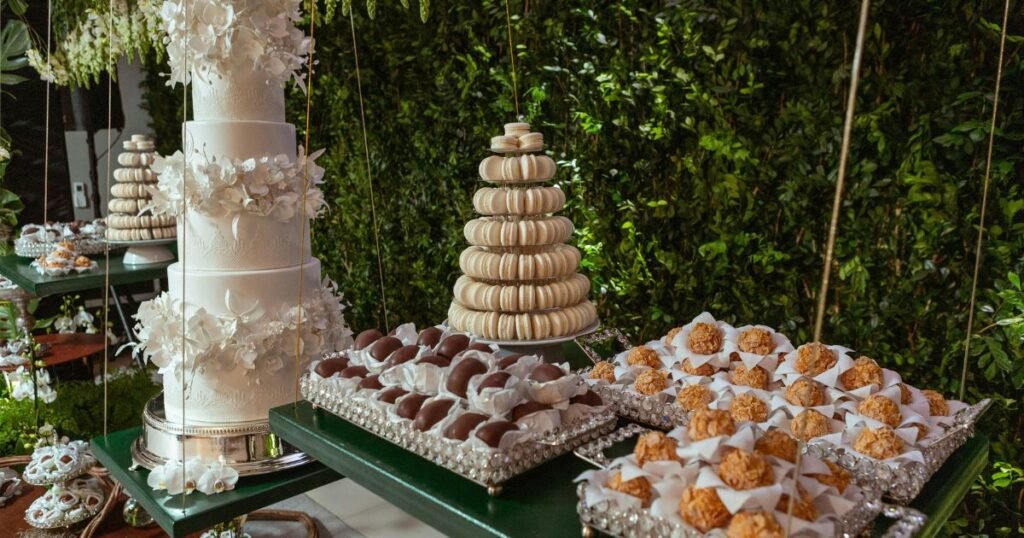
A large display of grazing foods — charcuterie, cheese, bread, fruit, dips, sweets — arranged as an abundant, visually beautiful spread on one or more tables. Works best as a cocktail hour offering or a late-night supplement rather than a standalone dinner replacement. Costs less than a hot catering format and photographs exceptionally well. Requires no service staff beyond initial setup and occasional replenishment. Per-head cost for a cocktail hour grazing table: $20–$40.
Heavy hors d’oeuvres and cocktail reception
Rather than a seated dinner, circulated canapés and small plates serve as the primary food offering. Works best for shorter receptions and evening events. Requires careful planning — the quantity of food must genuinely be sufficient for a complete meal, which means more pieces per person than most couples estimate. Brief your caterer specifically: “We want guests to be fully fed by the end of the cocktail hour, not snacking.” Per-head cost: $40–$75.
The Bar Question
The bar is where wedding catering budgets most commonly overrun — because bar costs are frequently underestimated, inconsistently quoted and genuinely variable based on consumption.
The service options from most to least expensive:
Full open bar (premium spirits plus wine and beer): $45–$90 per person for a four-to-five hour reception. On 100 guests: $4,500–$9,000.
Standard open bar (house spirits plus wine and beer): $30–$60 per person. On 100 guests: $3,000–$6,000.
Signature cocktail plus beer and wine: $25–$50 per person. On 100 guests: $2,500–$5,000.
Cash bar (guests pay for their own drinks): Not recommended. It feels inhospitable regardless of budget constraints. There are better ways to reduce bar costs.
The most cost-effective approach for couples with a tight bar budget: buy your own alcohol from Costco or Total Wine and hire a licensed bartender independently at $25–$40 per hour. This requires venue permission — confirm it is permitted in your contract — but typically costs 40 to 60 percent less than a venue bar package for the same quantity of alcohol.
The Hidden Fees That Inflate Every Catering Quote
These are the additional costs that appear on the final invoice and were never clearly communicated during the sales process:
Service charge: 18–22% added to the food and beverage total. This is not optional and is not the same as gratuity.
Gratuity: 15–20% added on top of the service charge at some venues. Always ask whether gratuity is included in the service charge or added separately.
Cake cutting fee: $2–$10 per person charged by the caterer for cutting and serving a cake they did not make. On 100 guests: $200–$1,000. Ask about this specifically if you are bringing your own cake.
Corkage fee: $10–$25 per bottle charged by the venue when couples bring their own alcohol. Varies widely — ask specifically before planning to bring your own bar.
Linen and equipment rental: not always included in catering quotes. Tables, chairs, linens, serving platters, chafing dishes and beverage equipment may all be additional costs. Ask specifically what is and is not included.
Staffing fees: the number of service staff required for your guest count and service style may be quoted separately from the food cost. Ask how many staff are included and at what ratio.
Overtime fees: if your reception runs past the contracted end time, catering overtime charges apply. Typically $100–$300 per hour per catering staff member.
How to Compare Catering Quotes Accurately
Never compare catering quotes on headline per-head price alone. Compare total all-in cost for your specific guest count including service charge, gratuity, tax, equipment rental and staffing.
Ask every caterer to provide a complete itemized quote showing: per-head food cost, bar cost, service charge percentage, gratuity percentage, tax rate, equipment and rental inclusions, staffing inclusions and overtime rate. Then calculate the same total for each caterer using your actual guest count. The caterer with the lowest headline price is frequently not the best value when all-in costs are calculated.
A well-designed comparison spreadsheet — like the vendor tracker in the Weddzie Wedding Planner Bundle — makes this calculation straightforward across multiple quotes.
[→ Get the Weddzie Wedding Planner Bundle for $17 — Instant Download]
The Menu Decisions That Save Money
Within any service style, menu choices have a significant impact on per-head cost. These are the specific decisions that reduce food costs without reducing guest satisfaction.
Choose proteins strategically. Beef tenderloin and lamb are the most expensive protein choices at any caterer. Chicken, pork and pasta-based dishes cost 30 to 50 percent less per head on the same menu. A beautifully executed chicken dish with excellent sides and sauces satisfies guests as completely as a more expensive protein.
Reduce the course count. A two-course dinner — starter and main — costs significantly less than a three-course meal and rarely leaves guests feeling any less fed. The dessert function is served by the wedding cake, which most couples are already purchasing separately.
Cut the late-night snack or make it inexpensive. A late-night snack station — sliders, fries, a pizza delivery — is one of the most warmly received elements of any reception and can be executed for $5 to $10 per person. Compare this to the $15 to $25 per-person cost of a late-night canapé service from the main caterer.
Keep the cocktail hour food simple. Cocktail hour catering is the category most prone to over-ordering. Two to three canapé varieties passed for one hour is sufficient. Five varieties plus a grazing station plus an oyster bar is genuinely more food than most guests want before a full dinner.
Choosing a Caterer
The caterer you choose is as important as the food they produce. The relationship runs from tasting to wedding day — approximately eight to twelve months of communication, menu decisions, dietary management and logistics coordination.
At the tasting — which most caterers offer as part of the quoting process — evaluate the food honestly. Not just whether it is good but whether it is the right food for your guest list, your service style and your wedding aesthetic. A grazing table specialist may not produce the right plated dinner. A traditional plated caterer may not produce the right food truck experience.
Check references from couples whose weddings the caterer has recently served. Ask specifically: was the food hot when it arrived at the table? Was there enough? Did the service staff manage the pace of the meal well? Were there any surprises on the final invoice?
Book your caterer at the same time as your photographer — six to twelve months in advance for peak season dates. The best independent catering companies fill their calendars as quickly as any other high-demand wedding vendor.
The Dietary Accommodation Question
Every wedding has guests with dietary requirements — vegetarian, vegan, gluten-free, halal, kosher, nut allergies, shellfish allergies. Managing these at scale requires planning that begins with the RSVP process, not on the week of the wedding.
Include a dietary requirements field on every RSVP card or wedding website RSVP form. Compile the responses into a clear list — number of vegetarian, vegan, gluten-free, allergy-specific — and share it with your caterer at least four weeks before the wedding. Confirm at this stage that the caterer can genuinely accommodate every requirement on the list rather than assuming it is covered.
For severe allergies — anaphylactic nut or shellfish allergies — have a direct conversation with the head chef, not just the coordinator. Confirm cross-contamination protocols and identify what the guest will actually be served on the day. This is a health and safety matter, not a preference.
The Weddzie Wedding Planner Bundle includes a guest list manager with a dietary requirements column — so every accommodation is tracked and accessible in one place from RSVP to the day of the wedding.
[→ Get the Weddzie Wedding Planner Bundle for $17 — Instant Download]
Frequently Asked Questions
How much does wedding catering cost per person in 2026? Wedding catering costs in 2026 range from $25 to $50 per person for a food truck, $45 to $85 for a buffet, $55 to $95 for family-style service and $75 to $145 for a plated dinner — all before service charge (18–22%), gratuity (15–20%) and tax. The real all-in per-head cost is consistently 35 to 45 percent higher than the quoted food cost. Calculate the full figure before comparing quotes.
What is the cheapest catering option for a wedding? The food truck is the most affordable full-meal catering option for most weddings — typically $800 to $2,500 as a flat booking fee for a 100-person reception. A self-service buffet from an independent caterer is the cheapest traditional catering format. Buying your own alcohol from Costco and hiring a licensed bartender independently reduces bar costs by 40 to 60 percent versus a venue bar package.
How do you avoid hidden catering costs at a wedding? Ask every caterer for a complete itemized quote including service charge, gratuity, tax, cake cutting fee, corkage fee, equipment rental, staffing and overtime rates. Never compare caterers on headline per-head price alone. Read the catering contract in full before signing. Get verbal promises confirmed in writing. The questions to ask specifically: is gratuity included in the service charge or additional, what is the overtime rate, does the venue rental count toward the food and beverage minimum and what happens if we do not reach the minimum.
How many canapés per person for a cocktail hour? Budget six to eight canapés per person for a cocktail hour that precedes a full dinner, or twelve to fifteen per person for a cocktail-style reception where canapés are the primary food offering. Two to three varieties passed for one hour is sufficient before a full dinner — more than this is genuinely more food than most guests want before a two or three course meal.
When should you book your wedding caterer? Book your wedding caterer six to twelve months before the wedding for peak season Saturdays — the best independent caterers fill their calendars as quickly as photographers and venues. If your venue requires you to use an approved or in-house caterer, the caterer is effectively booked at the same time as the venue. If you are sourcing an independent caterer, begin requesting quotes and scheduling tastings at the same time as your venue search.
What should you look for at a wedding catering tasting? Evaluate temperature — food served cold or lukewarm at a tasting will be cold at a wedding for 100 people. Evaluate portions — are they generous enough to constitute a full meal for guests who may not have eaten since lunchtime. Evaluate the service — how the coordinator communicates, answers questions and manages the tasting experience reflects how they will manage your wedding. And evaluate value — does the quality of the food justify the price at the full all-in cost.