Your wedding flowers are in almost every photograph taken on your wedding day. They are in your hands during the ceremony, on every table at the reception, woven through your hair or pinned to a lapel. Before you choose a single bloom, you need to decide on your color.
The color of your wedding flowers sets the emotional tone of your entire wedding aesthetic. White flowers feel timeless and classic. Pink flowers feel romantic and soft. Purple flowers feel dramatic and rich. Orange flowers feel bold and joyful.
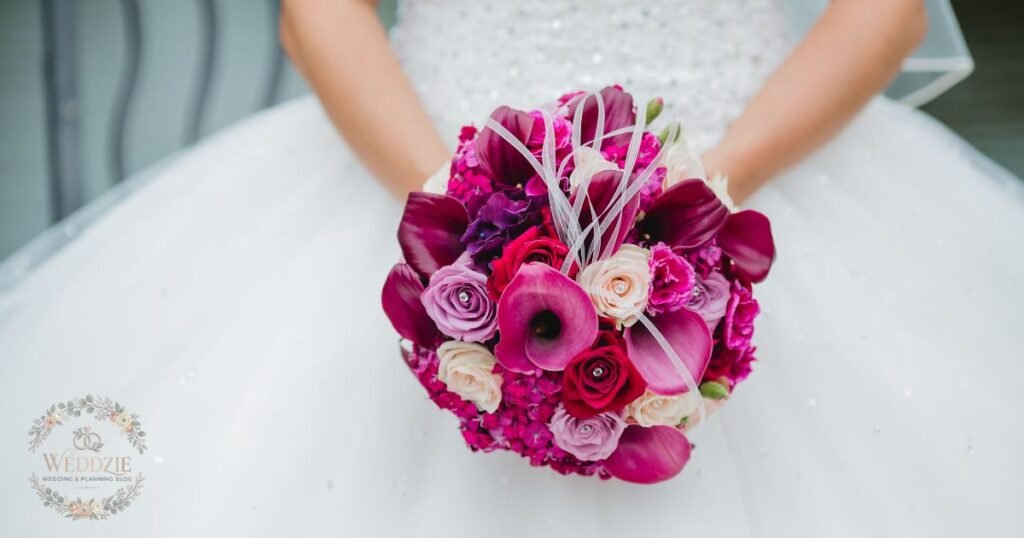
Your flower color is not just a decoration choice — it is a mood, a palette and a statement about who you are as a couple. This guide covers the 10 most beautiful wedding flower colors brides are choosing in 2026 — with real flower recommendations for each color, styling advice and seasonal guidance — so you can build a floral palette that feels genuinely yours.
Why Your Wedding Flower Color Matters More Than the Flower Itself
Most brides start their floral planning by choosing a specific flower — a peony, a garden rose, a ranunculus. Experienced florists always recommend doing it the other way around: choose the color first, then build the flowers around it. Here is why. A peony comes in white, blush, coral, burgundy and deep magenta. A garden rose comes in almost every color imaginable. A ranunculus comes in white, yellow, peach, red and purple. When you choose a specific flower without choosing a color, you end up with a bouquet that contains your favorite blooms in colors that do not work together. When you choose the color first, every flower your florist suggests — regardless of variety — works within the palette. The bouquet looks cohesive, intentional and professionally designed even when it contains many different flower types. Color first. Flowers second. Every time.
How to Choose Your Wedding Flower Color
Four things should guide your wedding flower color choice. Your wedding color palette — your flowers should complement or match the colors your guests will see throughout the day, from the bridesmaid dresses to the table linens to the venue décor. Your wedding season — certain flower colors photograph differently in different light, and seasonal availability affects both price and freshness. Your venue style — white flowers in a grand cathedral look majestic; white flowers at a relaxed garden party can look understated to the point of disappearing. And your personal instinct — the color that genuinely excites you when you see it in an inspiration image is always the right starting point. With those four filters in mind, here are the ten most beautiful wedding flower colors for 2026 brides.
The 10 Most Beautiful Wedding Flower Colors for 2026
1. White Wedding Flowers
White is the most timeless wedding flower color — and the most misunderstood. White is not a single color. It is a spectrum from the bright, crisp white of a gardenia to the warm ivory of a garden rose to the creamy off-white of a ranunculus. Building a bouquet in layered whites — different blooms in different shades of white — creates extraordinary depth and texture without introducing any other color.
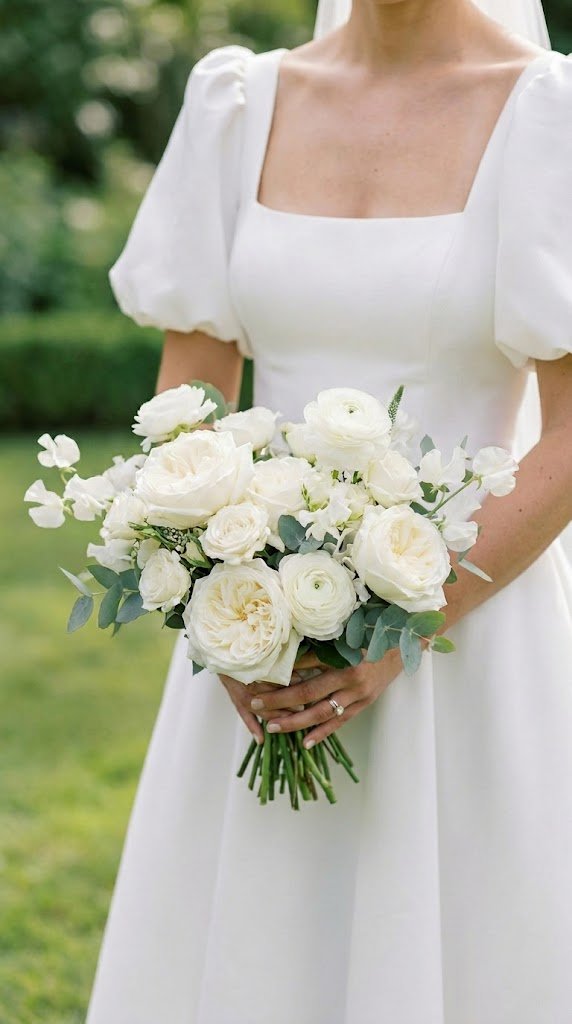
Real flowers to use: Garden roses (Patience, Juliet or White O’Hara varieties), peonies (Duchess de Nemours), ranunculus, sweet peas, lisianthus, gardenias, white cosmos, Queen Anne’s lace and white tulips in spring.
Best for: Traditional venues, religious ceremonies, classic and timeless wedding aesthetics, winter and spring weddings.
Styling note: Add texture rather than color — mix smooth petals with fluffy blooms, add dried pampas grass or eucalyptus for contrast. White flowers with no texture look flat in photographs.
Season: Available year-round — white is the most widely available flower color in every season.
2. Pink Wedding Flowers
Pink is the most popular wedding flower color on Pinterest and for good reason — it is universally flattering in photographs, works in every season and spans an enormous range from the palest blush to the deepest magenta. Blush pink flowers are the most consistently saved wedding image on Pinterest globally in 2026.
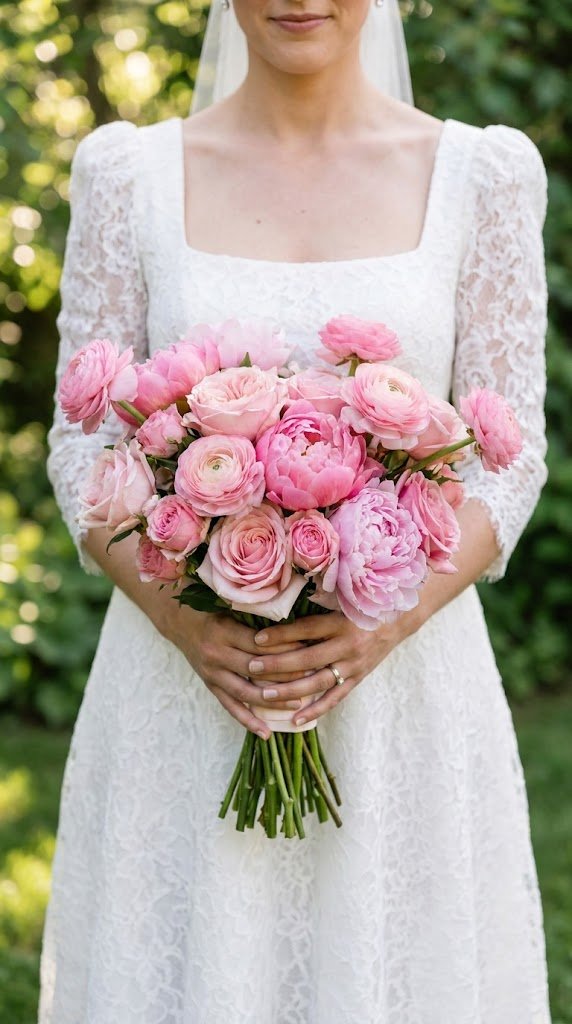
Real flowers to use: Blush peonies (Sarah Bernhardt, Bowl of Cream), blush garden roses (Juliet rose, Keira rose), pink ranunculus, pink sweet peas, pink cosmos, pink lisianthus, pink tulips (spring), pink dahlias (summer/autumn) and pink scabiosa.
Best for: Romantic venues, garden weddings, spring and summer receptions, bohemian and soft feminine aesthetics.
Styling note: Mix two or three shades of pink — pale blush with soft rose and a touch of deeper mauve — for a bouquet that looks like a professional designed it. Monochromatic pink bouquets with subtle shade variation are the most photographed floral trend of 2026.
Season: Peonies peak in May–June. Dahlias peak August–October. Garden roses and ranunculus are available spring through autumn.
3. Purple Wedding Flowers
Purple wedding flowers are having a significant moment in 2026 — driven by the lavender and lilac trend that has moved from fashion into interiors and now into wedding aesthetics. Purple flowers photograph with extraordinary richness and create one of the most dramatic and distinctive wedding palettes available.
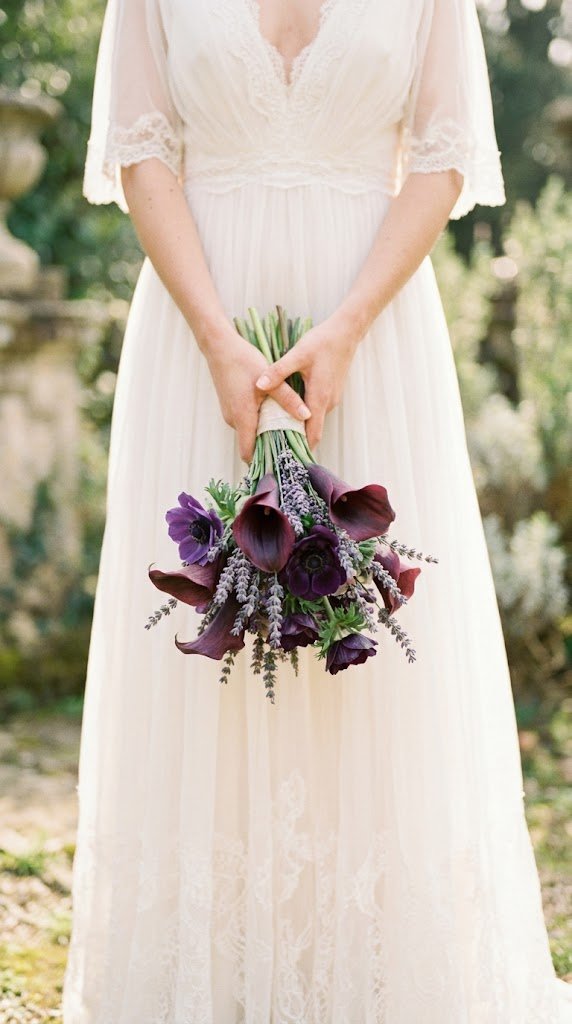
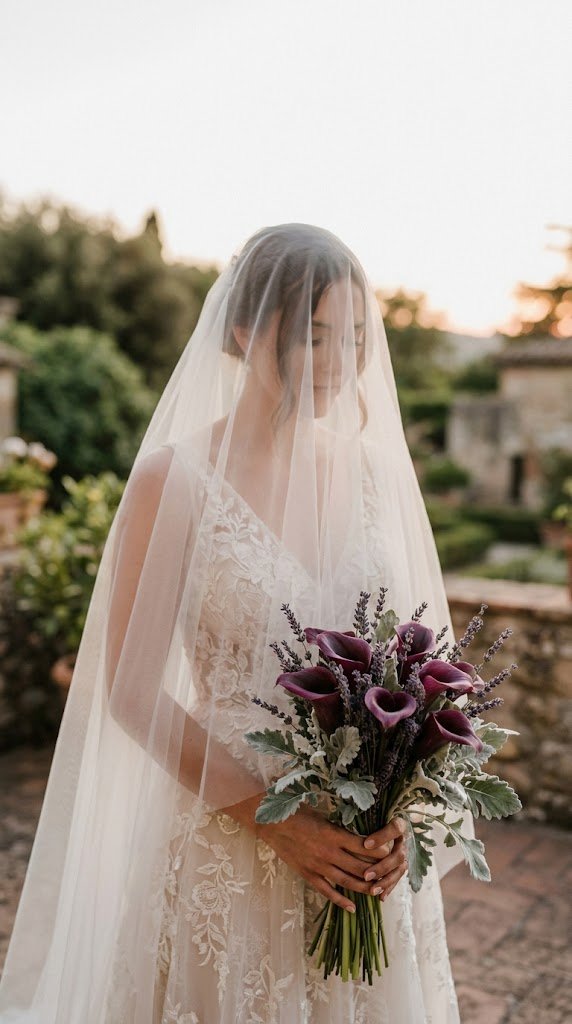
Real flowers to use: Lavender (the most popular purple wedding flower on Pinterest right now), lisianthus in purple and violet, sweet peas in lilac, purple anemones, alliums, wisteria (seasonal), purple cosmos, purple dahlias and stocks in mauve.
Best for: Provençal and French country aesthetics, garden and outdoor venues, summer and early autumn weddings, brides who want a distinctive and non-traditional palette.
Styling note: Pair purple flowers with silver-grey eucalyptus and white accents. Pure purple bouquets can read as heavy — white and silver elements lift the palette and create balance. Dried lavender mixed into a fresh bouquet adds fragrance and extraordinary texture.
Season: Lavender peaks June–August. Lisianthus and dahlias are available summer through autumn.
4. Orange Wedding Flowers
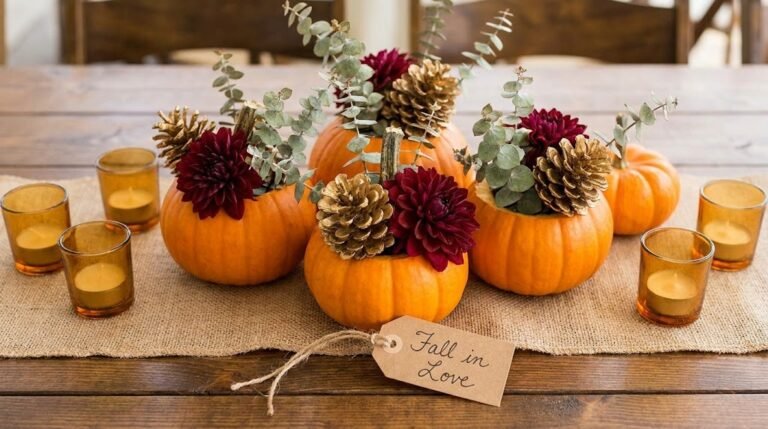
Orange is the boldest wedding flower color choice on this list — and the one that photographs with the most energy and warmth. Burnt orange and terracotta flowers in particular have become one of the defining wedding aesthetics of 2026, driven by the sustained popularity of earthy, autumnal wedding palettes.
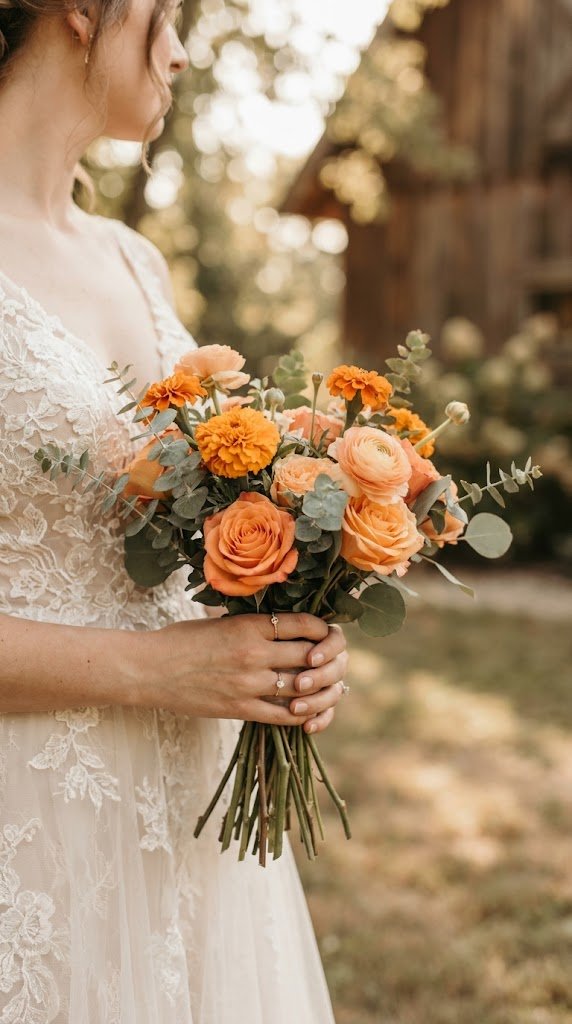
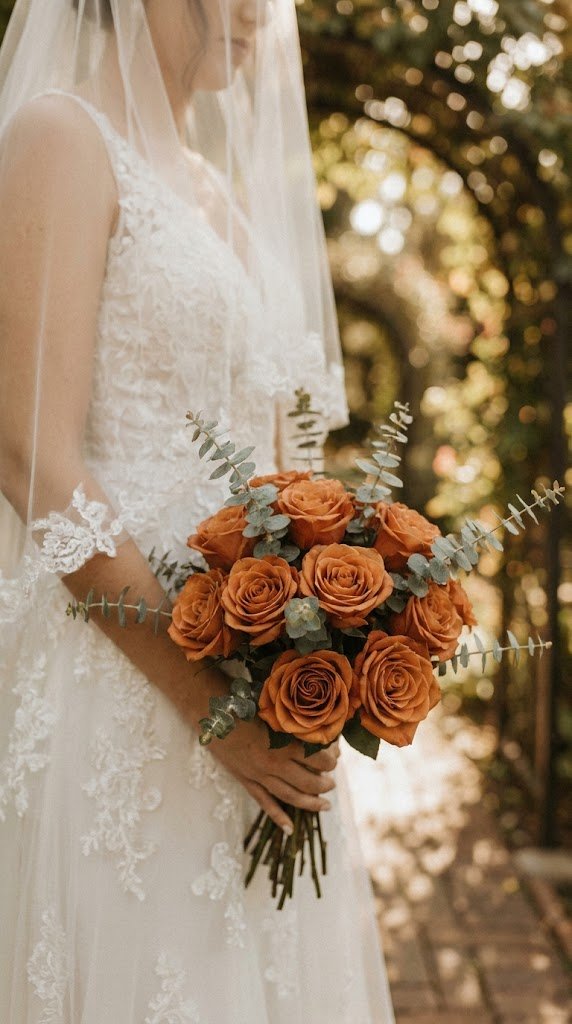
Real flowers to use: Orange dahlias (Café au Lait adjacent varieties, Bishop of Llandaff), marigolds, orange ranunculus, orange garden roses (Doris Ryker, Leonidas), celosia in terracotta, orange cosmos, sunflowers (for a more casual aesthetic) and orange tulips in spring.
Best for: Autumn weddings, rustic and barn venues, outdoor and garden receptions, brides who want a warm and joyful palette, summer festival-style weddings.
Styling note: Pair orange flowers with deep green foliage — eucalyptus, magnolia leaves or tropical leaves — and burgundy accent blooms. Orange and green together is one of the most organic and naturally beautiful wedding flower combinations.
Season: Dahlias and marigolds peak August–October, making orange a natural autumn wedding choice. Ranunculus and tulips offer orange options in spring.
5. Blue Wedding Flowers
Genuinely blue flowers are rare in nature — which is exactly what makes them so distinctive and sought after. A wedding bouquet with real blue flowers is a genuine conversation piece. Blue flowers are the “something blue” tradition elevated to an entire floral palette.
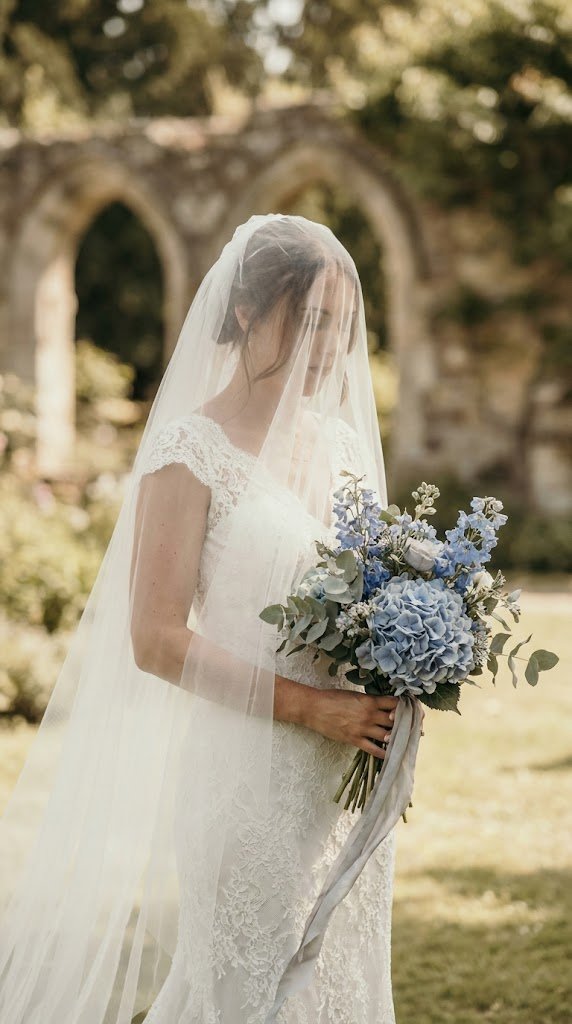
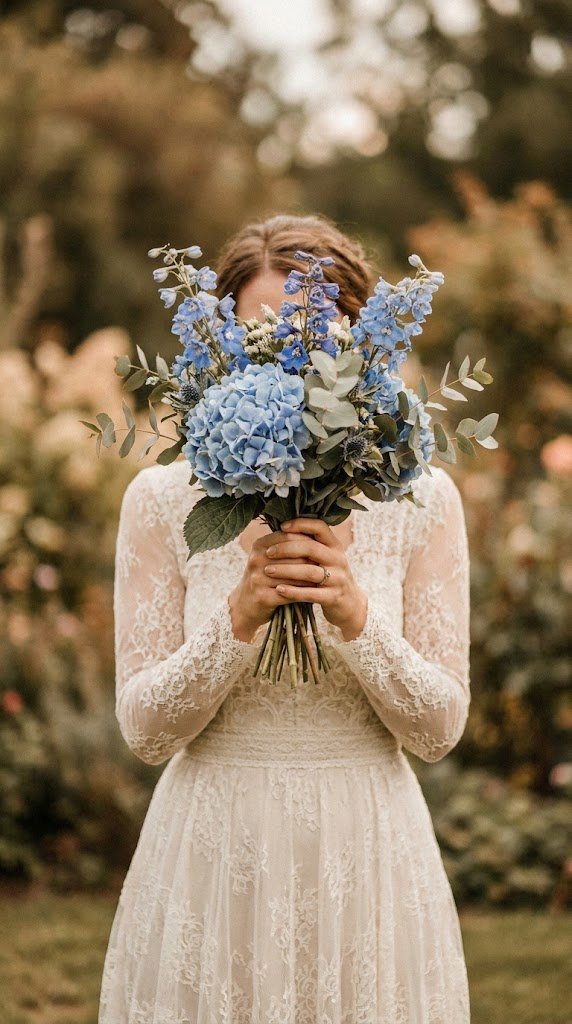
Real flowers to use: Hydrangeas in blue (Incrediball Blue, Nikko Blue), delphiniums (the most saturated blue available in cut flowers), cornflowers (also called bachelor’s buttons — a delicate wild-field blue), agapanthus, blue veronica, forget-me-nots (spring only), nigella (love-in-a-mist) and tweedia.
Best for: Summer weddings, coastal and nautical venues, brides who want something genuinely distinctive, weddings with a navy or dusty blue color palette.
Styling note: Blue flowers look most beautiful paired with white — the contrast makes both colors appear more vivid. Blue and white is one of the most classic and photogenic wedding flower combinations available. Add silver or grey foliage for a more modern interpretation.
Season: Delphiniums and hydrangeas peak June–August. Cornflowers and forget-me-nots are spring flowers.
6. Red Wedding Flowers
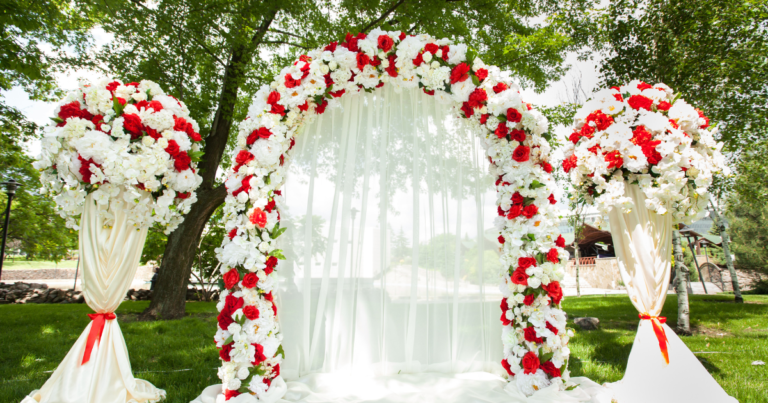
Red wedding flowers are the most romantic and traditionally passionate color choice — and they are significantly underused in modern weddings. A bouquet of deep red garden roses is one of the most timeless and beautiful images in all of wedding photography.
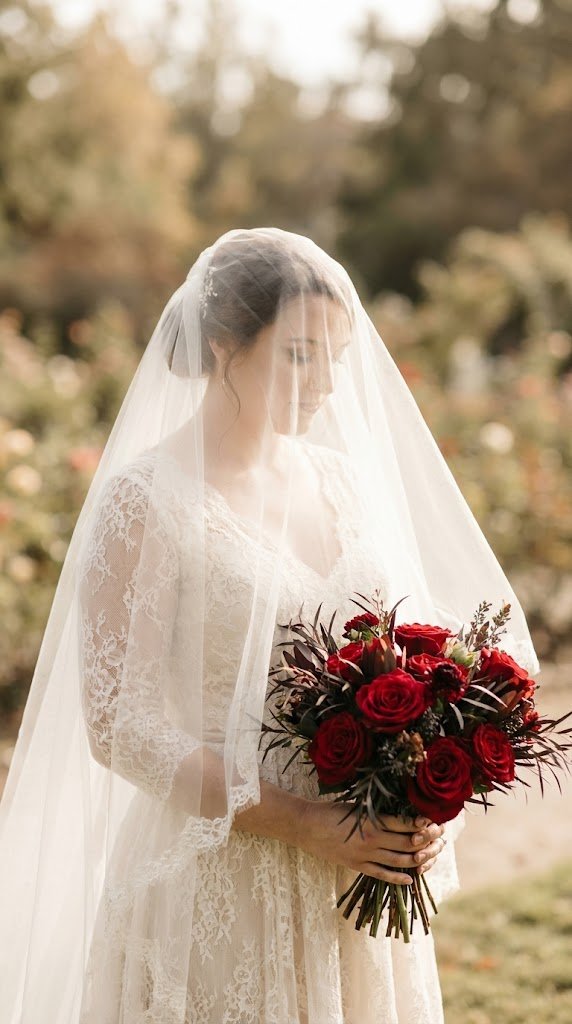
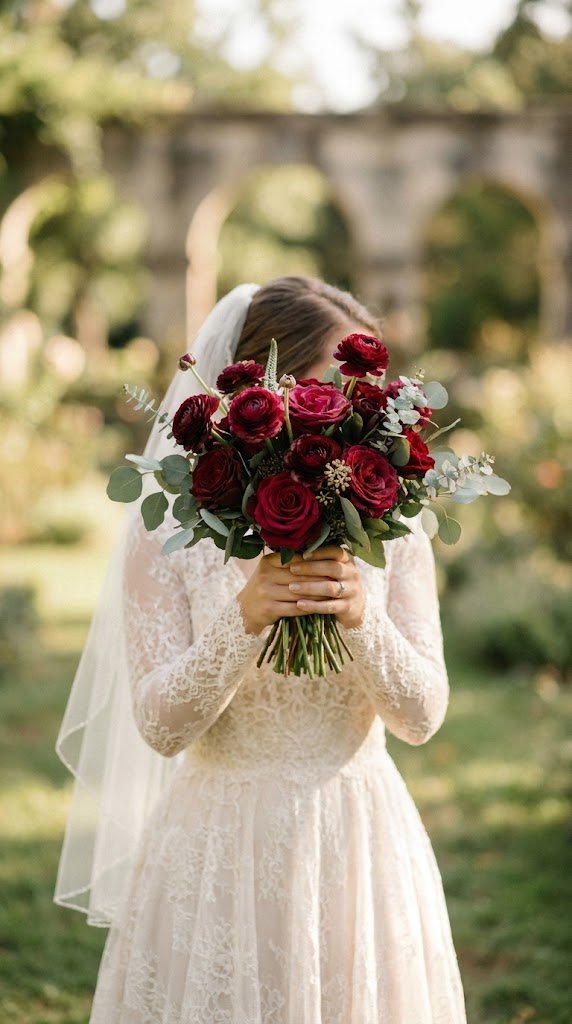
Real flowers to use: Red garden roses (Red Naomi, Freedom rose — the most widely available red wedding rose), red ranunculus, red anemones (with their distinctive black center — one of the most striking flowers in any color), red tulips (spring), burgundy dahlias (which read as deep red in photographs), red amaryllis and red sweet peas.
Best for: Winter weddings, Valentine’s Day and February weddings, formal and traditional venues, romantic and passionate aesthetics, brides who want maximum impact from a single color.
Styling note: Deep red flowers — Red Naomi roses, burgundy dahlias — photograph more beautifully than bright red. Bright red can look harsh in flash photography. Deep red reads as romantic, rich and sophisticated in every light condition.
Season: Red roses are available year-round. Red tulips peak in spring. Dahlias in burgundy-red peak August–October.
7. Green Wedding Flowers
All-green wedding flowers — using foliage, herbs, succulents and green blooms rather than colorful flowers — is one of the most sophisticated and distinctive wedding trends of 2026. Green bouquets look architectural and editorial, photograph with extraordinary texture and work beautifully in both modern and natural venues.
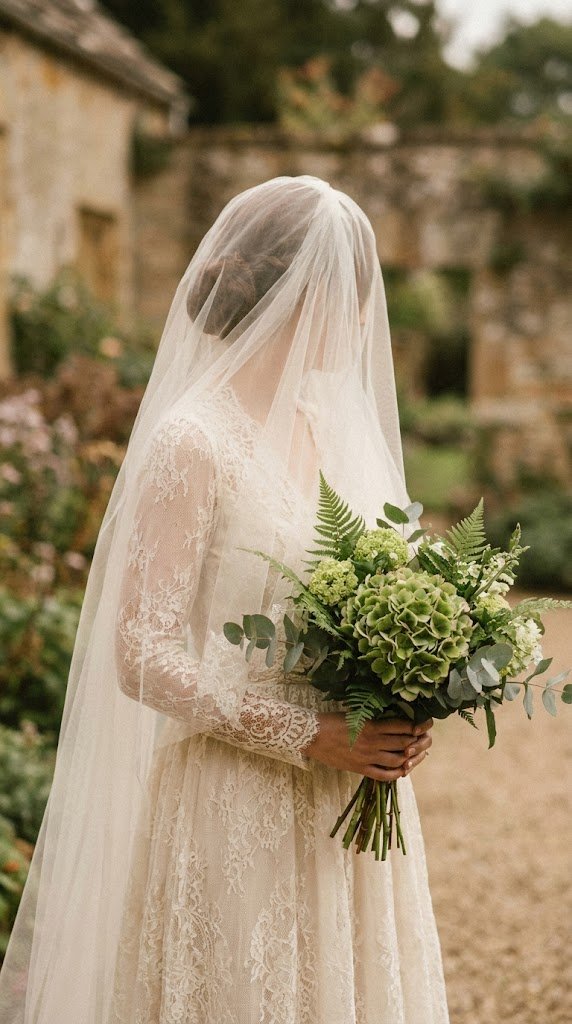
Real flowers to use: Green hydrangeas (Magical Four Seasons, Limelight), green chrysanthemums, green trick dianthus, green hellebores, green anthurium, bells of Ireland, green amaranthus, succulents (echeveria varieties), fresh herbs (rosemary, mint, eucalyptus), green viburnum berries and green ranunculus.
Best for: Modern and minimalist venues, botanical gardens, greenhouse receptions, brides who want something non-traditional and fashion-forward, weddings with a neutral or earthy color palette.
Styling note: Texture is everything in an all-green bouquet. Combine smooth succulent leaves with fluffy green hydrangeas, trailing amaranthus and structural bells of Ireland. Monochromatic green bouquets with strong texture variation look like they belong in a fashion editorial.
Season: Most green foliage is available year-round. Green hydrangeas peak in summer. Hellebores are winter and early spring.
8. Burgundy and Deep Red Wedding Flowers
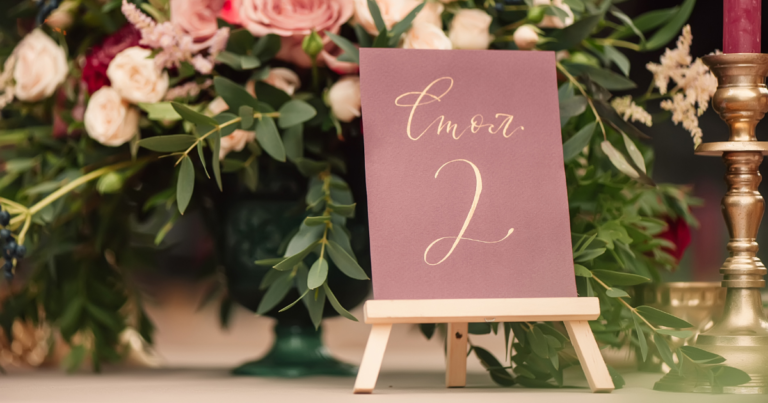
Burgundy deserves its own category separate from red. Where bright red is passionate and bold, burgundy is moody, sophisticated and deeply romantic. Burgundy flowers — dahlias, garden roses, anemones — create one of the most consistently beautiful wedding palettes available regardless of venue or season.
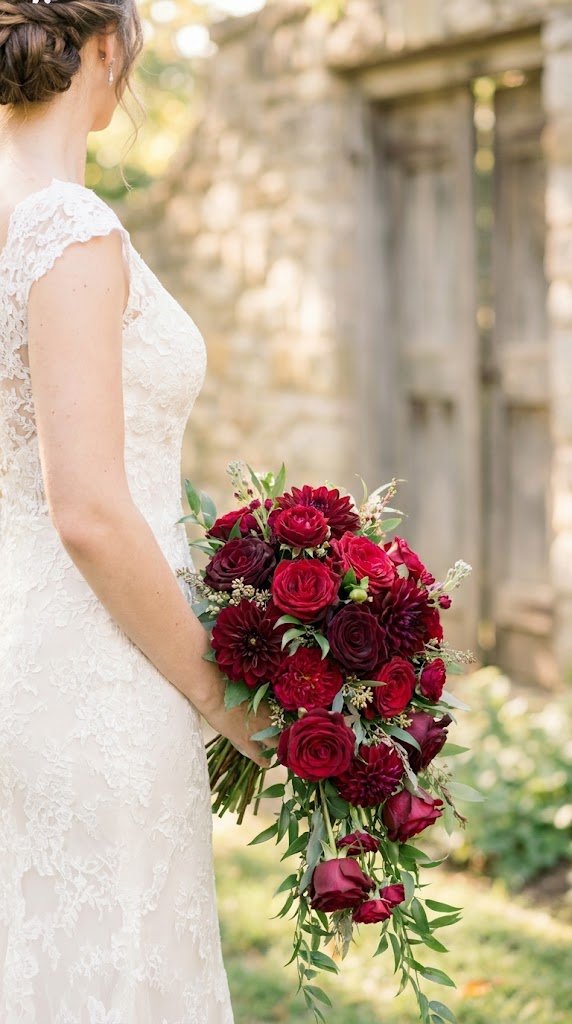
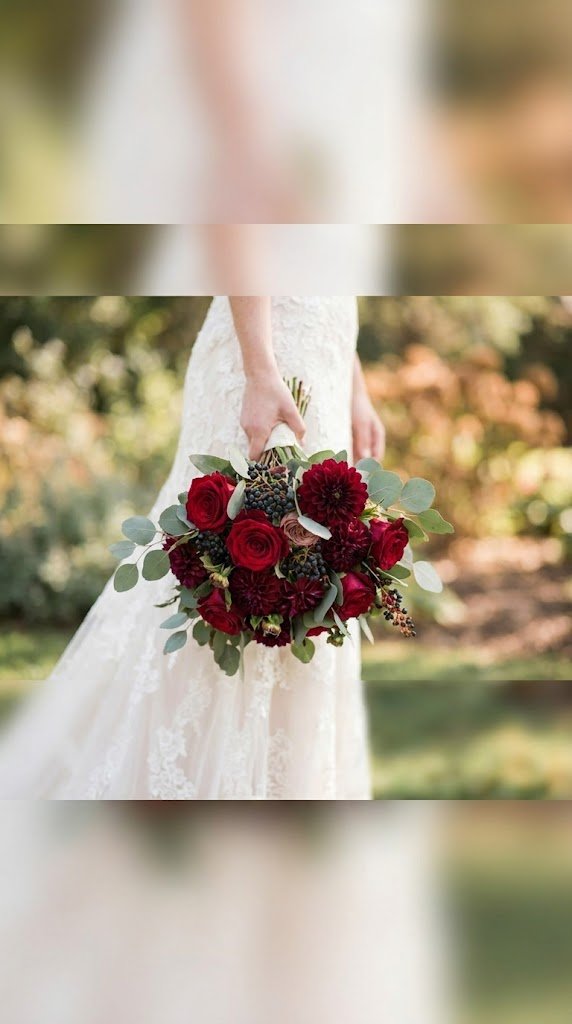
Real flowers to use: Burgundy dahlias (Karma Choc, Black Jack varieties), burgundy garden roses (Black Baccara — one of the most beautiful flowers in any color), dark red anemones, chocolate cosmos (a genuinely almost-black flower with a natural chocolate scent), burgundy astrantia, deep plum sweet peas and wine-red lisianthus.
Best for: Autumn and winter weddings, rustic barn venues, intimate candlelit receptions, moody and dramatic aesthetics, brides who want richness and depth over brightness.
Styling note: Pair burgundy flowers with blush and ivory — the contrast between deep burgundy and pale blush is one of the most photographed wedding flower combinations on Pinterest. Add copper or gold foliage in autumn for maximum seasonal beauty.
Season: Dahlias peak August–October. Black Baccara roses are available year-round. Chocolate cosmos are a summer and early autumn specialty.
9. Peach and Coral Wedding Flowers
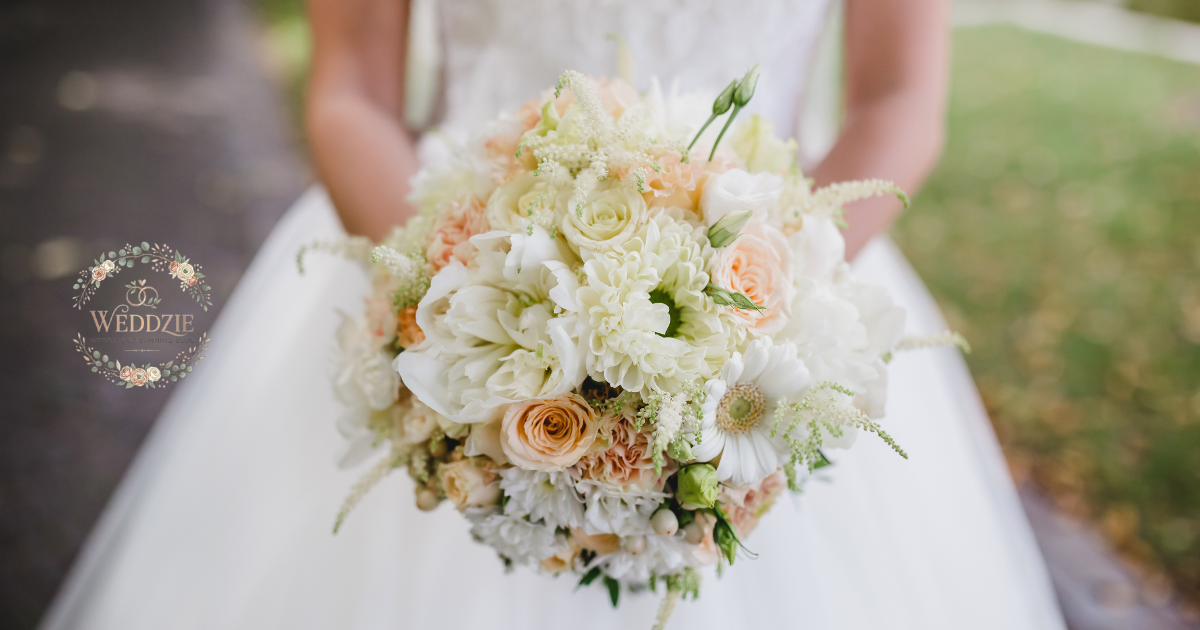
Peach and coral wedding flowers sit at the intersection of pink and orange — warm, joyful and flattering in photographs in a way that neither pure pink nor pure orange quite achieves. Peach flowers create one of the most universally appealing and widely saved wedding palettes on Pinterest.
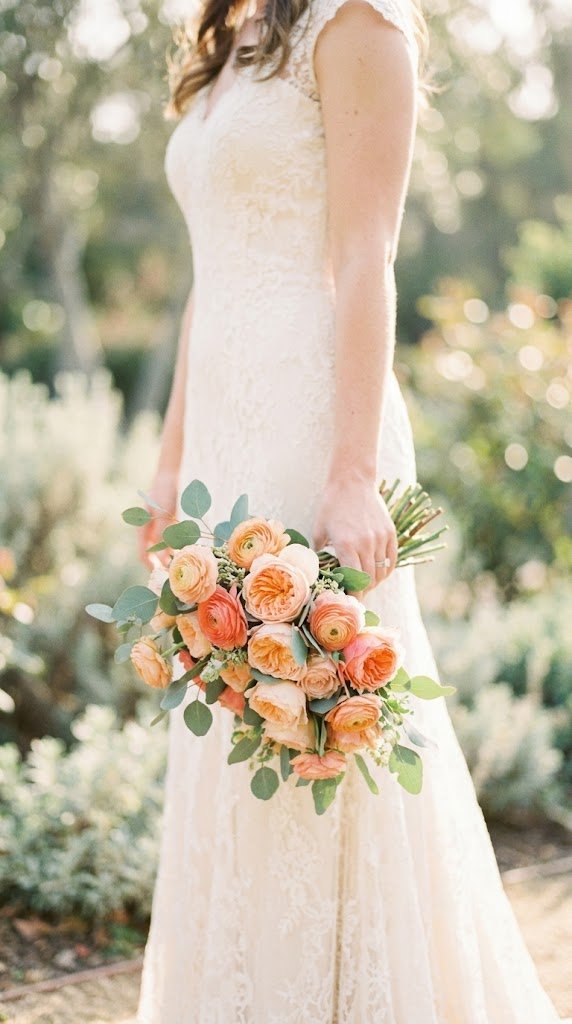
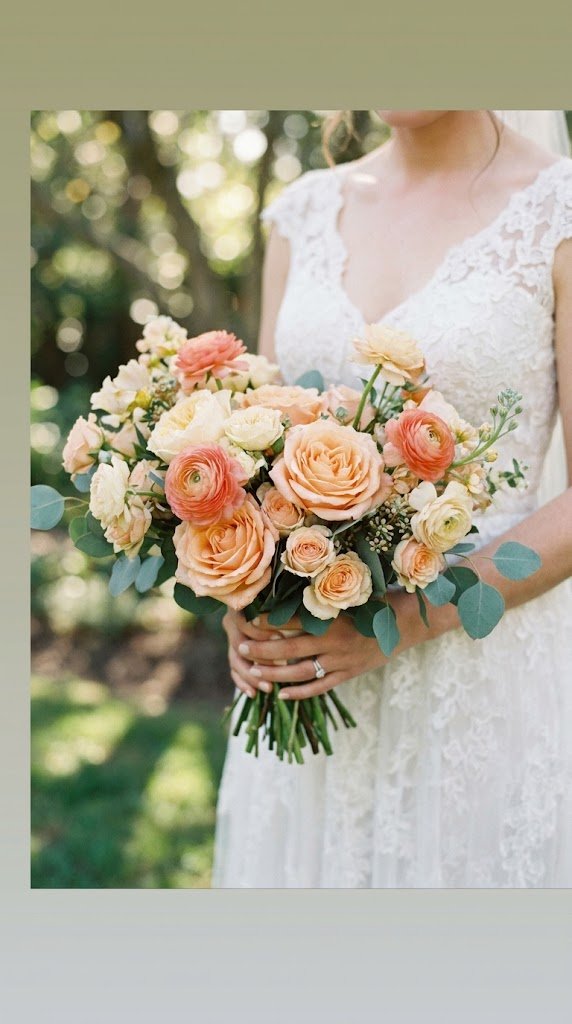
Real flowers to use: Peach garden roses (Juliet rose — the most famous peach wedding rose in the world, David Austin variety), peach peonies (Coral Charm, the most searched peach flower for weddings), coral ranunculus, peach sweet peas, peach lisianthus, peach dahlias (Preference variety), apricot cosmos and peach foxgloves.
Best for: Spring and summer weddings, garden venues, romantic and bohemian aesthetics, brides who want warmth without going fully orange, beach and coastal receptions.
Styling note: The Juliet garden rose in peach-apricot is the single most photographed wedding flower on Pinterest globally. A bouquet built around Juliet roses with peach sweet peas, ranunculus and eucalyptus is one of the most reliably beautiful floral combinations available at any price point.
Season: Peonies peak May–June. Garden roses, ranunculus and sweet peas are available spring through summer.
10. Yellow and Sunflower Wedding Flowers
Yellow wedding flowers create the most joyful and energetic wedding atmosphere of any color on this list. A bride walking down the aisle with a bouquet of yellow flowers — sunflowers, yellow garden roses, mimosa — radiates a happiness that is genuinely contagious and photographs with extraordinary warmth.
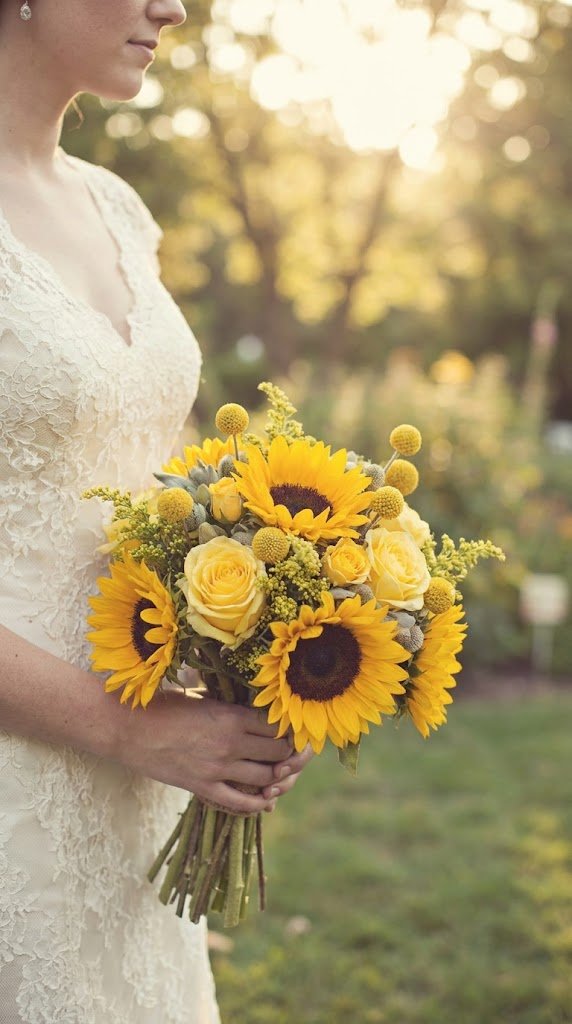
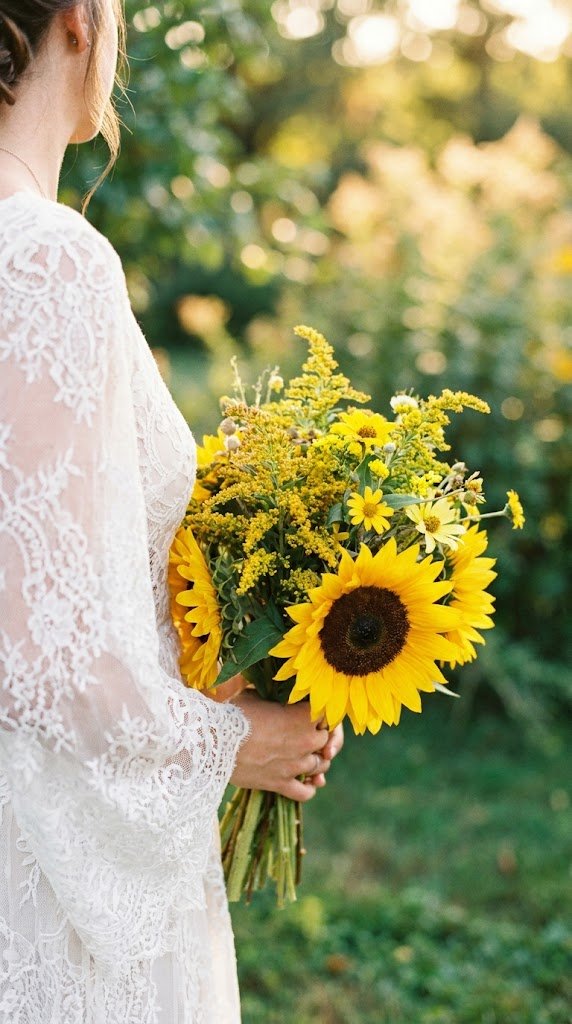
Real flowers to use: Sunflowers (the most recognizable yellow wedding flower — works in both rustic and garden settings), yellow garden roses (Golden Mustard, Sunbelt varieties), yellow ranunculus, mimosa (acacia — peak February–March), yellow tulips (spring), yellow dahlias (summer/autumn), yellow cosmos and yellow sweet peas.
Best for: Summer weddings, outdoor and garden venues, rustic and barn receptions, festival-style weddings, brides who want maximum joy and energy in their photographs.
Styling note: Yellow flowers pair spectacularly with white and with deep green foliage — think wild meadow flower aesthetic. For a more refined version, yellow garden roses with white ranunculus and eucalyptus create a sophisticated palette that is warm without being casual.
Season: Sunflowers peak July–September. Mimosa peaks February–March. Yellow tulips are spring only. Garden roses and dahlias cover summer through autumn.
How to Mix Multiple Colors in One Bouquet
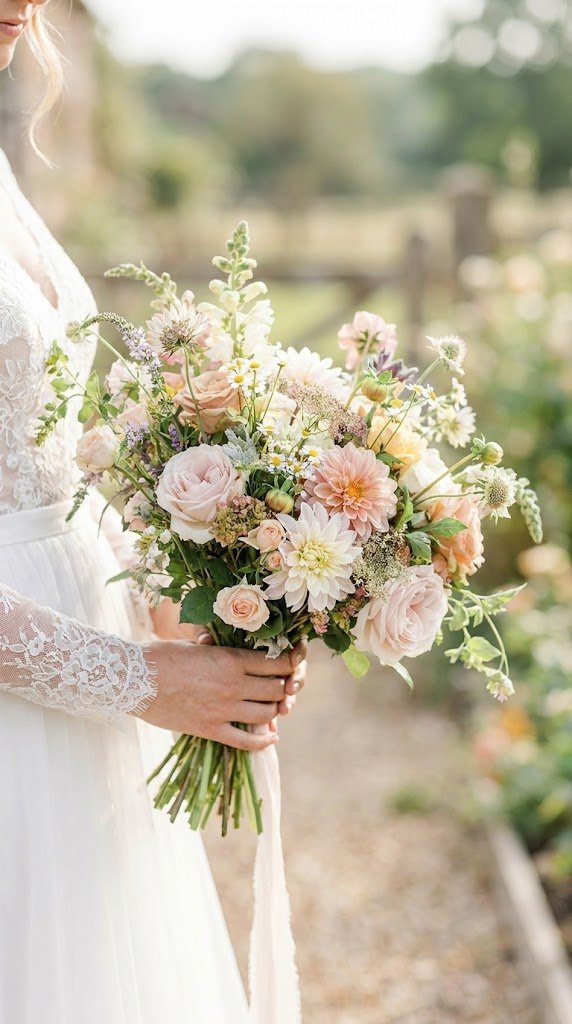
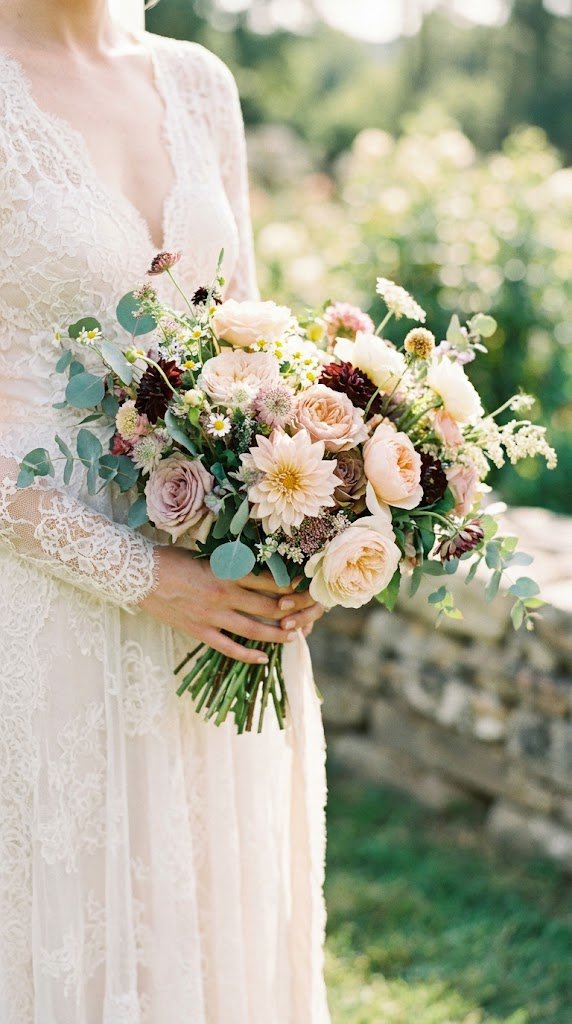
The most beautiful wedding bouquets in 2026 are rarely single-color — they are built around a dominant color with one or two accent colors that create depth and contrast. The rule of thumb that professional florists use is simple: choose one dominant color (60% of the bouquet), one secondary color (30%) and one accent color (10%). This formula works for every palette on this list. White dominant with blush secondary and burgundy accent. Peach dominant with coral secondary and ivory accent. Purple dominant with white secondary and green foliage accent. The proportions do the work — you choose the colors.
Wedding Flower Colors by Season
Certain colors are more naturally available — and therefore more affordable — at certain times of year.
Spring favors white, pink, yellow and lilac.
Summer offers the widest range of every color including blue, peach, purple, orange and coral.
Autumn is the natural season for burgundy, orange, terracotta and deep red.
Winter works best with white, red, burgundy and green.
Choosing a flower color that is in season for your wedding month reduces cost, improves freshness and gives your florist the widest possible range of options to work with.
Stay Organized Through Every Wedding Planning Step
Choosing your wedding flower colors is one of the most exciting parts of planning — but it is just one of dozens of decisions between engagement and wedding day. The Weddzie Wedding Planner Bundle gives you every tool you need to stay organized from your first vendor conversation to your wedding morning — budget tracker, vendor contact sheet, monthly checklist, timeline builder and more. [→ Get the Weddzie Wedding Planner Bundle for $17 — Instant Download]

Frequently Asked Questions
What are the most popular wedding flower colors in 2026? The most popular wedding flower colors on Pinterest in 2026 are blush pink, white, peach and burgundy. Purple — particularly lavender — is growing fastest as a trend. Orange and terracotta are the top choice for autumn weddings.
Which wedding flowers are available year-round? Garden roses, lisianthus, ranunculus, gypsophila, chrysanthemums and most foliage varieties are available year-round from most florists. Seasonal flowers — peonies, dahlias, sweet peas, sunflowers — are significantly cheaper and more beautiful when bought in season.
What color flowers go with a white wedding dress? Almost every flower color works with a white wedding dress — the dress is neutral enough to support any bouquet palette. The most classic combination is white flowers with a white dress. The most photographed combination in 2026 is blush pink and peach flowers against a white dress.
How do I choose a flower color that photographs well? Soft, warm colors — blush, peach, ivory, coral — photograph beautifully in almost every light condition. Bright, saturated colors — hot pink, bright red, electric blue — can be unpredictable in flash photography. Deep, rich colors — burgundy, deep purple, midnight blue — photograph with extraordinary depth in natural light but can lose detail in dark reception lighting.
Should my bouquet match my bridesmaid flowers? Your bouquet and bridesmaid flowers should be coordinated rather than identical. The bride’s bouquet is typically the largest and most elaborate. Bridesmaid bouquets should use flowers from the same color family in a simpler, smaller arrangement. This creates a cohesive look without every bouquet being the same.
How far in advance should I book a florist for a specific flower color? Book your florist 6–9 months before your wedding for peak season dates. For highly seasonal flowers — peonies in spring, dahlias in autumn — your florist needs advance notice to source the specific varieties you want. The further in advance you book, the more options you have.