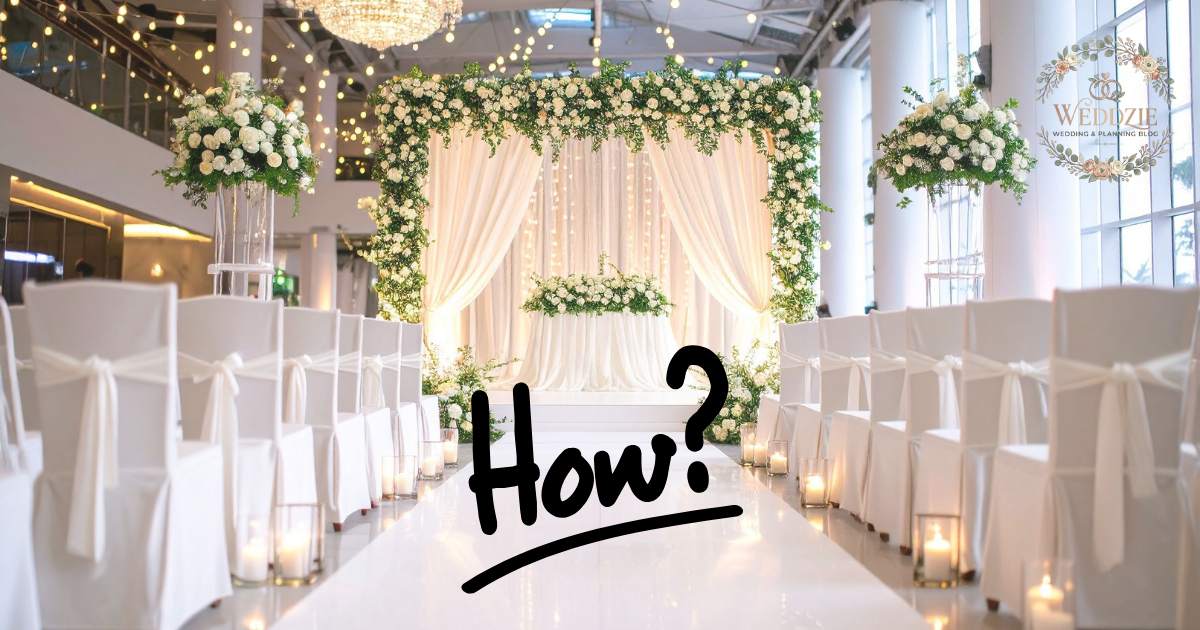
Your wedding venue is the single decision that determines almost everything else.
The date. The guest count. The style. The catering. The photographer you can realistically afford after the venue deposit. The dress code. The weather contingency. The transportation logistics. Every downstream decision in your entire wedding planning process flows from the venue choice.
Get it right and the rest of planning falls into place. Get it wrong and no amount of beautiful flowers or perfect weather fixes what a mismatched venue does to a wedding day.
This guide walks you through exactly how to choose a wedding venue in 2026 — step by step, from the first conversation about budget to the moment you sign the contract — so you make the most important decision of your planning process with confidence, clarity and no regrets.
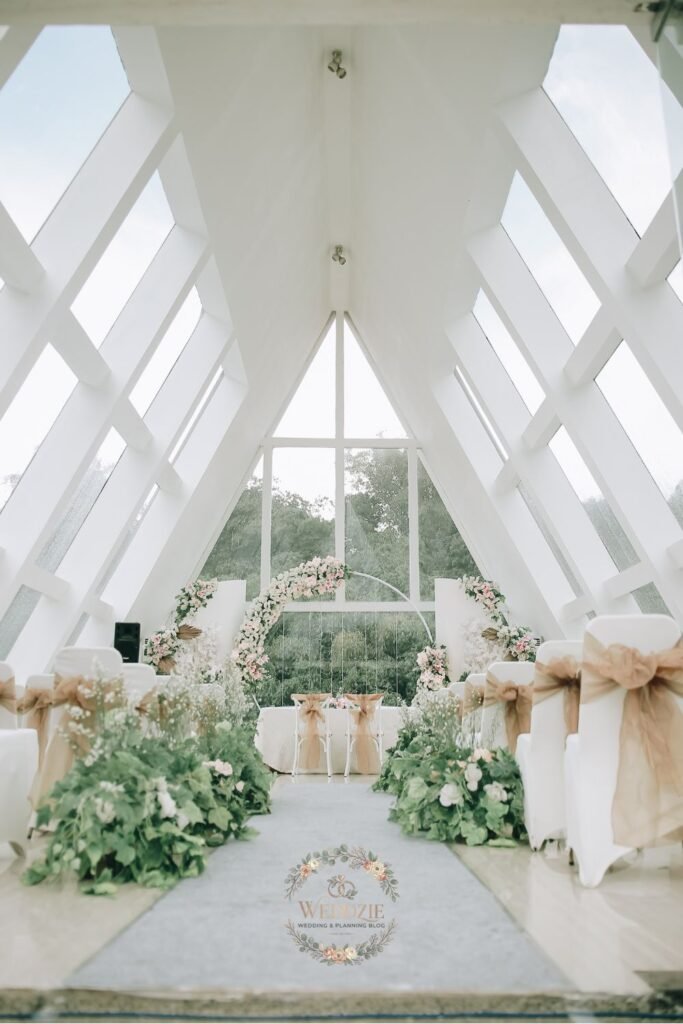
Why Choosing a Wedding Venue Is the Most Important Decision You Will Make
Newly engaged couples almost always make the same mistake. They start their venue search the wrong way — by falling in love with a space before they know their budget, their guest count or their priorities.
They visit a venue that is $15,000 over budget. They adore it. Every other venue they see afterward is disappointing by comparison. They either stretch the budget dangerously or spend months settling for something that never quite feels right.
The couples who choose their wedding venue well do something different. They do the preparation first — they know their numbers, their priorities and their non-negotiables before they walk through a single door. They visit venues as informed buyers, not as hopeful browsers. And when they find the right one, they recognize it immediately because they have already defined what “right” looks like.
Everything in this guide is designed to put you in that second group.
Step 1: Set Your Budget Before You Visit Anything
The venue is typically the largest single line item in a wedding budget — consuming 30–45% of total spend in most cases.
Before you search for a single venue, you need one number: your total wedding budget. Not a range. A number.
How to set your venue budget:
Take your total wedding budget and multiply by 0.30 to get your venue target. This is the maximum amount — for the venue alone, not including catering — you should be spending.
| Total Budget | Venue Target (30%) |
| $15,000 | $4,500 |
| $20,000 | $6,000 |
| $30,000 | $9,000 |
| $50,000 | $15,000 |
If your venue includes catering — which many do — the combined venue and catering allocation is typically 45–55% of total budget.
The total cost rule:
Never evaluate a venue on its headline price. Always ask for the total cost — venue fee plus catering minimum plus service charge plus tax plus all mandatory extras — before you allow yourself to become emotionally attached to the space.
A venue quoting $6,000 that requires a $12,000 catering minimum and adds 22% service charge is a $22,000 venue. Know this before you fall in love with it.
Step 2: Lock In Your Guest Count First
Your guest count and your venue are inseparable decisions — but most couples make them in the wrong order. They find a venue they love, then try to adjust the guest list to fit the space. This creates family tension, hurt feelings and a reception that never feels quite right.
The correct order is: guest list first, venue second.
How to build your preliminary guest list:
Start with two columns — immediate family and close friends only. These are the non-negotiable guests. Everyone else is an addition based on budget and space.
Set a firm number before you begin your venue search. This number becomes your filter — any venue that cannot comfortably accommodate it is eliminated immediately, regardless of how beautiful it is.
Why guest count controls everything:
Your guest count determines your minimum venue capacity. Your venue capacity determines which venues are even eligible. Eliminating ineligible venues before you visit them saves weeks of wasted time and avoids the heartbreak of loving a space you cannot use.
Step 3: Choose Your Wedding Style and Season
Before you can evaluate venues effectively, you need a clear picture of the wedding you are actually planning. Not the wedding of your Pinterest board — the wedding that fits your personalities, your guest list and your budget.
Define your wedding style:
Ask yourself and your partner these questions:
- Formal or relaxed?
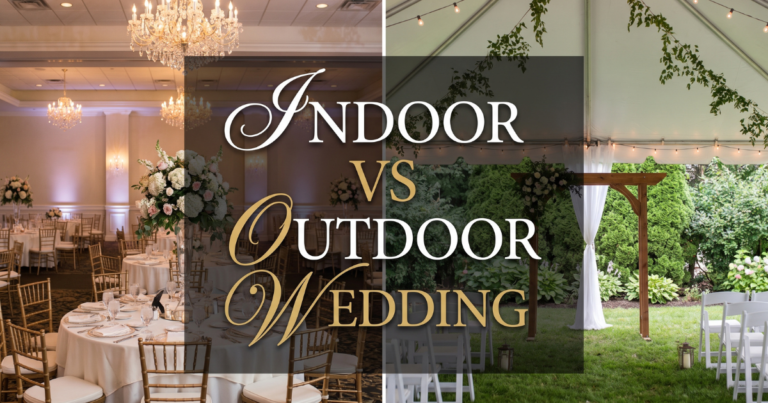
- Indoor or outdoor?
- Intimate or grand?
- Traditional or unconventional?
- Urban or countryside?
- Religious or secular?
Your answers eliminate entire categories of venue before you begin searching. A couple who wants an intimate, relaxed outdoor wedding does not need to visit grand ballrooms. A couple who wants a formal seated dinner for 200 does not need to visit bohemian garden spaces.
Choose your season deliberately:
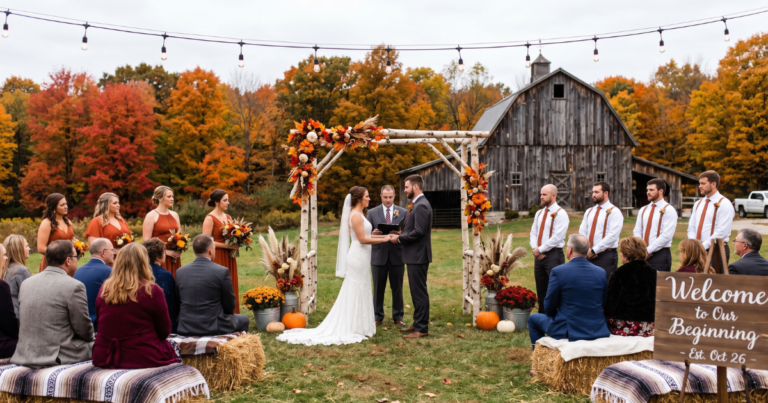
Peak wedding season — late spring and early fall — commands the highest venue prices and fills up 12–18 months in advance. Off-peak seasons and weekday dates offer the same venues at significantly lower prices.
| Season | Timing | Venue Pricing |
| Peak | May, June, Sept, Oct Saturdays | Full price |
| Shoulder | March, April, November | 10–20% discount |
| Off-peak | January, February, weekdays | 20–40% discount |
| Winter weekday | Any month, Monday–Thursday | Up to 50% discount |
If budget is a priority, an off-peak date at your dream venue will always beat a peak-season date at your second choice.
Step 4: Know the Different Venue Types
Understanding the different types of wedding venues — and what each typically includes and excludes — is essential before you begin your search.
Hotel ballrooms and event spaces Hotels offer convenience, on-site accommodation for guests and usually in-house catering. The tradeoff is a more corporate aesthetic and mandatory vendor packages. Best for: large formal weddings, out-of-town guests, couples who want all logistics handled in one place.
Dedicated wedding venues Purpose-built wedding venues have everything designed for the occasion — bridal suites, ceremony spaces, manicured grounds, in-house coordination. They often have preferred vendor lists and can be inflexible on outside suppliers. Best for: couples who want a complete package with minimal coordination effort.
Restaurants and private dining rooms Intimate, food-focused and often significantly cheaper than traditional venues. Limited guest capacity, limited décor flexibility. Best for: small weddings under 80 guests who prioritize exceptional food.
Historic buildings and estates Barns, manor houses, castles, heritage buildings. High visual impact, unique character, often very flexible on vendors. Variable on what is included — verify everything. Best for: couples who want a distinctive setting with strong photographic value.
Outdoor spaces — parks, gardens, vineyards Exceptional photography, relaxed atmosphere, often lower cost. Require more logistical planning — power, restrooms, weather backup. Best for: couples comfortable with planning complexity in exchange for a unique outdoor setting.
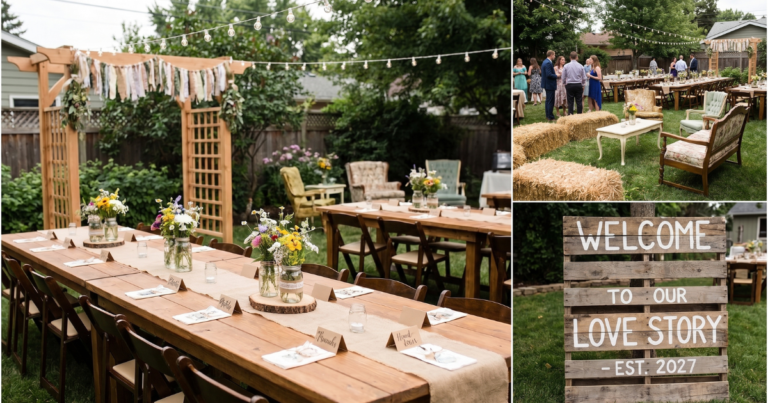
Backyard and private property The most personal and potentially most affordable option. Requires the most planning — rentals, permits, power, restrooms, catering setup. Best for: couples with access to a beautiful private space and a solid planning system.
Step 5: Research and Build Your Shortlist
With your budget, guest count, style and season defined — you are ready to research.
Where to find venues:
Google search: “[your city] wedding venues” filtered by guest capacity and price range. Read Google reviews, not just the venue website.
Wedding directories: The Knot, WeddingWire and Junebug Weddings all have searchable venue databases with real couple reviews. Filter ruthlessly by capacity and location.
Instagram and Pinterest: Search your location plus “wedding venue” to find venues with real wedding photography. The way a venue photographs matters enormously.
Local wedding Facebook groups: Ask recently married couples in your area for venue recommendations. Real firsthand experience beats any directory listing.
How to build your shortlist:
Your shortlist should contain 5–7 venues that meet all of your non-negotiable criteria: budget range, guest capacity, style match and geographic location. Do not put venues on your shortlist that require compromising on any of these four criteria.
Fewer, better-matched venues on your shortlist means more productive tours and a faster, more confident decision.
Step 6: Visit Every Venue on Your Shortlist
You cannot choose a wedding venue from a website. Photographs are always flattering. The experience of actually standing in the space — feeling the scale, the light, the atmosphere, the logistics — is irreplaceable.
When to visit:
If possible, visit venues at the same time of day as your planned ceremony. A venue that is beautiful in morning light may be very different at 4:00 PM. An outdoor space that photographs well in sunshine looks completely different under gray winter sky.
What to bring:
A notepad, your list of questions, your guest count and your budget number. Bring your partner. Do not bring parents or wedding party on the first visit — their opinions will influence yours before you have formed your own.
What to observe beyond the aesthetics:
Walk the space with practical eyes. Where do guests park? Where do vendors load in? How far is the ceremony space from the reception space? Where is the bridal suite? Are the bathrooms adequate for your guest count? What is the noise situation from surrounding roads or businesses? Is there natural light for photographs?
These practical questions matter as much as how beautiful the space is.
Step 7: Ask These Questions at Every Venue Tour
Prepared questions separate informed venue buyers from couples who fall in love and sign contracts without understanding what they have agreed to.
Take these questions to every single venue tour and write down the answers:
About pricing:
- What is the total cost — venue fee plus catering minimum plus service charge plus tax plus all mandatory extras?
- Is the quoted price guaranteed until our wedding date?
- What is not included in this quote that will appear on our final invoice?
- What is the payment schedule and cancellation policy?
About logistics:
- What is included in the rental — tables, chairs, linens, AV equipment?
- How many hours does the rental include and what is the overtime rate?
- How many other events will be held here on our wedding day?
- What is the maximum guest capacity for a seated dinner?
- What is the genuine weather backup plan for outdoor spaces?
About vendors:
- Are we required to use your preferred or exclusive vendors?
- Can we bring our own caterer, bar service or DJ?
- Is there a fee for using outside vendors?
About the contract:
- What does the force majeure clause cover?
- Who is our dedicated coordinator and what happens if they leave before our wedding?
For the complete list of venue questions with detailed explanations of why each one matters, read our full guide: [15 Questions You Must Ask Your Wedding Venue Before Signing].
Step 8: Compare Venues the Right Way
After touring your shortlist, comparison should be systematic — not emotional. The venue that felt the most exciting in the moment is not necessarily the right choice.
Build a comparison matrix:
Create a simple spreadsheet with your venues as columns and your evaluation criteria as rows. Score each venue from 1–10 on every criterion.
| Criteria | Venue A | Venue B | Venue C |
| Total real cost | 7 | 9 | 6 |
| Guest capacity fit | 9 | 8 | 10 |
| Style match | 8 | 7 | 9 |
| Included items | 6 | 9 | 5 |
| Vendor flexibility | 5 | 8 | 9 |
| Coordinator quality | 9 | 7 | 8 |
| Parking and logistics | 7 | 8 | 6 |
| Photography value | 9 | 6 | 10 |
| Total | 60 | 62 | 63 |
This matrix does two things. It forces you to evaluate every dimension of each venue — not just the ones that feel exciting. And it often reveals that the venue you felt least certain about scores highest when evaluated objectively.
The gut check:
After the matrix, do a gut check. If the highest-scoring venue still does not feel right — trust that instinct. The matrix is a tool to inform the decision, not to make it for you.
Step 9: Understand the Contract Before You Sign
The venue contract is a legally binding document. Read every word of it before you sign anything or pay any deposit.
What to verify in every venue contract:
Your specific wedding date and time is correctly stated. The rental period — start and end times — is explicitly written. The total price and payment schedule matches what was verbally quoted. The cancellation and refund policy is clearly defined at every stage. The force majeure clause is present and reasonable. The name of your dedicated coordinator is included if agreed. Every item you were told is included — tables, chairs, linens, AV — is listed in writing.
The verbal promise problem:
Venue coordinators make verbal promises that are not always reflected in the contract. “We always allow outside catering” means nothing if the contract says otherwise. “We never charge for that” means nothing without it in writing.
If it was promised verbally and matters to you, ask for it in writing before you sign. A reputable venue will have no problem adding agreed terms to the contract. A venue that resists putting verbal promises in writing is showing you something important.
Consider wedding insurance:
A wedding insurance policy costs $150–$500 and covers cancellation, vendor no-shows, property damage and liability. For the price of a floral arrangement it protects your entire investment. Purchase it within 24 hours of signing your venue contract.
Step 10: Book and Protect Your Date
When you find the right venue — move decisively.
Good venues at good prices do not stay available. A venue you visit on a Saturday may have that date taken by Wednesday. Once you have done the comparison and made your decision, call the venue, confirm availability and pay the deposit within 48 hours.
After booking your venue:
Send a confirmation email summarizing every agreed term. Keep a copy of the signed contract somewhere safe — physically and digitally. Add all payment due dates to your calendar immediately. Share the venue contact details with your photographer, caterer and day-of coordinator so they can begin their own venue assessments.
What to book next:
With your venue signed and your date locked, book in this order: photographer, caterer, videographer, florist, DJ, everything else. Every other vendor’s availability is anchored to your venue date — this is why the venue comes first in every case.
Red Flags to Watch For When Choosing a Wedding Venue
They are reluctant to provide a written itemized quote. Any professional venue should be able to give you a complete written breakdown of all costs within 48 hours of a tour.
The coordinator is vague or dismissive about questions. Your venue coordinator is the person who will manage your wedding day. How they treat you during the sales process is how they will treat you when problems arise.
Online reviews mention the same problems repeatedly. One negative review is an outlier. Three reviews mentioning the same issue — poor communication, hidden costs, coordinator turnover — is a pattern.
They pressure you to sign quickly. Genuine urgency about availability is real and reasonable. Pressure tactics designed to prevent you from thinking clearly are a red flag.
The contract and the verbal promises do not match. This is the clearest possible signal that the venue’s word cannot be trusted.
The venue looks significantly different from the photos. Every venue photographs better than it looks in person. If the reality is dramatically worse than the website, ask yourself what else has been misrepresented.
Stay Organized Through Every Step
Choosing a wedding venue involves dozens of conversations, multiple tours, written quotes, contract reviews and payment schedules. Managing all of it in your head — or across scattered notes and emails — is how important details get missed.
The Weddzie Wedding Planner Bundle includes a complete venue research and comparison tracker, a vendor contact sheet, a full payment planner and a 65+ page wedding planning system that takes you from engagement to wedding day without missing a single step.
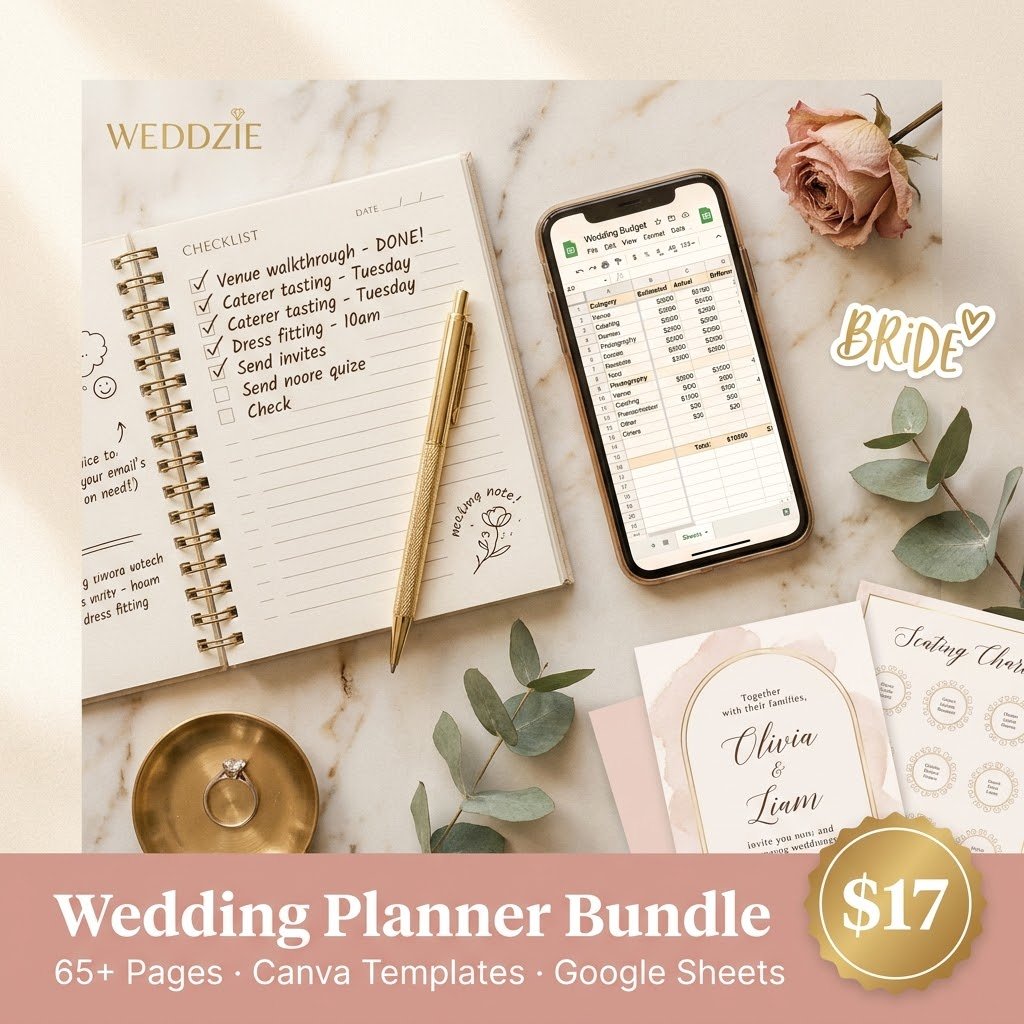
[→ Get the Weddzie Wedding Planner Bundle for $17 — Instant Download]
Everything you need in one place. Instant download. Fully editable. Yours forever.
Frequently Asked Questions
When should I start looking for a wedding venue? Start your venue search as soon as you have set your budget, guest count and preferred season — ideally 12–18 months before your planned wedding date for peak season Saturdays. Popular venues in most cities book up 12 months or more in advance. If your preferred date is a Saturday in May, June, September or October, begin your search immediately after getting engaged.
How much does a wedding venue cost on average? The average wedding venue cost in the United States ranges from $3,000 to $12,000 for the space alone — not including catering, which adds $8,000–$20,000 for a 100-person wedding. All-inclusive venue packages typically range from $15,000 to $40,000 for 100 guests. Weekday and off-peak dates can reduce these figures by 20–50%.
What is the most important factor when choosing a wedding venue? Budget fit — meaning the total real cost including all fees and catering — is the most important factor. A venue that exceeds your budget creates financial stress that follows you through the entire planning process and beyond. After budget, guest capacity fit and style match are equally critical.
How many wedding venues should I visit before choosing? Visit at least 3 venues, ideally 5. Visiting fewer than 3 does not give you enough comparison. Visiting more than 7 creates decision fatigue and makes it harder to remember the genuine differences between spaces. Build a tight shortlist of 5–7 venues that meet your non-negotiable criteria, tour all of them and compare systematically.
Can I negotiate with a wedding venue? Yes — and most couples never try. Venues are most flexible on weekday bookings, off-peak dates and last-minute availability. Asking “is there any flexibility if we confirm by [date]?” or “what can you do on the catering minimum for our guest count?” costs nothing and frequently results in meaningful savings. The worst answer is no — which leaves you exactly where you started.
What should I do if two venues are equally good? Go back and visit both a second time — ideally with your partner if they were not on the first tour. Ask each venue one additional question that matters to you. Trust your instinct about the coordinator more than the space — the space is fixed, the coordinator relationship is ongoing. If still equal, choose the one with more flexible vendor policies, as this typically saves money downstream.
Should both partners be involved in choosing the wedding venue? Absolutely. The venue choice affects both partners equally — the aesthetic, the budget, the guest experience and the overall feel of the day. Make this decision together, with both partners having toured the shortlisted venues and both partners’ non-negotiables clearly established before the search begins.
Final Thought
Learning how to choose a wedding venue is really learning how to make a major decision well — with preparation, clear criteria and systematic comparison rather than emotion and impulse.
The couple who chooses their venue this way does not just end up with a beautiful space. They end up with a planning process that feels manageable, a budget that holds and a wedding day that reflects exactly who they are.
Start with the numbers. Do the preparation. Tour with purpose. Compare systematically. Sign with confidence.
Your venue is out there. This guide just gave you the map to find it. 💍
Save this article and share it with your fiancé — venue hunting is a two-person job.
📦 Get the Weddzie $17 Wedding Planner Bundle — venue tracker, budget planner, vendor contact sheet and every other tool you need. Instant download.

2 Comments